Granalla de plata fina 99,9 % o 99,99 % de pureza o, lo que es lo mismo, una impureza por 1.000 o por 10.000; plata para joyería, para alingotar, para procesos industriales, para…Puede provenir del refino de chatarra/plata de diversas leyes o del mineral afinado.
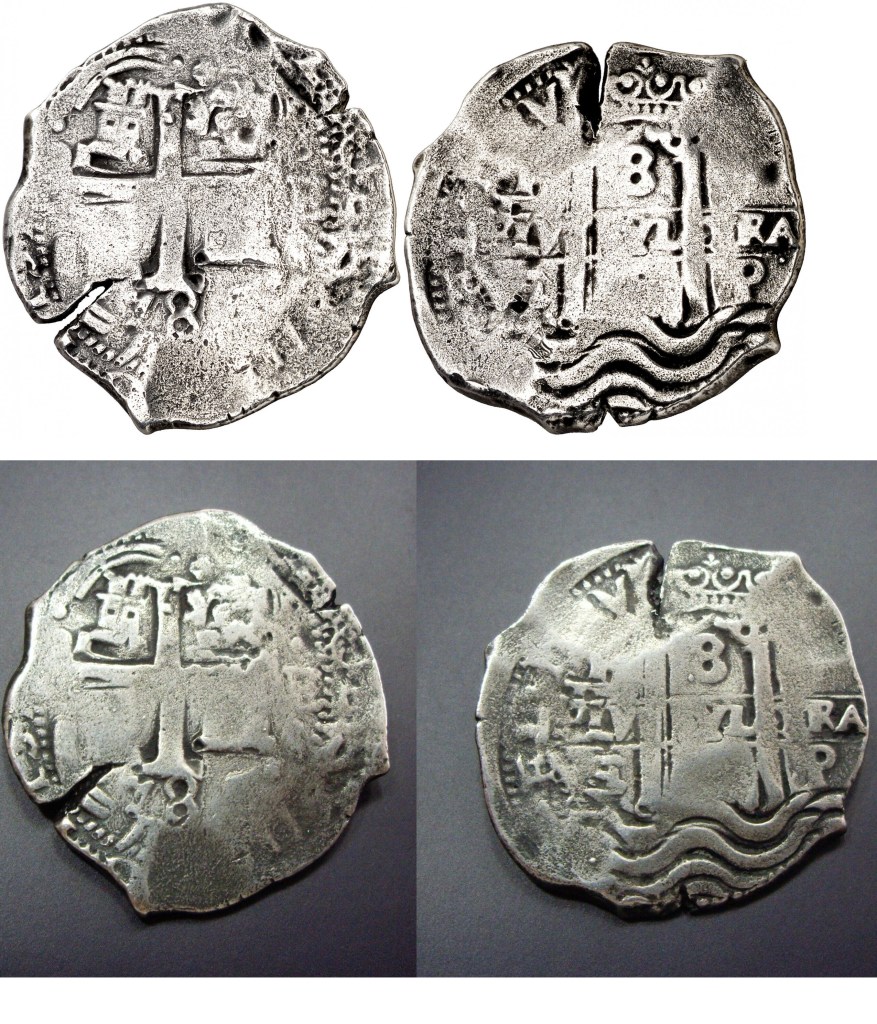
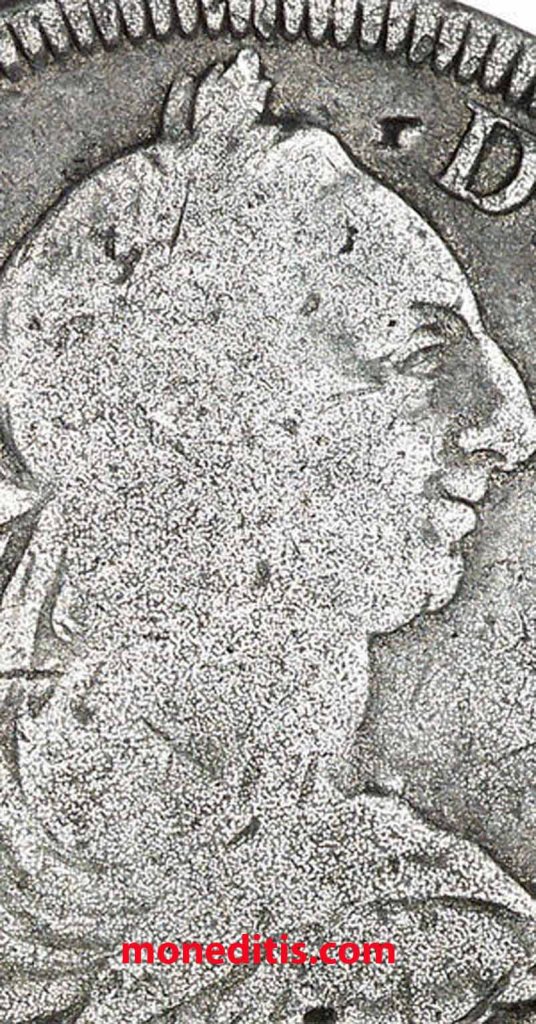
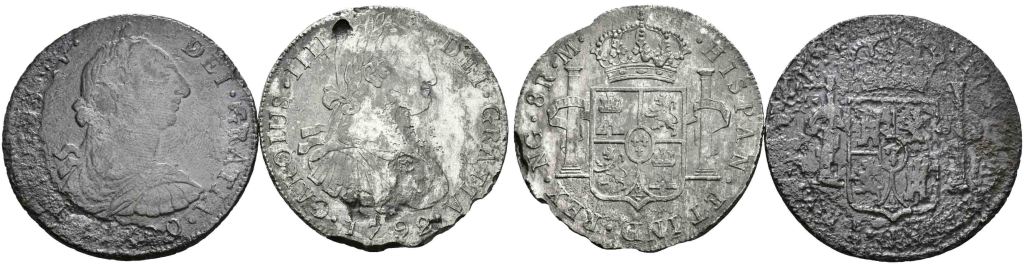
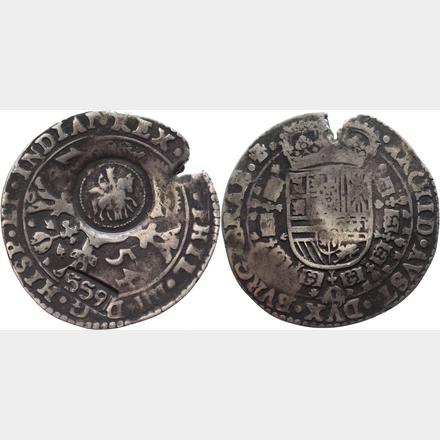
En este caso, se trata de 8 reales macuquinos de Carlos II acuñados en Potosí o Lima en 168() o sin fecha, dependiendo del vendedor, Aureo o Numismática Carlos Peláez en ebay, respectivamente. Estos últimos alertan de la falsedad de la pieza, afirmando que, al menos, es de plata.
As it’s biddr and not Sixbid, maybe something will come of it. But this shows, they are not on the collectors’ side, they get their money from the auction houses and also from fake auction houses like these. Whether it’s dishonesty, utter incompetence or likely a mixture of the two doesn’t really matter.
There are a lot more auction houses than there used to be and a lot of them are crap.
In this auction, there are some weird Greeks as well.
Only one and sole Probvs there is genuine! The rest are cheap,casted fakes! That’s awful! It is (or was…) trusted european auction house! I wrote about their «Probvs coins» on european forum.
If you buy bulk lots, you need to view them really at any of these auction houses, if you want to rule out the possibility of buying fakes – especially as you cannot reliably return them – although the best houses generally will let you. I have purchased fake coins in bulk lots from many of the most respected auction houses, in today’s market – it is just part of the game sadly, although it shouldn’t be like that !
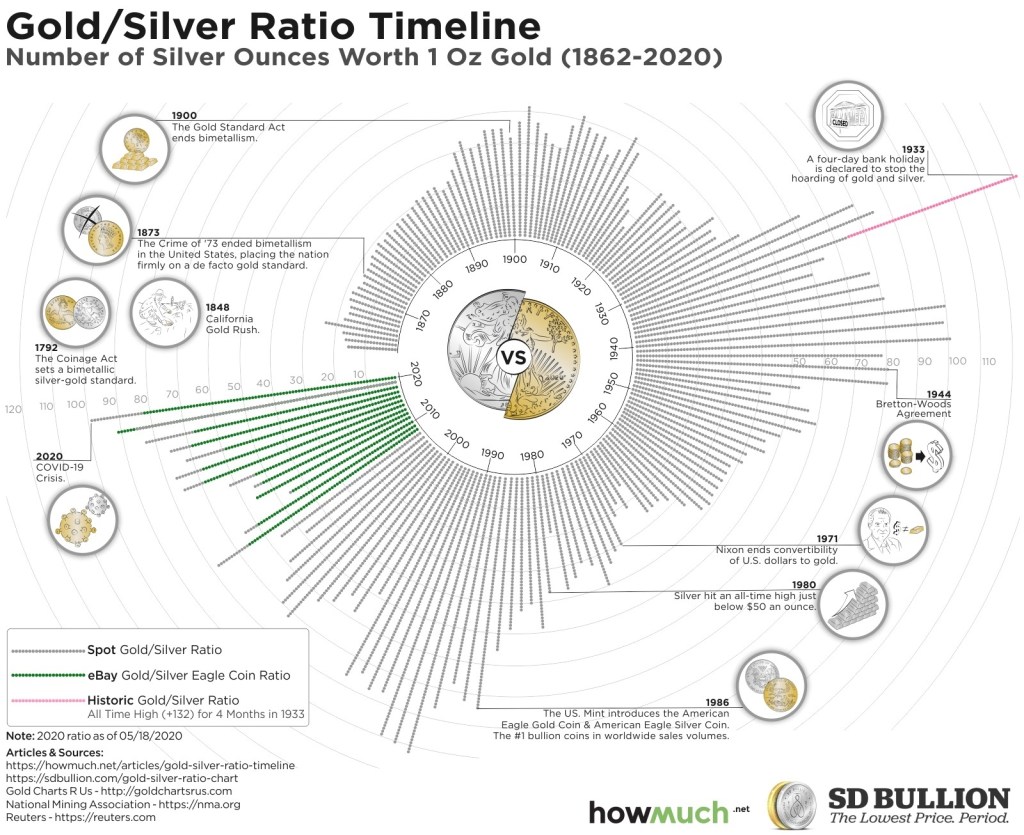
Fin del Patrón Plata(imagen superior de plena actualidad por los precios alcanzados; extrapolable a este 2025, con sus distintas connotaciones) con varios enlaces interesantes , Macuquinas Potosí; naufragio de la Capitanacon el siguiente archivo pdf y muchos enlaces relacionados
Junk Silver / Plata Basura con 20 francos suizos falsos en el post scriptum, Efimok II / ефимок II con interesantes comentarios sobre falsificaciones en el post scriptum también, entre los que destaco:
«…A mi me han ofrecido comprar aureos a 1000 euros que tenian ese precio por ser unicos, es decir, se hace un aureo, se rompe el troquel y unicamente queda tu aureo, esto tambien se hace con denarios y con otro tipo de monedas, esos aureos luego con un certificado pueden llegar a valer cinco veces mas como poco, si es un aureo especial puede llegar a los 30.000 o 50.000 euros, un denario imagina que te lo venden a 300 o 400 pero ese denario vale 4000 o 5000 euros. Esto eran gente que llegaban con maletines llenos de este tipo de moneda, normalmente era un italiano el que aparecia con estos maletines, italiano diferente al de los tetradracmas.
En moneda medieval española hay varios especialistas y sus copias en caso de que quieran hacerlas unicas son imposibles de detectar, la unica manera de poder detectarlas es que se hagan varias monedas del mismo cuño y conforme van saliendo al mercado darte cuenta de que son clones acuñados, si fueran fundidos si pueden llegar a reconocerse por un ojo experto.
Casi todos los talleres estan por el sur de españa, casi todos estan operando de forma legal, pero hay otros que son como las reliquias, sabes que estan, sabes que esisten pero no hay manera de saber quien tiene ese taller, por ejemplo el famoso taller de las cabezas de san juan, nunca he llegado a saber nada de su dueño, debe de ser un tio muy listo con un bajo perfil y con clientes ya buscados, se sabe que esiste desde hace años pero nadie sabe nada de el.
Luego estan los bulgaros, especialistas en moneda romana y en arqueologia, casi todo lo que se vende hoy en dia es de de ellos, hacen entalles en piedras naturales que venden a 40 euros que luego pueden como poco triplicar su valor con un certificado…»
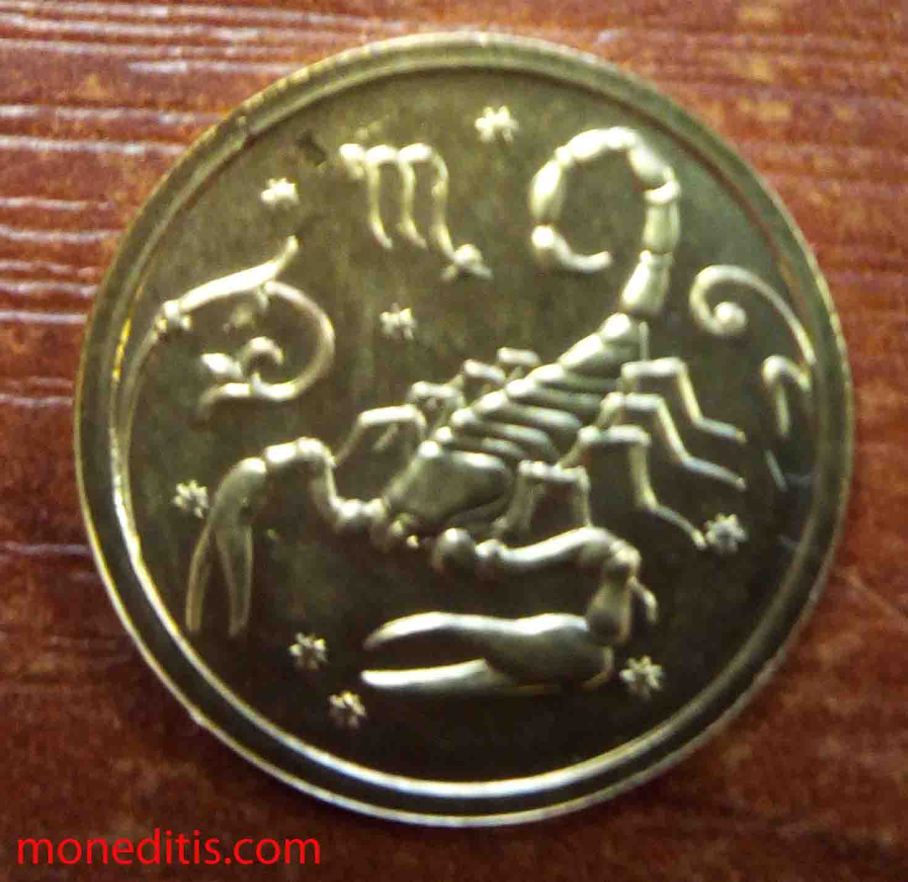
Sigo con signos del zodiaco: escorpión y anteriores
Следующий номинал является очень непривычным для российской системы денежного обращения, поскольку ориентирован не на десятеричную, талерную. Внешнеполитические успехи елизаветинского времени оставили свой след в двух региональных выпусках монет. Первый — это монеты для прибалтийских провинций Ливонии и Эстляндии.
Необычный номинал свидетельствует о попытке привязать русскую денежную систему к талерной, основанной на 12-кратном счете и привычной для населения провинций. На оборотных сторонах монет 96, 48 и 24 копейки в клювах орла на лентах подвешены гербы городов Риги и Ревеля (с 1917 года — Таллин).
Чеканились в Москве на Красном дворе петербургскими штемпелями работы Б. Скотта.
Лицевая сторона — портрет императрицы, оборотная — российский двуглавый орел с гербами Риги и Ревеля и надпись MONETA LIVOESTHONICA, цифра 96 и дата. Проба — 750, нормативный вес — 26,38 грамма, гурт — узор.
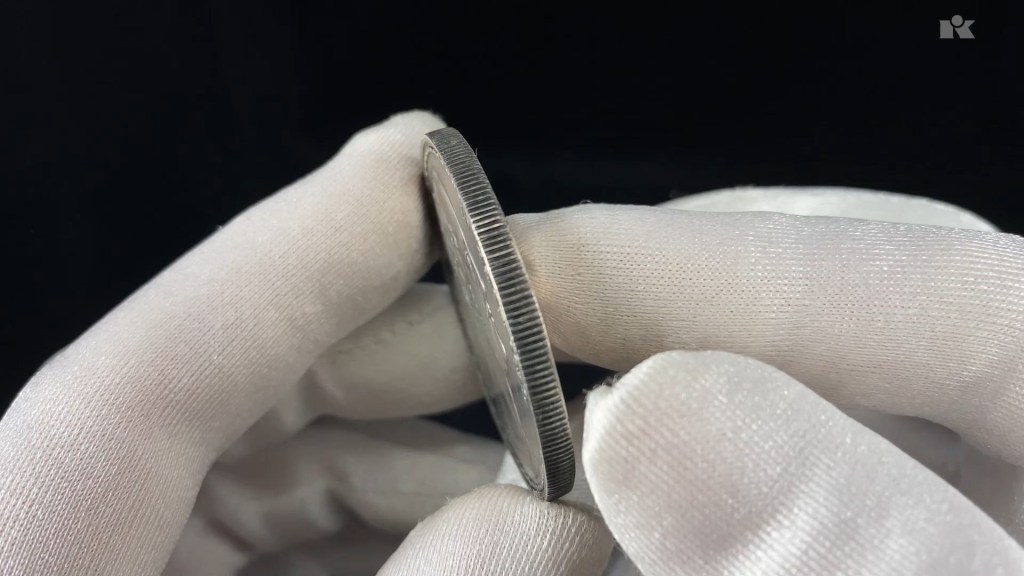
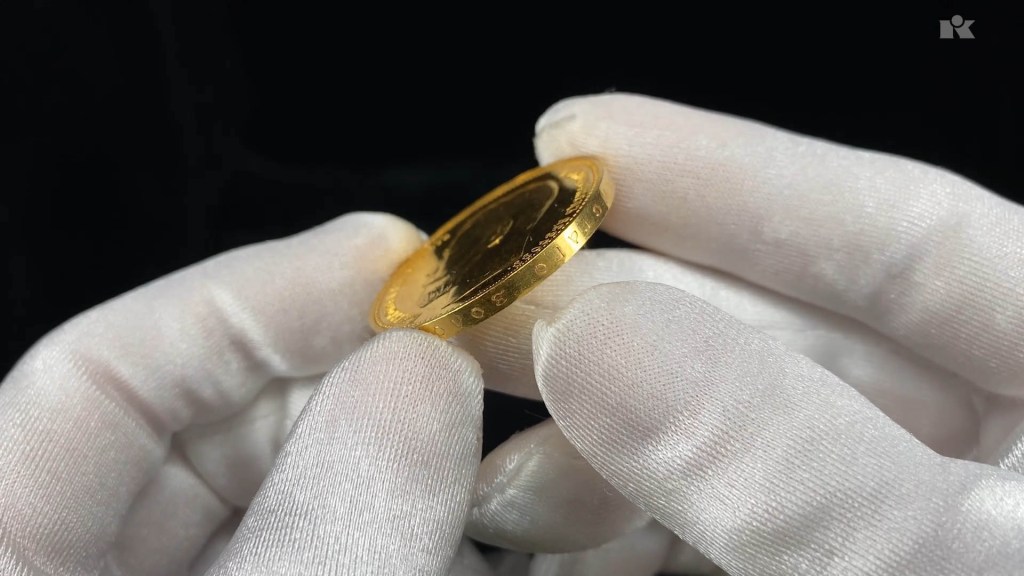
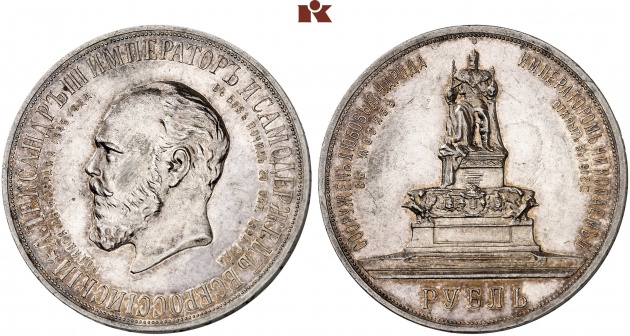
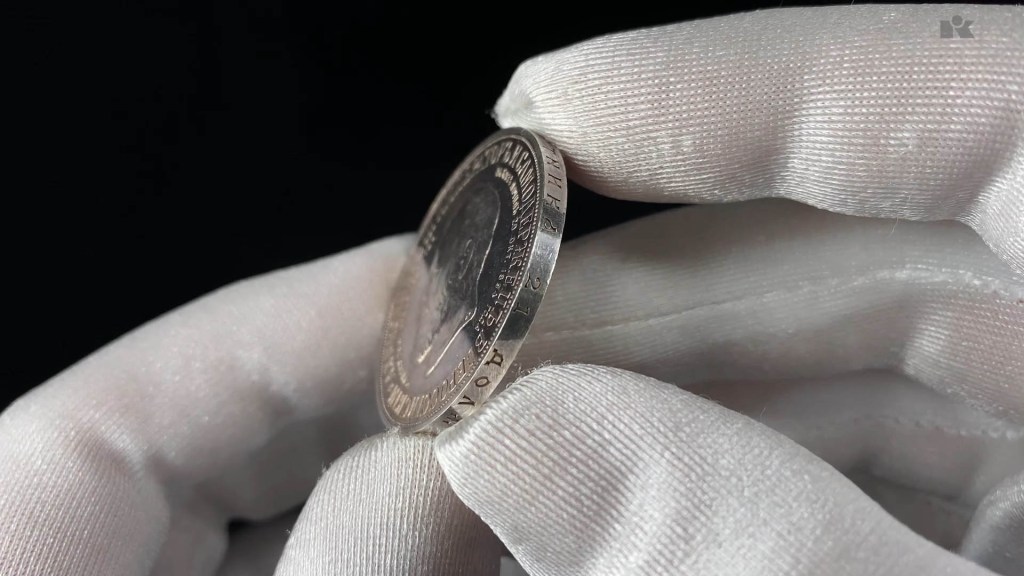
Subasta de Kunker en la World Money Fair (WMF) 2024 en Berlín el 1 de febrero pasado; voy a centrarme en moneda rusa. Todos los enlaces disponen de vídeo para apreciar mejor las moneditas.
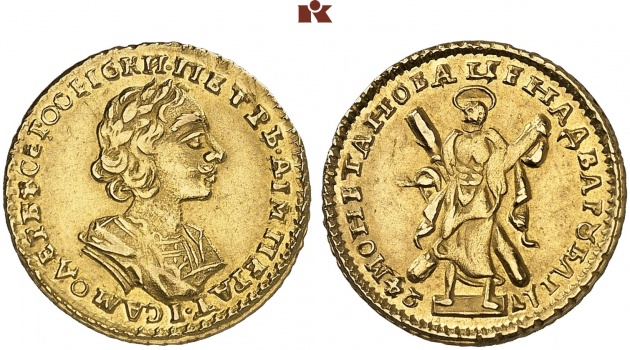
Петр I Великий, 1682-1725. 2 Рубля 1724 года, Москва, Красный монетный двор. 4.07 г. Изображение р. с лавровым венком на груди и накинутой мантией// Святой Андрей с нимбом стоит В. В., держа крест позади себя. Биткин 163 (Р); Дьяков 1; Фб. 91.
золото. Большая редкость. Очень привлекательный образец с тонким тисненым блеском, изысканный
Estimated price: 25,000.00 € Hammer-price / sale price: 70,000.00 €
Pedro I El Grande, 1682-1725. 2 Rublos 1724, Moscú, casa de la moneda Roja. 4.07 la Imagen de R. con una corona de laurel en el pecho y un manto cubierto// San Andrés con un Halo se encuentra V. V., sosteniendo la Cruz detrás de él. Bitkin 163( R); Diakov 1; FB. 91.
oro. Muy raro. Patrón muy atractivo con brillo fino en relieve, exquisito
Estimated price: 25,000.00 € Hammer-price / sale price: 70,000.00 €
Иван III. 1740-1741. Рубль 1741 г., Санкт-Петербург. 24,45 г. Кираса р. с лавровым венком, плащом и орденами Святого Андрея//Коронованный двуглавый орел со скипетром и имперским яблоком в лапах, на груди Георгиевский знак, вокруг цепь ордена Святого Андрея, вверху корона. Биткин 32 (Р1); Дав. 1676; Дьяков 12.
Очень редко, особенно в этом заповеднике. Красивая патина, восхитительная Иван III был сыном герцога Антона Ульриха Брауншвейг-Вольфенбюттельского и его супруги Анны Леопольдовны. Это была племянница царицы Анны, а именно дочь ее сестры Екатерины. Царица Анна назвала Ивана своим преемником. Таким образом, Иван стал царем России 17 октября 1740 года в возрасте всего 2 месяцев, но 25 ноября 1741 года был свергнут Елизаветой, дочерью Петра Великого. После этого Иван жил в заключении в крепости Шлиссельбург. 4 июля 1764 года, не прошло и 2 лет после восшествия на престол царицы Екатерины II. Иван был убит в Шлиссельбурге своими охранниками. Это произошло в результате недоразумения, распространяла Екатерина, которая, как полагают, стояла за этим событием. Говорят, что, получив известие о смерти Ивана, она воскликнула: «Божьи советы непостижимы».
Estimated price: 15,000.00 € Hammer-price / sale price: 14,000.00 €
Iván III. 1740-1741. Rublo 1741, San Petersburgo. 24,45 g. Cuadro de pecho R. con corona de laurel, manto envuelto y Orden de San Andrés / / Águila bicéfala coronada con cetro y manzana imperial en las garras, escudo de San Jorge en el pecho, alrededor de la cadena de la Orden de San Andrés, corona en la parte superior. Bitkin 32 (R1); Dav. 1676; Diakov 12.
Muy raro, especialmente en esta conservación. Bonita pátina, excelente Iván III era hijo del duque Antón Ulrico de Brunswick-Wolfenbüttel y su esposa Ana Leopoldovna. Era sobrina de la zarina Anna, es decir, hija de su hermana Katharina. La zarina Ana había nombrado a Iván como su sucesor. Así, el 17 de octubre de 1740, a la edad de apenas 2 meses, Iván se convirtió en zar de Rusia, pero el 25 de noviembre de 1741 fue derrocado por Isabel, la hija de Pedro el Grande. Después de eso, Iván vivió como prisionero en la fortaleza de Schlüsselburg. El 4 de julio de 1764, no exactamente 2 años después de la ascensión al trono de la zarina Catalina II. Iván fue asesinado por sus guardias en Schlüsselburg. Esto sucedió como resultado de un malentendido, Katharina lo difundió, quien se cree que estuvo detrás de este evento. Cuando recibió la noticia de la muerte de Iván, se dice que exclamó: «Las conclusiones de Dios son insondables».
Estimated price: 15,000.00 € Hammer-price / sale price: 14,000.00 €
Elisabeth, 1741-1761. Ducado 1752, Moscú, Patio de Mint Roja. 3.40 g. Busto coronado r. / / San Andrés se yergue v. v. con una cruz, a los lados año número. Bitkin 39 (R2); Diakov 256 (R2); Fb. 111.
ORO. De gran rareza. Solo se acuñaron 9.398 ejemplares. Min. ondulado, ligeros rastros de procesamiento, muy hermoso
Estimated price: 15,000.00 € Hammer-price / sale price: 26,000.00 €
Елизавета, 1741-1761. Дукат 1752 года, Москва, Красный монетный двор. 3.40 г. Изображение на груди с короной р.//Святой Андрей Первозванный стоит в. В. с крестом, по бокам номер года. Биткин 39 (Р2); Дьяков 256 (Р2); Фб. 111.
золото. Большая редкость. Всего 9 398 экземпляров с тиснением. минимум гофрирования, легки
Estimated price: 15,000.00 € Hammer-price / sale price: 26,000.00 €
Павел I. 1796-1801. 5 Рублей 1800, Спб. 6.20 г. Четыре увенчанные вензеля, поставленные крестом, в центре римская цифра «I», по углам – цифра 5//Украшенная табличка с четырьмя строками шрифта, внизу знаки монетного двора и мастера монетного двора. Fb. 144; Шл. 3.1; Биткин 6 (R1).
золото. След ссадины на ребре, винц. Царапины, легко очищаются, почти восхитительны Копия с аукциона Sincona AG 50, Цюрих, 2018, № 1175 и аукциона Фрица Рудольфа Кюнкера 349, Оснабрюк, 2021, № 4176.
По словам Петрова: 100 руб.
Estimated price: 20,000.00 € Hammer-price / sale price: 22,000.00 €
Pablo I. 1796-1801. 5 Rublos 1800, San Petersburgo. 6.20 g. Cuatro monogramas coronados colocados en la cruz, en el medio el número romano «I», en los ángulos el número de valor 5 / / Panel decorado con cuatro líneas de escritura, en la parte inferior signos para mint y mint master. Dy. 144; Schl. 3.1; Bitkin 6 (R1).
ORO. RR Kl. Hay una marca de desgaste en el borde, Tiny. Arañazos, fáciles de limpiar, casi exquisitos. Una copia de la subasta Sincona AG 50, Zurich 2018, Nº 1175 y la subasta Fritz Rudolf Künker 349, Osnabrück 2021, Nº 4176.
Según Petrov: 100 rublos.
Estimated price: 20,000.00 € Hammer-price / sale price: 22,000.00 €
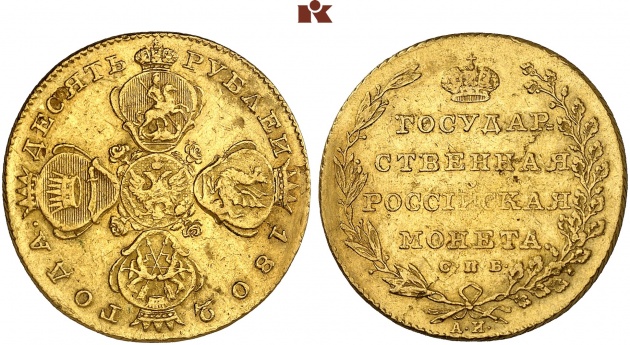
Alejandro I. 1801-1825. 10 Rublos 1802, San Petersburgo. 12.17 g. Cuatro escudos coronados colocados en la cruz, escudo de águila en el medio//Cuatro líneas de escritura, incluyendo información de mint, corona en la parte superior, laurel y rama de roble a los lados. Bitkin 2 (R1); Fb. 146; Schl. 7.1.
ORO. RR Kl. Schrötlingsfehler, muy agradable
Estimated price: 10,000.00 € Hammer-price / sale price: 34,000.00 €
Александр I. 1801-1825. 10 Рублей 1802 года, Санкт-Петербург. 12.17 г. Четыре коронованных герба помещены в крест, в центре щит с орлом //Четыре строки шрифта, внизу указатель монетного двора, вверху корона, по бокам лавровая и дубовая ветви. Биткин 2 (Р1); Фб. 146; Шл. 7.1.
золото. Ошибка Шретлинга, очень красивая
Estimated price: 10,000.00 € Hammer-price / sale price: 34,000.00 €
Alejandro I. 1801-1825. Rublo 1801, San Petersburgo (casa de moneda del banco). Muestra. 20,22 g. Busto R. / / Águila bicéfala coronada con cetro y manzana imperial en las garras, en el pecho escudo de San Jorge, alrededor de la cadena de la Orden de San Andrés, corona en la parte superior. Bitkin H 646 (R2).
De gran rareza. Un ejemplar magnífico. Brillo en relieve fino, excelente brillo de sellos
Estimated price: 100,000.00 € Hammer-price / sale price: 150,000.00 €
Александр I. 1801-1825. Рубль 1801 г., Санкт-Петербург (Банковский монетный двор). Образец. 20,22 г. Бюст р.// Коронованный двуглавый орел со скипетром и имперским яблоком в лапах, на груди Георгиевский знак, вокруг цепь ордена Святого Андрея Первозванного, вверху корона. Биткин Н 646 (Р2).
Большая редкость. Великолепный образец. Тонкий тисненый глянец, изысканный тисненый глянец
Estimated price: 100,000.00 € Hammer-price / sale price: 150,000.00 €
Николай I 1825-1855. 1 1/2 рубля (10 злотых) 1836 г. (чеканился в 1836/1837 гг.), Санкт-Петербург. Семейный рубль. 30,97 г. Бюст р. на вырезе гербовая печать//Медальон с изображением бюста его супруги Александры Федоровны (Фридерика Луиза Шарлотта Вильгельмина, дочь Фридриха Вильгельма III Прусского) р. с диадемой, вокруг бюстов их семерых детей Александра (впоследствии царя Александра II), Марии, Александры, Николая, Михаила, Константин и Ольга. Биткин 888 (Р2); Дав. 286 Б.
Отчеканено всего 150 экземпляров. Тонкая патина, мин. протертый, изысканно-тисненый блеск Экземпляр из вестфальской частной коллекции «Многочисленные портреты на монетах и медалях».
Прямым образцом русского семейного рубля являются «исторические талеры» баварского короля Людвига I (1825-1848), отчеканенные в 1828 году. Считается, что экземпляры этой памятной монеты были переданы в дар русскому царю Николаю I (1825-1855), что побудило министра финансов Канкрина предложить правителю заказать аналогичную чеканку с изображением правящей семьи. На лицевой стороне фамильного герба справа изображен бюст царя. На реверсе изображен медальон царицы Александры Федоровны (Фридерики Луизы Шарлотты Вильгельмины, дочери Фридриха Вильгельма III Прусского), окруженный бюстами ее семерых детей. Строго говоря, термин «семейный рубль» на самом деле не совсем корректен, поскольку номинал на самом деле должен составлять 1 ½ рубля или 10 злотых. Кроме того, все экземпляры нумизматически являются «образцами памятной монеты», поскольку регулярный выпуск в больших количествах никогда не проводился. Резчиком штампов был нанят талантливый художник Павел Уткин.
Первый проект, датированный еще 1835 годом (Биткин 885; Дав. 286), по своему оформлению все еще очень близок к баварскому образцу. Предположительно, изображение царицы, однако, слишком сильно напомнило правителю его тещу, из-за чего проект в конечном итоге был отклонен. Второй – теперь датированный 1836 годом – рисунок (Биткин 886; дав. 286 А) больше не имеет медальонных кругов вокруг головок детей, а на оборотной стороне имя резчика штампов удалено. Однако первая марка этой чеканки разошлась уже после 50 экземпляров, поэтому пришлось изготовить новую. Третий вариант, представленный в настоящем экземпляре (Биткин 888; дав. 286 Б), сокращает имя резчика штампов на лицевой стороне до инициалов П.У., написанных кириллицей. Всего было отчеканено всего 150 экземпляров этого варианта.
Семейный рубль не только является ярким событием в истории российского монетного двора и украшением любой российской коллекции благодаря своей исключительной редкости, но и является единственной современной монетой царя, на которой изображен его портрет.
Estimated price: 25,000.00 € Hammer-price / sale price: 75,000.00 €
Nicolás I. 1825-1855. 1 1/2 Rublos (10 zlotych) 1836 (acuñado 1836/1837), San Petersburgo. Rublo familiar. 30,97 g. Busto R. en la sección del cuello la firma del grabador / / medallón, en él el busto de su esposa Alexandra Feodorovna (Friederike Luise Charlotte Wilhelmine, hija de Friedrich Wilhelm III de Prusia) R. con diadema, alrededor de los bustos de sus siete hijos Alexander (más tarde zar Alexander II), Maria, Alexandra, Nikolai, Michael, Konstantin y Olga. Bitkin 888 (R2); Dav. 286 B.
RR acuñó solo 150 ejemplares. Pátina fina, mín. frotado, excelentemente-brillo de acuñación Una copia de la colección privada de Westfalia «Múltiples retratos en monedas y medallas».
El modelo directo del rublo familiar ruso es el «valle de la historia» del rey bávaro Luis I (1825-1848), que fue acuñado en 1828. Se dice que las copias de esta moneda conmemorativa fueron un regalo para el zar ruso Nicolás I (1825-1855), lo que llevó al Ministro de Finanzas Kankrin a proponer al gobernante que encargara una moneda similar a la familia gobernante. El anverso del rublo familiar representa el busto del zar a la derecha. En el reverso hay un medallón de la zarina Alexandra Feodorovna (Friederike Luise Charlotte Wilhelmine, hija de Friedrich Wilhelm III de Prusia), rodeado por los bustos de sus siete hijos. Estrictamente hablando, el término rublo familiar en realidad no es del todo correcto, ya que el valor impreso debería ser de 1 ½ rublos o 10 zlotys. Además, numismáticamente hablando, todas las copias son «muestras de una moneda conmemorativa», ya que nunca se ha realizado una emisión regular en grandes cantidades. El talentoso artista Pavel Utkin fue comisionado como grabador.
El primer borrador – todavía fechado en el año 1835 – (Bitkin 885; Dav. 286) sigue estando muy cerca del modelo bávaro en su diseño. Supuestamente, sin embargo, se dice que la imagen de la zarina le recordaba demasiado al gobernante a su suegra, razón por la cual el diseño finalmente fue rechazado. El segundo borrador, ahora fechado en el año 1836 (Bitkin 886; Dav. 286 A) ya no tiene círculos en forma de medallón alrededor de las cabezas de los niños y se ha eliminado el nombre del grabador en la parte posterior. Sin embargo, se dice que la primera acuñación / cuño de esta moneda saltó después de solo 50 copias, por lo que se tuvo que hacer uno nuevo. El tercer borrador-presente en esta copia – (Bitkin 888; Dav. 286 B) abrevia el nombre de la troqueladora en el anverso excepto por las iniciales P. U. en escritura cirílica. En total, solo se acuñaron 150 copias de esta variante.
El rublo familiar no solo es un punto culminante de la historia de la moneda rusa debido a su rareza excepcional y lo más destacado de todas las colecciones de Rusia, sino también la única moneda contemporánea del zar que muestra su retrato.
Estimated price: 25,000.00 € Hammer-price / sale price: 75,000.00 €
Nicolás II. 1894-1917. 37 1/2 Rublos (100 francos) 1902, San Petersburgo. 32,24 g. Cabeza L. / / Coronada de doble vena con cetro y globo imperial en las garras, en el pecho escudo de San Jorge, alrededor de la cadena de la Orden de San Andrés, en las alas cuatro escudos heráldicos más cada uno, corona en la parte superior. Con letras marginales empotradas. Bitkin 315 (R2); Fb. 170; Schl. 187.
ORO. De gran rareza. Solo se acuñaron 225 ejemplares. Primera emisión, casi estampada brillante Una copia de la Colección Gaston DiBello, Parte I, Auction Stack’s, Nueva York, octubre de 1969, núm. 732; the auction Stacks, Subasta Pública, Nueva York, junio de 1973, núm. 212 y la colección del famoso numismático noruego Bernhard F. Brekke (1914-2011).
Nicolás II Alexandrovich inicialmente continuó con el régimen autocrático de su padre Alejandro III, hasta que la revolución que estalló durante la Guerra Ruso-Japonesa en 1905 lo obligó a realizar reformas drásticas. Otorgó a su pueblo derechos fundamentales esenciales, sufragio universal y estableció una representación legislativa del pueblo (Duma). En términos de política exterior, aspiraba a preservar la influencia rusa en los Balcanes, no dudó antes de entrar en la Primera Guerra Mundial y asumió personalmente el mando supremo. Tras el estallido de la revolución, el último zar ruso abdicó el 15 de marzo de 1917, presionado por la generalidad. Fue asesinado junto con su esposa Alejandra de Hesse, la heredera del trono y sus cuatro hijas en el exilio siberiano en julio de 1918.
La pieza de 37 1/2 rublo que se subastó aquí, acuñada en solo 225 copias, es una de las monedas rusas más famosas y buscadas. La moneda se emite con un peso bruto de 32,258 gy un peso fino de 29,02 g según el estándar de la denominada «Unión de Monedas Latinas». Esta unión monetaria con el franco francés como base fue decidida por iniciativa de Napoleón III en 1865 por Francia, Bélgica, Italia y Suiza (adhesión de Grecia en 1868). Las monedas Kurant de esta moneda doble, la pieza dorada de 20 francos y la pieza plateada de 5 francos eran válidas en los 5 estados. El nominal más grande de la unión de monedas fue la pieza de 100 francos, que se acuñó en grandes cantidades solo en Francia. Nicolás II también hizo acuñar una moneda de oro tan representativa en 1902 a 100 francos o 37 1/2 rublos, que se distribuyó a altos dignatarios. Nos complace poder ofrecerle esta famosa rareza de la historia de las monedas rusas, que también documenta las conexiones de Rusia con la República Francesa.
Estimated price: 150,000.00 € Hammer-price / sale price: 160,000.00 €
Николай II 1894-1917. 37 1/2 рубля (100 франков) 1902 г., Санкт-Петербург. 32.24 г. Голова л.// Коронованный двуглавый орел со скипетром и имперским яблоком в лапах, на груди Георгиевский знак, вокруг цепь ордена Святого Андрея, на крыльях еще четыре гербовых щита, вверху корона. С углубленным шрифтом на полях. Биткин 315 (Р2); Фб. 170; шл. 187.
золото. Большая редкость. Отчеканено всего 225 экземпляров. Начальный штрих, почти штемпельный блеск Экземпляр из коллекции Гастона ДиБелло, часть I, Аукцион Stack’s, Нью-Йорк, октябрь 1969 г., № 732; аукцион Stacks, публичные торги, Нью-Йорк, июнь 1973 г., № 212 и коллекция известного норвежского нумизмата Бернхарда Ф. Брекке (1914-2011).
Николай II. Сначала Александр Александрович возглавлял самодержавный полк своего отца Александра III, пока революция, разразившаяся во время русско-японской войны в 1905 году, не вынудила его провести решительные реформы. Он предоставил своему народу основные основные права, всеобщее избирательное право и учредил законодательное народное представительство (Думу). Во внешней политике он стремился сохранить российское влияние на Балканах, не колеблясь перед вступлением в Первую мировую войну и лично принял на себя верховное командование. После начала революции последний русский царь отрекся от престола 15 марта 1917 года под давлением генералитета. Он был убит вместе со своей супругой Александрой Гессенской, наследницей престола и четырьмя дочерьми в июле 1918 года в сибирской ссылке.
Выставленная на аукцион монета номиналом 37 1/2 рубля, отчеканенная всего в 225 экземплярах, является одной из самых известных и востребованных российских монет. Монета номиналом 32,258 г грубой массы и 29,02 г мелкой массы выпущена в соответствии со стандартом так называемого «Латинского монетного союза». Этот валютный союз с французским франком в качестве основы был принят Францией, Бельгией, Италией и Швейцарией в 1865 году по инициативе Наполеона III (присоединение Греции в 1868 году). Монеты Куранта этой двойной валюты, золотая монета номиналом 20 франков и серебряная монета номиналом 5 франков, были действительны во всех 5 штатах. Самым крупным номиналом монетного союза была монета номиналом 100 франков, которая чеканилась в больших количествах только во Франции. Николай II также отчеканил в 1902 году такую престижную золотую монету номиналом 100 франков или 37 1/2 рубля, которая была роздана высокопоставленным лицам. Мы рады предложить вам этот знаменитый раритет российской монетной истории, в котором также задокументированы связи России с Французской Республикой.
Estimated price: 150,000.00 € Hammer-price / sale price: 160,000.00 €
As it’s biddr and not Sixbid, maybe something will come of it. But this shows, they are not on the collectors’ side, they get their money from the auction houses and also from fake auction houses like these. Whether it’s dishonesty, utter incompetence or likely a mixture of the two doesn’t really matter.
There are a lot more auction houses than there used to be and a lot of them are crap.
In this auction, there are some weird Greeks as well.
Only one and sole Probvs there is genuine! The rest are cheap,casted fakes! That’s awful! It is (or was…) trusted european auction house! I wrote about their «Probvs coins» on european forum.
If you buy bulk lots, you need to view them really at any of these auction houses, if you want to rule out the possibility of buying fakes – especially as you cannot reliably return them – although the best houses generally will let you. I have purchased fake coins in bulk lots from many of the most respected auction houses, in today’s market – it is just part of the game sadly, although it shouldn’t be like that !
¿Montones de monedas antiguas y/o rusas falsas?…¡No puede ser…y menos en una casa de subastas! 🙂
Hi all! I know discussions are already on Forvm Ancient Coins and r/AncientCoins, but there isn’t a thread here yet, so I’m posting one in case people aren’t active on the other sites
The new Katz auction has many suspected fake coins listed as genuine, including die matches to other coin in the same sale. None of these are marked as forgeries
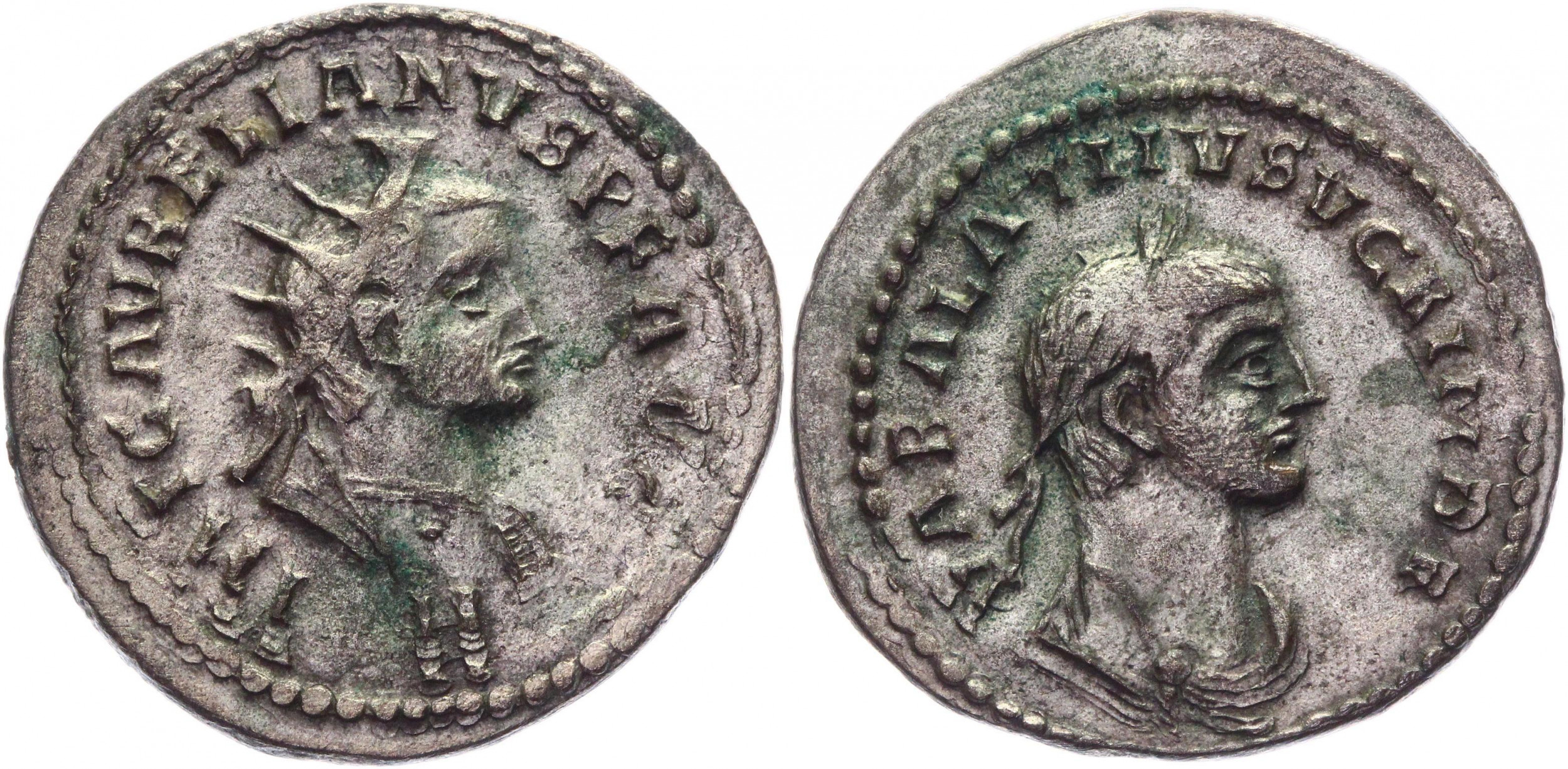
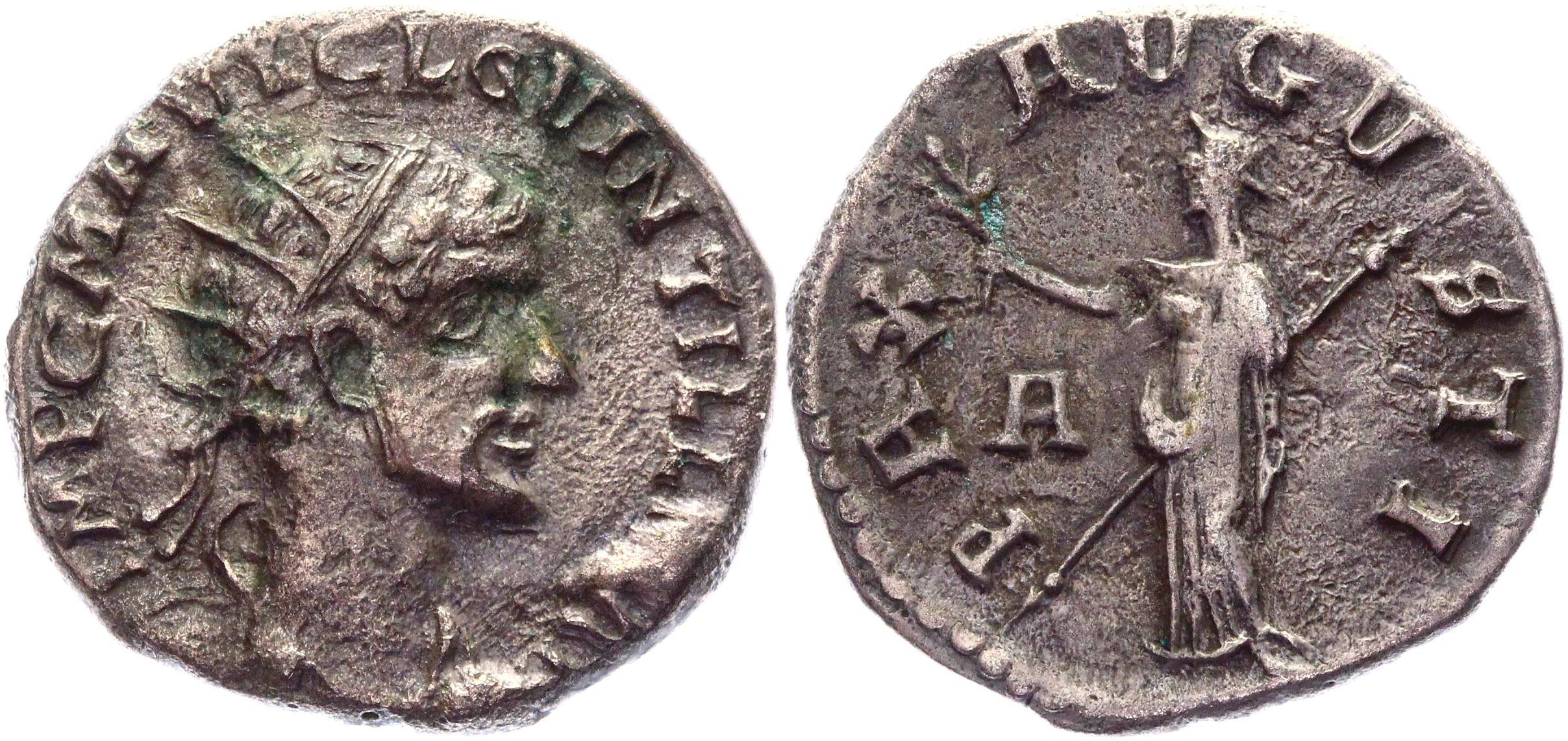
As an antoninianus collector, I went straight to their Imperial section to see what they had to offer. If I were looking to buy fakes, I would not be disappointed. Most of them have weird portrait styles – and even some common coins look like forgeries.
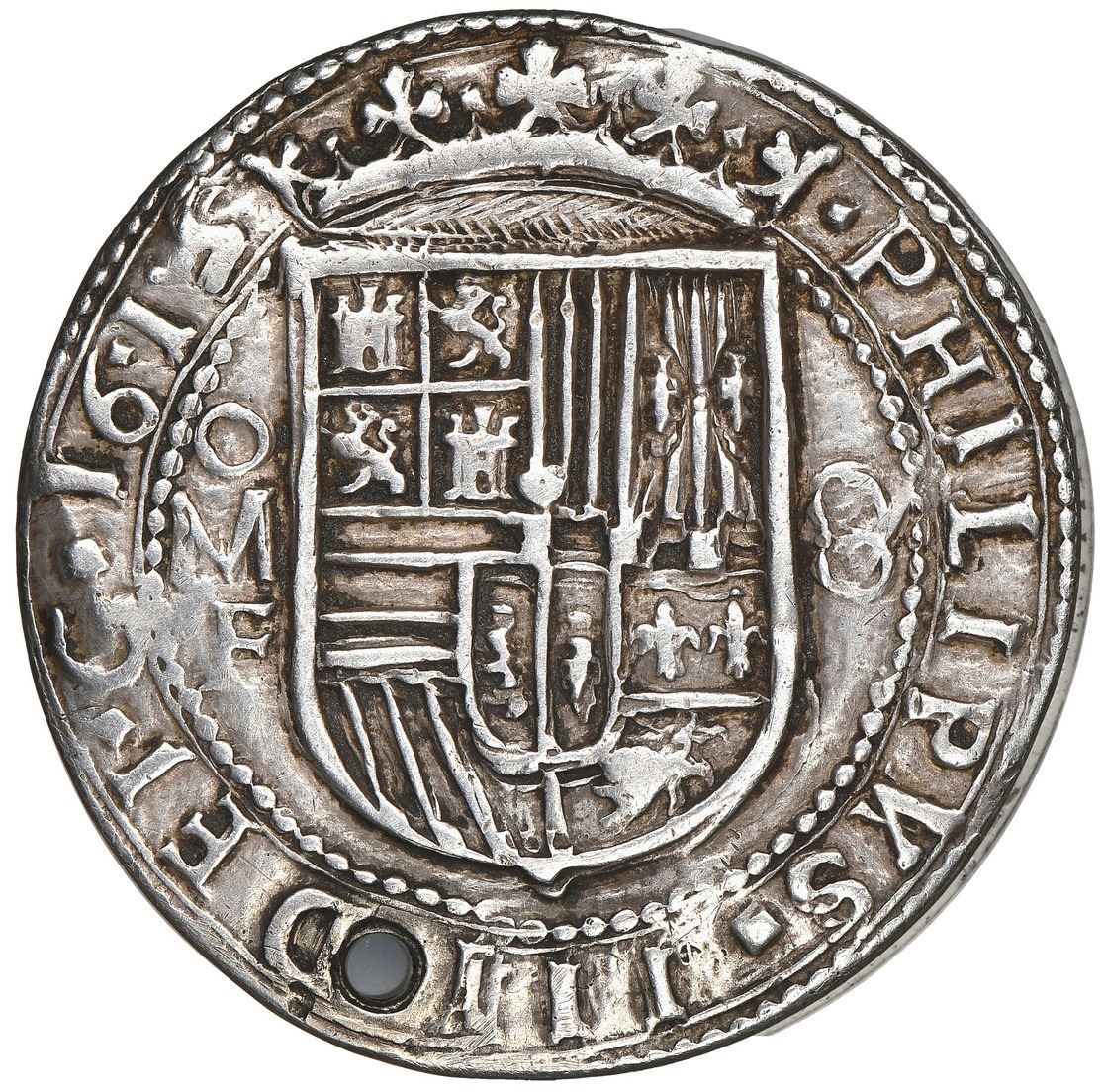
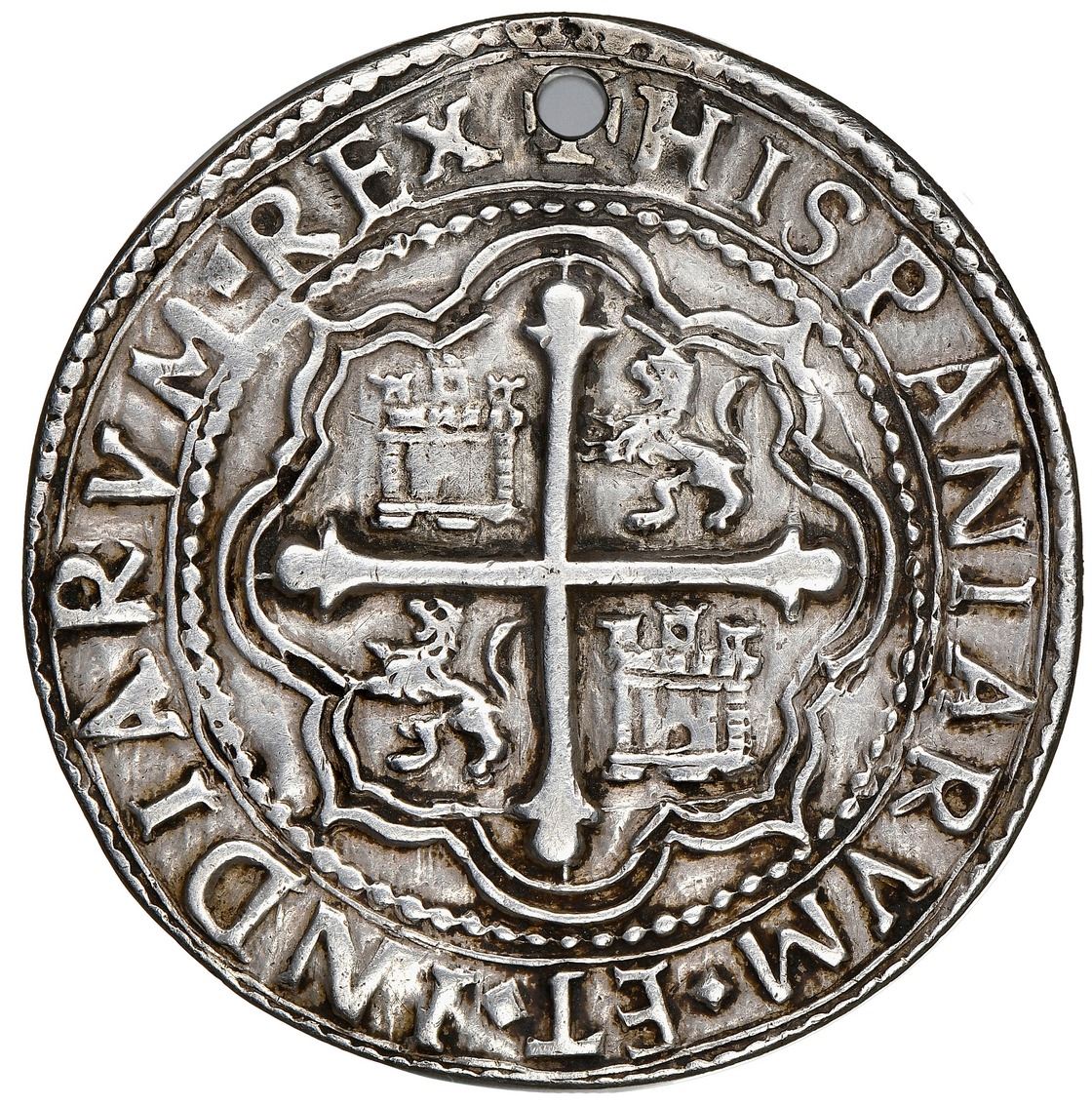
En definitiva, monedas viajando de subasta en subasta, ofrecidas en lotes, o no, para no poder ser devueltas y «comerte» alguna que otra fundida. Ni que decir tiene que no todas las casas de subastas son iguales, aunque ninguna se toma todas las debidas molestias con monedas baratas; criterios de rentabilidad se imponen, lógicamente. ¿Se toman todas las casas de subastas las debidas molestias con monedas caras en todas sus subastas? Pues dependerá; demasiados factores a considerar.
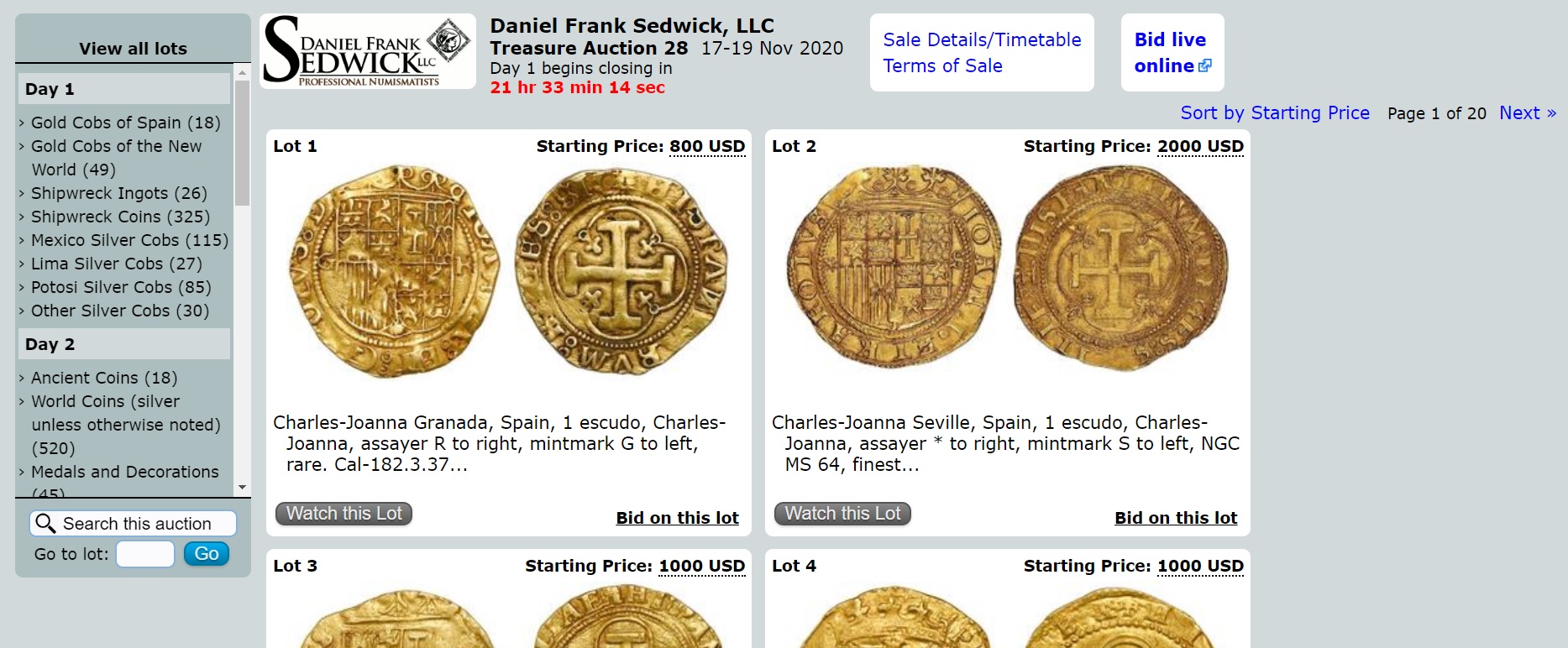
Noviembre es un mes intercalado entre octubre y diciembre…de paso, por el medio… por lo que voy a echar un vistazo a las subastas de Sedwick y Konros, USA y Rusia, a falta de nada mejor que hacer… numismáticamente hablando 🙂 Añadir que, por la cercanía de la Navidad, todos los años desde hace unos cuantos, siempre hay una gran concentración de subastas por estas fechas; mera política comercial.
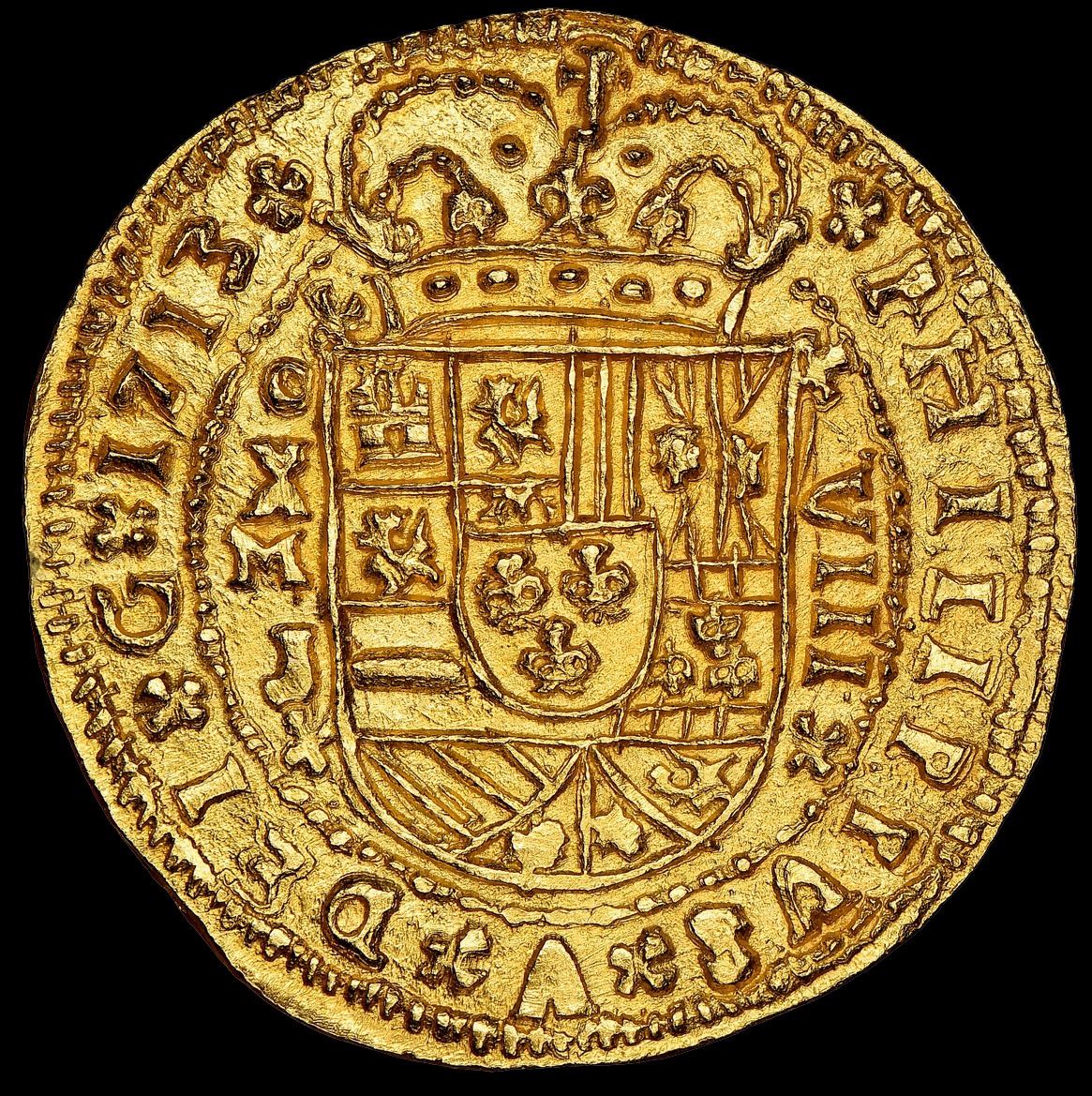
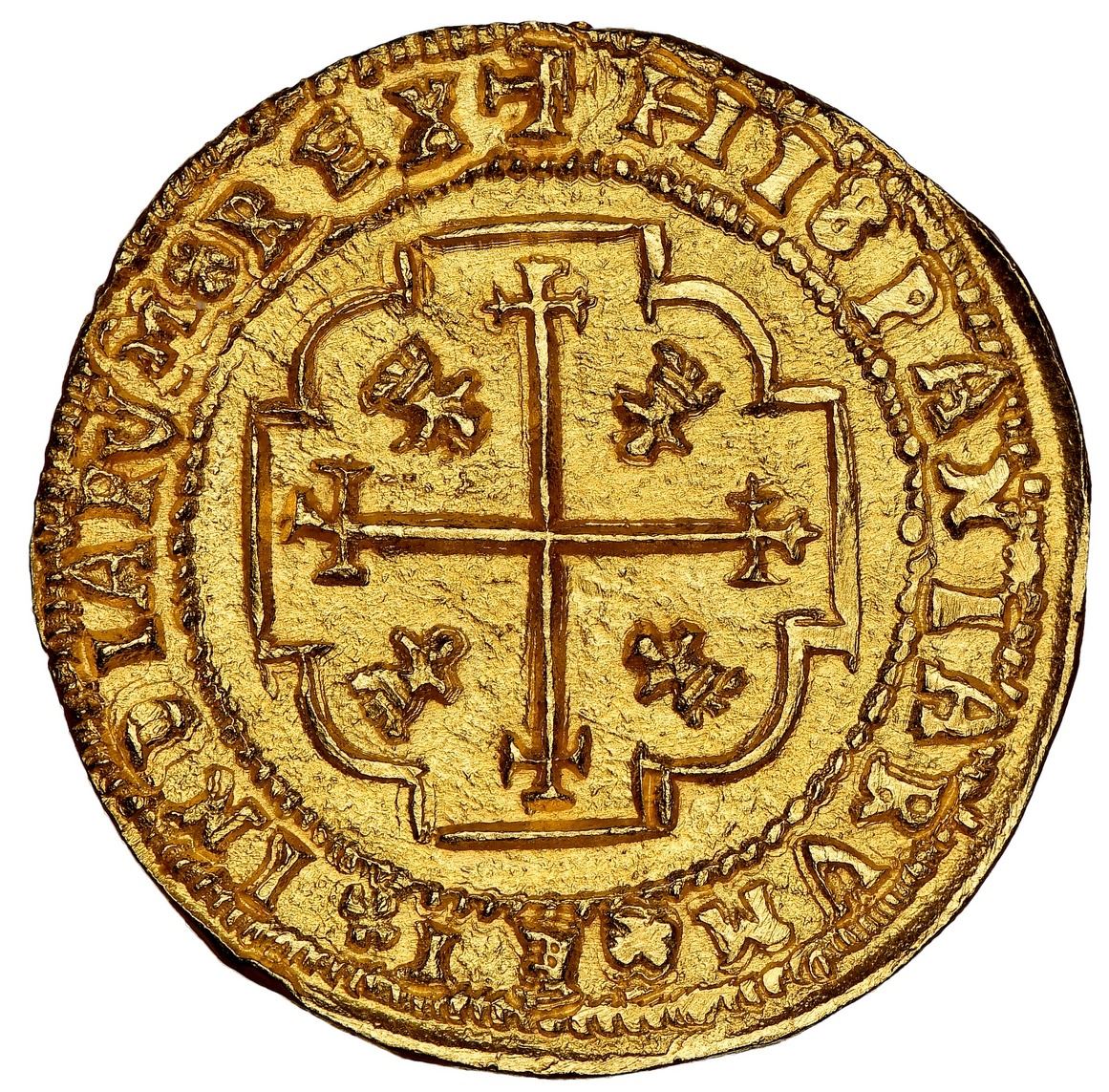
Mexico City, Mexico, cob 8 escudos Royal (galano), 1713J, extremely rare, NGC MS 66, finest and only example graded by NGC, ex-1715 Fleet (designated on special label). S-M30; Cal-2194; KM-R57.1. 27.03 grams. From the 1715 Fleet (Corrigan’s site), pictured on the cover of the November-December 1998 issue of Treasure Quest (a copy of which is included), with Fisher photo-certificate #42933, ex-Rudman. NGC #5909759-001.
Without question, the pinnacle of Spanish colonial coinage is the Mexican 8 escudos Royal (galano), a coin so large and beautiful and perfect as to be considered among the most desirable gold coins in the world. These 8 escudos Royals are quite rare, currently represented by just over 40 specimens across about a dozen dates within the 53-year span in which Mexico made gold cobs (1680-1732). There is no mistaking these special coins; while some regular cob issues come close (normally they are chunky and misshapen) and even some regular-planchet issues were struck with Royal dies (arguably trial or test strikes), only true Royals are perfectly round and evenly struck on planchets of uniform thickness, not to mention that they were generally struck with obverse and reverse in medallic alignment (the present specimen actually rotated 90 degrees, but still oriented with cross aligned). These are formal presentation pieces, to be sure, but the exact purpose of Royals remains unknown, the details behind their commission apparently missing in archival records beyond simple line-item figures labeled “galanos.” While some dates of 8 escudos Royals today are represented by multiple specimens (the most abundant being 1702, 1711 and 1714) others are extremely rare or even unique. The date 1713 is in fact among the rarest, with only two known, the specimen offered here being the finer of the two and the only one graded by NGC. In terms of condition and quality of strike, we feel it is also among the finest of all the known dates.
Like the majority of known 8 escudos Royals, this coin was recovered from the wreckage of the Spanish Plate Fleet of 1715, eleven ships sunk on the reefs off the east coast of Florida in a hurricane in July 1715. It was actually two fleets, the combined Tierra Firme Fleet coming from Cartagena loaded with Peruvian and Colombian treasures, and the New Spain Fleet coming from Mexico with freshly minted coins and Asian jewels from the Manila Galleon trade, united in Havana for the northeasterly trip back to Spain. What had been an annual system of shipping to and from the New World was delayed for many years by the War of Spanish Succession after Charles II’s death in 1700, causing the treasure to pile up in Mexico and Colombia. Spain desperately needed this wealth back home and could not wait for the Fleet to delay any longer when it finally left Havana in July, evidently right into the path of a hurricane. There were many survivors, who encamped on the shores opposite the wrecks, and Spain was able to organize some salvage, only to experience their other nemesis when pirates absconded with much of the recovered treasure. It is impossible to say how much of the 1715 Fleet treasure was saved in its time, or even how much was on board (as contraband could account for perhaps double the amount on the manifest); suffice to say the currently eight known wrecksites (some of which may be parts of the same ship) from present-day Melbourne down to Stuart (aptly called the “Treasure Coast”) have kept divers and beachcombers busy since at least the early 1960s, when Kip Wagner and the Real Eight Co. began organized salvage and instituted a State lease system that is still in place today. The first Royals, in fact, were found by Real Eight and offered at auction as early as 1964.
The coin we are offering here was recovered in August 1998, the find of a lifetime for diver Clyde Kuntz of the salvage vessel Bookmaker (captained by Greg Bounds), under a lease held by the Mel Fisher company , whose photo-certificate (“GRADE: One ++”) accompanies the coin. According to the November-December 1998 issue of Treasure Quest magazine, the cover of which features a photo of this coin, Clyde was working the “Corrigan’s” site , about five miles north of Vero Beach, when on the same day he found both this coin and another 8 escudos Royal dated 1698 (currently unique) that is now permanently housed in the State of Florida collection. The biggest single find of Royals came in the 2015 diving season, in which a staggering ten pieces (dated 1711, 1712 and 1715) were recovered under leases held by Queens Jewels, LLC (the current owner of the 1715-Fleet site leases). Subsequently, we appraised those coins for millions of dollars for Queens Jewels and the State of Florida, which gets a 20% cut of all finds.
The only other known 1713 example , reportedly found on the beach in the 1980s, made headlines in 1985 when it was sold at the January F.U.N. auction (Kurt Krueger) in Florida. The same coin sold in Switzerland in 1991 as part of the Emilio Ortiz collection. According to census information, that coin has not been graded, but we note that it was struck on a smaller flan (also slightly lower weight, at 26.84 grams) with slightly fewer peripheral details than the piece we offer here.
While any one of the Royals is a joy to behold, with full and well-struck details on big, round flans, in our 2015 appraisal we noted that there is actually a good bit of difference in quality (strike and condition) between all the known specimens, even within the same date, in addition to the differences in rarity. Anyone who has ever attempted striking a coin by hand knows that making coins like these requires great strength and dexterity. Hitting on dead center with full pressure on the entire canvas—without bouncing the hammer—is easier said than done. It is no exaggeration to say that a well-struck handmade coin demonstrates a level of skill far greater than what is required to make a beautiful milled coin. In fact, at least one researcher asserts instead that Mexican Royals must have been struck with a screw-press instead, using multiple pressings to achieve such completeness of detail. Also consider the dies: Each Royal die was specially prepared with as much care and aesthetics as the mint could muster, using the same punches available for regular issues but with greater attention paid to concatenation and placement, usually allowing for more ornamentation in the legends and around the inner details. The 1713 issue, for example, has strange X-shaped flowers that appear both as stops in the legend and as space-fillers in the four “corners” of the shield (an aspect of this date only). Presumably important and wealthy people (some would say the King himself) were depending on the mint to make these jewels as near to perfect as possible.
The twelve or thirteen known dates come in five basic types, most easily recognized by their styles of crosses:
Plain Cross: 1695 , 1698
Box-End Cross: 1702
Crosslet Cross: 1711, 1712, 1713
New Cross: 1714
New Cross with Bouquets: 1715, 1717, 1718 (if it exists), 1723, 1728/5, 1729
It should be noted that regular-issue 8 escudos also use these styles, in addition to two more types (used concurrently with others) that at present are NOT represented by any Royals:
Jeweled Cross: 1680-1699
Ornate-Tressure Cross: 1711-1712
While each date within the Crosslet-Cross type of Royals dated 1711-1713 is slightly different in execution, the basic design did not change and in fact marks the end of a rustic style replaced in 1714 with a vastly sharper and more polished design, which some believe can be traced to the implementation of press-type machinery. These post-1713 issues are also generally on smaller, thicker flans.
The 1713 we offer here—arguably finer than any of the known 1711’s and 1712’s and easily superior to the other known 1713—therefore represents the final perfection of the rustic style of the Crosslet-Cross type. Of course the complete lack of wear is a factor, but there is more to it than that: This coin is just SO WELL STRUCK that it glistens from every angle, its color changing from yellow to gold as it turns in the light, the exceptionally deep and skillful strike making sharp peaks out of every design element, with near-perfect centering (especially the obverse) and no doubling or weakness anywhere, all on a huge and essentially flawless flan that extends beyond the outer border of dots. This is best appreciated in hand, or at least in video, where movement reveals the flash of luster that so distinguishes this coin. Just as it has been up till now (in the Isaac Rudman numismatic cabinet), such a perfect specimen will be at home in any of the best coin collections currently being formed around the world, whether focused on colonials, U.S., world or even shipwreck. Mexican 8 escudos as a type are so rare that we have never offered one in our auctions before, and we are honored that our first is indeed one of the most beautiful coins we have ever offered. It will be hard to match this rarity and perfection for a long time.
Updated Census of Known Mexican 8 Escudos Royals by Date
Date King Assayer Quantity known
1695 Charles II L 1
1698 Charles II L 1
1702 Philip V J 7
1711 Philip V J 8
1712 Philip V J 4
1713 Philip V J 2
1714 Philip V J 9
1715 Philip V J 5
1717 Philip V J 1
1718 Philip V J 0
1723 Philip V J 1
1728/5 Phi.V/Louis I D 1
1729 Philip V R 1
_________________________
FOOTNOTES:
– As the table at the end of this article shows, only twelve dates are confirmed, with one more mentioned in references.
– Mel Fisher had worked with Real Eight from 1963 to 1972 and then moved to Key West to pursue salvage on the 1622 Fleet (Atocha and Santa Margarita). Real Eight maintained the 1715-Fleet leases until abandoning them in 1977. Mel Fisher resumed salvage on the 1715 Fleet in 1979. In 2010, Mel Fisher’s family sold the leases to Queens Jewels LLC, which manages salvage there today.
– The wrecksites of the 1715 Fleet are referred to by nicknames as opposed to the actual names of the ships themselves, because in most cases it is uncertain where each of the ships sank. “Corrigan’s” is named after 1950s beachcomber Hugh Corrigan, whose house fronted that stretch of beach.
– Amazingly, this other 1713 was struck from different dies from the present coin. In fact, most if not all of the non-unique dates exhibit multiple dies. Our theory is that the amount of striking pressure required to properly make these big coins with full and bold details caused the dies to break after only a few strikes, and probably there were lots of failed attempts that were just re-melted. While it seems like a waste of resources to make fresh dies to net just a few coins (or less!), consider that these were special issues commissioned by or for wealthy dignitaries who could afford the extra expense and didn’t need lots of coins.
– The single-known specimen of the date 1695, originally sold in the Ubilla-Echevez auction by Christensen in 1967, set a record in 2009 for the most ever paid for a Spanish American gold coin at close to $600,000.
The “bouquets” are floral-bouquet ornaments in the dimples of the tressures and appear only on Royals. They are not the same as the “daggers” in the same positions on the New Cross issues of 1714 and 1715.
– Researcher Philip Flemming points out that the Plain Cross was “aesthetically a better choice” for Royals than the Jeweled Cross, but why the Ornate-Tressure Cross was not used on Royals is a mystery (December 2016 issue of the U.S. Mexican Numismatic Association’s Journal).
– This table is adapted from Kent Ponterio’s preface to Ponterio and Associates’ Auction #108 on April 7-8, 2000. Kent listed only publicly known examples, with detailed information of their appearances. Our only updates to Kent’s work are the addition of ten 8 escudos Royals found in 2015 (seven 1711s, two 1712s and one 1715) and a correction to the 1728 (now recognized as 1728/5 and PHILIPPVS/LVDOVICVS).
– Spanish references by Calicó (Numismática española [2020] and La Onza [2004]) and Tauler (Oro Macuquino [2011]) do list the date 1718, but without photos or any other information. The whereabouts of any specimen(s) is unknown to us, so for now we treat it as quantity 0.
Y muchas moneditas más, además de objetos de naufragio, joyas…Curiosa subasta. ¡Os invito a dar una vuelta y disfrutarla! Habrá que estar atentos a los precios de adjudicación.
Más asequible – menos exclusiva, además de muchas otras diferencias y/o características, es la subasta de noviembre en sala de Konros
Adjudicado en 155.000 rublos + comisión (+- 1.900 €)
Рубль 1723 года «В горностаевой мантии»
В 1723 году портрет на рублевых монетах меняется, причем дважды. Первый вариант — у нумизматов он получил прозвище «тигровик» – примечателен тем, что на нем латы царя прикрыты горностаевой мантией, а на груди — знаки ордена Св. Андрея Первозванного. В обрезе рукава вновь появляется знак ОК. Выделяют четыре типа лицевой стороны по наличию и размеру андреевского креста на груди.
Разновидности оборотной стороны различаются расположением букв легенды против i.
Гуртовая надпись – «Российский рубль Московского двора», по всей видимости, такое обозначение продукции московского Кадашевского двора связано с ожидаемым началом работы нового монетного двора в Санкт-Петербурге.
Легенда лицевой стороны – «Петр А (Алексеевич) Император и Самодержец Всероссийский», оборотной – «Монета новая цена рубль» и дата арабскими цифрами. Проба — 729, вес 28, 44 грамма.
Adjudicado en 160.000 rublos + comisión (+- 1.950 €)
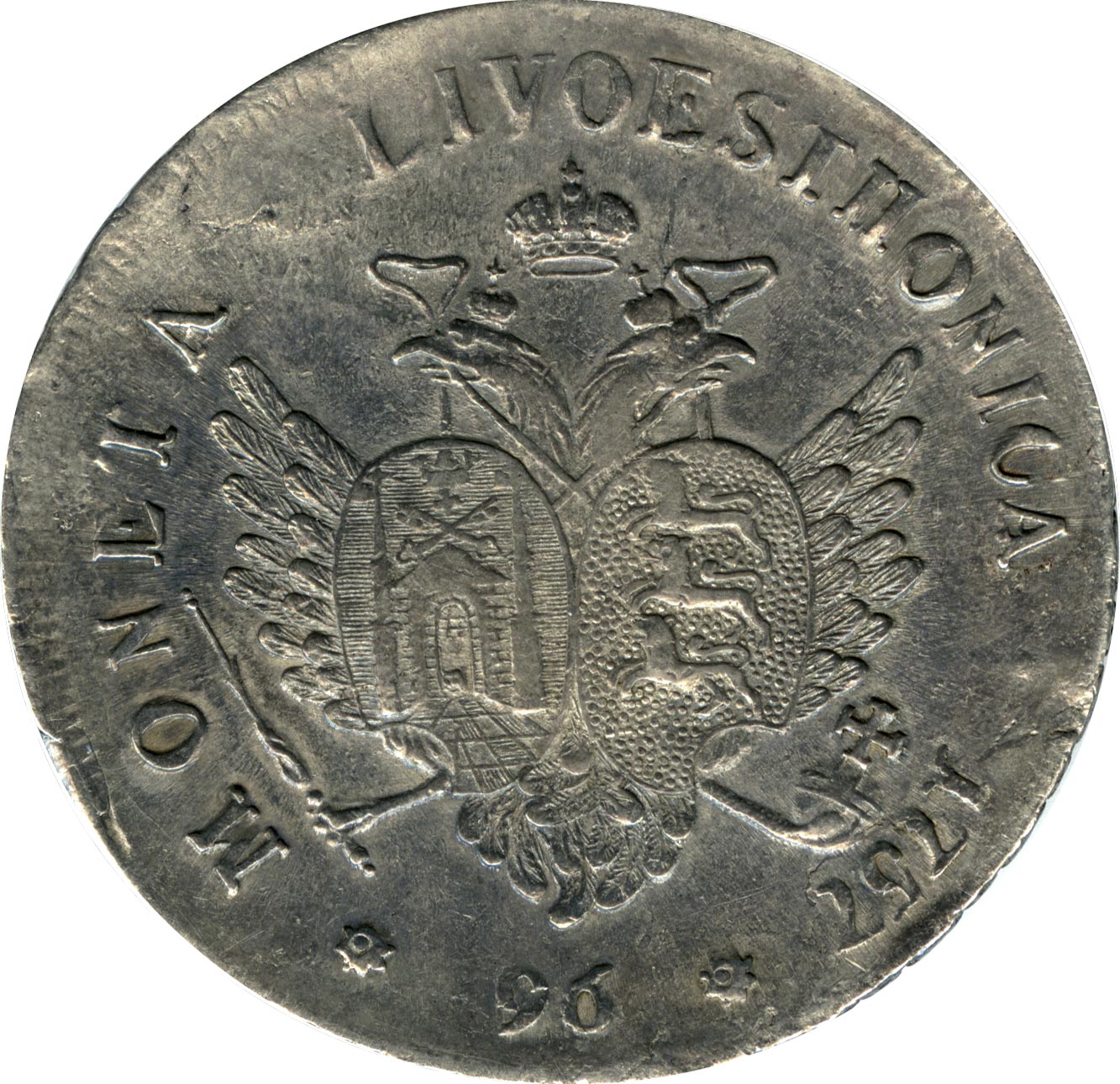
96 копеек «Ливонез»
Следующий номинал является очень непривычным для российской системы денежного обращения, поскольку ориентирован не на десятеричную, талерную. Внешнеполитические успехи елизаветинского времени оставили свой след в двух региональных выпусках монет. Первый — это монеты для прибалтийских провинций Ливонии и Эстляндии.
Необычный номинал свидетельствует о попытке привязать русскую денежную систему к талерной, основанной на 12-кратном счете и привычной для населения провинций. На оборотных сторонах монет 96, 48 и 24 копейки в клювах орла на лентах подвешены гербы городов Риги и Ревеля (с 1917 года — Таллин).
Чеканились в Москве на Красном дворе петербургскими штемпелями работы Б. Скотта.
Лицевая сторона — портрет императрицы, оборотная — российский двуглавый орел с гербами Риги и Ревеля и надпись MONETA LIVOESTHONICA, цифра 96 и дата. Проба — 750, нормативный вес — 26,38 грамма, гурт — узор.
Por aquí os dejo los enlaces de las dos (2) últimas subastas en sala anteriores, para que comparéis
INDIVIDUAL ISSUES
3 RUBLOS 1993 The Centenary of the Russo-French Alliance
3 RUBLOS 1994 The 100th Anniversary of the Trans-Siberian Railway
3 RUBLOS 1997 First Anniversary of Russia/Belarus Commonwealth
3 RUBLOS 1997 Reconciliation and Concord
3 RUBLOS 1998 The Year of Human Rights in the Russian Federation
3 RUBLOS 1999 275th Anniversary of the First Russian University
3 RUBLOS 1999 275th Anniversary of the Russian Academy of Sciences
3 RUBLOS 1999 50th Anniversary of the Establishing Diplomatic Relations with the PRC (People’s Republic of China)
3 RUBLOS 2000 World Ice Hockey Championship (St. Petersburg, April 29-May 14, 2000)
3 RUBLOS 2000 Europe Football Championship of 2000
3 RUBLOS 2000 The XXVIIth Summer Olympic Games. Sydney 2000
3 RUBLOS 2000 The 55th Anniversary of the Victory in the Great Patriotic War 1941-1945
3 RUBLOS 2000 The 140th Anniversary of the Foundation of the State Bank of Russia
3 RUBLOS 2001 The 300th Anniversary of the Military Education in Russia. The Navigation School
3 RUBLOS 2001 The 225th Anniversary of the Bolshoi Theater
3 RUBLOS 2001 The 40th Anniversary of the space flight of Yu. A. Gagarin
3 RUBLOS 2001 The Savings-Affairs in Russia the building of the Educative House (the first Moscow savings-bank)
3 RUBLOS 2001 The Savings-Affairs in Russia he dam Dnieproges (the hydro-electric power station on the Dniepr River)
3 RUBLOS 2001 The Savings-Affairs in Russia the complex of premises of the Savings-Bank of the Russian Federation in Moscow,
3 RUBLOS 2001 The 10th Anniversary of the Commonwealth of Independent States
3 RUBLOS 2002 The XIXth Winter Olympic Games 2002, Salt Lake City, USA
3 RUBLOS 2002 150th Anniversary of the New Hermitage
3 RUBLOS 2002 Football World’s Cup 2002
3 RUBLOS 2002 Outstanding Russian Military Leaders and Sea Captains (P.S.Nakhimov)
3 RUBLOS 2003 World Biathlon Championship – 2003, Khanty-Mansiysk, Russia
3 RUBLOS 2005 250th Anniversary of Founding the Lomonosov Moscow State University
3 RUBLOS 2005 The 60th Anniversary of the Victory in the Great Patriotic War of 1941-1945
3 RUBLOS 2006 The Centenary of Parliamentarianism in Russia
3 RUBLOS 2006 The Savings-Affairs in Russia.
3 RUBLOS 2007 The International Arctic Year
3 RUBLOS 2007 The 250th Anniversary of the Academy of Arts
3 RUBLOS 2007 The 50th Anniversary of Launching the First Artificial Earth Satellite
3 RUBLOS 2008 The 250th Anniversary of the Moscow Medicine Academy named for I.M. Sechenov
3 RUBLOS 2009 The 50th Anniversary of the Beginning the Moon Research by Space Equipment
3 RUBLOS 2010 The 65th Anniversary of the Victory in the Great Patriotic war of 1941-1945 woman laying shells
3 RUBLOS 2010 The 65th Anniversary of the Victory in the Great Patriotic war of 1941-1945 three Soviet soldiers on the tank turret
3 RUBLOS 2010 The 65th Anniversary of the Victory in the Great Patriotic war of 1941-1945 three Soviet soldiers on the tank turret a medical orderly girl making bandage
3 RUBLOS 2010 The Russian General Census
3 RUBLOS 2010 The 39th World Chess Olympiad
3 RUBLOS 2011 Bicentenary of the Internal Troops of Russia’s Internal Ministry
3 RUBLOS 2011 50 Years of the Man’s First Space Flight
3 RUBLOS 2011 The Year of Spain in Russia and The Year of Russia in Spain
3 RUBLOS 2011 The Centenary of Foundation of the Russian Olympic Committee
3 RUBLOS 2011 The 225th Anniversary of the Founding the First Russian Insurance Institution
3 RUBLOS 2011 Sberbank 170 Years
3 RUBLOS 2012 The European Judo Championship in Chelyabinsk
3 RUBLOS 2012 The Centenary of the A.S. Pushkin State Museum of Fine Arts in Moscow
3 RUBLOS 2012 Centenary of the Air Forces
3 RUBLOS 2012 Tercentenary of the Beginning the Governmental Arms Production in the Town of Tula
3 RUBLOS 2012 Seasons of the Russian Language and Literature in the French Republic and of the French Language and Literature in the Russian Federation
3 RUBLOS 2013 The 350th Anniversary of the Foundation of the City of Penza
3 RUBLOS 2013 The Year of the Russian Federation in the Federal Republic of Germany and the Year of the Federal Republic of Germany in the Russian Federation
3 RUBLOS 2013 The World Track and Fields Athletics Championship in Moscow
3 RUBLOS 2013 The Years of Preservation of the Environment
3 RUBLOS 2013 The 1150th Anniversary of Foundation of the City of Smolensk
3 RUBLOS 2014 The 150th Anniversary of the Moscow Zoo
3 RUBLOS 2014 Deposits Insurance System
3 RUBLOS 2014 Symbol of the Ruble
3 RUBLOS 2014 World Judo Championship, the city of Chelyabinsk
3 RUBLOS 2014 The 250th Anniversary of the Foundation of the State Hermitage
3 RUBLOS 2015 The 50th Anniversary of the Day of the First Man’s Outing into the Outer Space
GEOGRAPHICAL SERIES: The First Russian Voyage Around the World
3 RUBLOS 1993 The Map of the Voyage
3 RUBLOS 1994 The First Russian Antarctic Expedition
3 RUBLOS 1995 S.I. Chelyuskin
3 RUBLOS 1995 R. Amundsen Russian Explorers of Central Asia
3 RUBLOS 1999 N.M.Przhevalsky he picture of members of an expedition against
3 RUBLOS 1999 N.M.Przhevalsky picture of an expedition’s camp against The Development and Exploration of Siberia, the XVIth-XVIIth centuries
3 RUBLOS 2001 map of Siberia from the XVIIth century: The 1st Kamchatka Expedition
3 RUBLOS 2003 Kamchatka Aboriginals The 2nd Kamchatka Expedition
3 RUBLOS 2004 The 2nd Kamchatka Expedition, 1733-1743
Research Expeditions of G.I. Nevelskoy to the Far East of 1848-1849 and 1850-1855
3 RUBLOS 2013 Research Expeditions of G.I. Nevelskoy to the Far East of 1848-1849 and 1850-1855
HISTORICAL SERIES The Age of the Enlightenment. The XVIII century
3 RUBLOS 1992 The Saint Trinity Cathedral
3 RUBLOS 1992 The Academy of Sciences Contribution of Russia to World Culture
3 RUBLOS 1993 Anna Pavlova
3 RUBLOS 1993 Feodor Shaliapin
3 RUBLOS 1994 A.A. Ivanov
3 RUBLOS 1994 V.I. Surikov The Millennium of Russia
3 RUBLOS 1995 Alexander the Nevsky the Novgorod Kremlin
3 RUBLOS 1995 Alexander the Nevsky Cathedral in Pereslavl-Zalessky
3 RUBLOS 1996 Dmitri Donskoy «The Old Testament Trinity»
3 RUBLOS 1996 Dmitri Donskoy the picture of Russian and Mongolian fighter 200th Anniversary of the Birth of Pushkin
3 RUBLOS 1999 picture of A.S.Pushkin holding a writing book and a goose quill in his hands
3 RUBLOS 1999 portrait of A.S.Pushkin holding a goose quill in his hand Dionissy
3 RUBLOS 2002 Dionissy The Window into Europe
3 RUBLOS 2003 Vyborg Theophanes the Greek
3 RUBLOS 2004 Theophanes the Greek 625th Anniversary of the Battle on Kulikovo Field
3 RUBLOS 2005 625th Anniversary of the Battle on Kulikovo Field The Millennium of Founding the City of Kazan
3 RUBLOS 2005 The Millennium of Founding the City of Kazan Andrew Rublyov
3 RUBLOS 2007 Andrew Rublyov The 450th Anniversary of Voluntary Entering of Bashkiria into Russia
3 RUBLOS 2007 The 450th Anniversary of Voluntary Entering of Bashkiria into Russia The 450th Anniversary of the Voluntary Entering of Udmurtiya into the Russian State
3 RUBLOS 2008 The 450th Anniversary of the Voluntary Entering of Udmurtiya into the Russian State The 400th Anniversary of the Voluntary Entering of Kalmyk People into the Russian State
3 RUBLOS 2009 The 400th Anniversary of the Voluntary Entering of Kalmyk People into the Russian State The Bicentennial Anniversary of the Birthday of N.V. Gogol
3 RUBLOS 2009 The Bicentennial Anniversary of the Birthday of N.V. Gogol The History of Russian Currency
3 RUBLOS 2009 The History of Russian Currency The Tercentenary of the Poltava Battle (July 8, 1709)
3 RUBLOS 2009 The Tercentenary of the Poltava Battle (July 8, 1709) The 350th Anniversary of the Voluntary Entering of Buryatiya into the Russian State
3 RUBLOS 2011 The 350th Anniversary of the Voluntary Entering of Buryatiya into the Russian State Bicentenary of Russia’s Victory in the Patriotic War of 1812
3 RUBLOS 2012 Bicentenary of Russia’s Victory in the Patriotic War of 1812 Millennium of the Unity of Mordovian People with the Peoples of the Russian State
3 RUBLOS 2012 Millennium of the Unity of Mordovian People with the Peoples of the Russian State The 400th Anniversary of the People’s Voluntary Corps Headed by Kozma Minin and Dmitry Pozharsky
3 RUBLOS 2012 The 400th Anniversary of the People’s Voluntary Corps Headed by Kozma Minin and Dmitry Pozharsky Bicentenary of the Birthday of Mikhail Yuryevich Lermontov
3 RUBLOS 2014 Bicentenary of the Birthday of Mikhail Yuryevich Lermontov The 700th Anniversary of the Birthday of Reverend Sergius Radonezhsky
3 RUBLOS 2014 The 700th Anniversary of the Birthday of Reverend Sergius Radonezhsky The Centenary of the Unity of Russia and Tuva and of Foundation of Kyzyl City
3 RUBLOS 2014 The Centenary of the Unity of Russia and Tuva and of Foundation of Kyzyl City
ARCHITECTURAL SERIES Monuments of Russia
3 RUBLOS 1993 The Bell-Tower «Ivan the Great»
3 RUBLOS 1993 The Cathedral of Intercession on the Moat
3 RUBLOS 1994 The Intercession Church on the Nerli-River
3 RUBLOS 1994 The Cathedral of the Nativity of the Mother of God in Suzdal
3 RUBLOS 1994 The Architectural Monuments of the Kremlin in Ryazan
3 RUBLOS 1994 The Smolny Institute and Cloister in St. Petersburg
3 RUBLOS 1995 The Golden Gate, XIIth Century, Vladimir
3 RUBLOS 1995 The Millennium of Belgorod
3 RUBLOS 1995 Smolensk Kremlin, 11th-18th Centuries
3 RUBLOS 1995 The Wooden Architecture of Kizhi
3 RUBLOS 1995 The 200th Anniversary of the First Russian National Library, St. Petersburg
3 RUBLOS 1996 The Church of Ilya the Prophet in Yaroslavl
3 RUBLOS 1996 Tobolsk Kremlin
3 RUBLOS 1996 Kazan Kremlin
3 RUBLOS 1996 The Winter Palace in St. Petersburg
3 RUBLOS 1997 The Monastery of the Virgin’s Saint Entrance Presentation in Yaroslavl
3 RUBLOS 1997 The Monastery of the Nativity Birth-Giver-of-God Hermitage of Kursk
3 RUBLOS 1997 Solovetski Monastery
3 RUBLOS 1998 100 th Anniversary of the Russian Museum portrait of E.V. Davydov painted by O.A. Kiprensky
3 RUBLOS 1998 100 th Anniversary of the Russian Museum sculpture «The Russian Sceavola» by V.I. Demut-Malinovsky,
3 RUBLOS 1998 100 th Anniversary of the Russian Museum fragment (a head of an archangel) from a half-length icon
3 RUBLOS 1998 100 th Anniversary of the Russian Museum fragment of the painting «A Merchant’s Woman Drinking Tea» by the painter B.M. Kustodiyev.
3 RUBLOS 1998 The Nilo Stolobenskaya Hermitage
3 RUBLOS 1998 The Savvino Storozhevsky Monastery
3 RUBLOS 1999 The Mosque «Mardjany», Kazan.
3 RUBLOS 1999 The Yuryev Monastery, Novgorod
3 RUBLOS 1999 Kuskovo Country Estate, Moscow
3 RUBLOS 1999 The Monument of Friendship, Ufa
3 RUBLOS 2000 The Ugreshsky-Saint Nicholas Monastery
3 RUBLOS 2000 The Nizhny Novgorod Kremlin (XVIth ctntury)
3 RUBLOS 2000 he City of Pushkin (Tsarskoye Selo), XVIIIth century
3 RUBLOS 2002 The Saint John Nunnery (the XXth century) St. Petersburg
3 RUBLOS 2002 The Church of the Savior Miraculous (the XVIIIth century), the Voronovo village
3 RUBLOS 2002 The Iversky Monastery (XVIIth century), Valday
3 RUBLOS 2002 Kideksha (XIIth – XVIIIth centuries)
3 RUBLOS 2003 The Saint Daniel Monastery (XIIIth – XIXth centuries), Moscow
3 RUBLOS 2003 The Kremlin of Pskov ( Xth – XIXth centuries)
3 RUBLOS 2003 The Ipatyevsky Monastery (XIVth – XIXth centuries), the city of Kostroma.
3 RUBLOS 2003 The Saint Trinity Seraphim-Diveyevsky Monastery (XVIIIth – XXth centuries).
3 RUBLOS 2004 The Wooden Architecture (the XIXth – XXth centuries), the city of Tomsk
3 RUBLOS 2004 The Epiphany Cathedral (the XVIIIth century), Moscow
3 RUBLOS 2004 The Church of the Sign of the Holy Mother of God (the XVIIth century). Moscow Region, Dubrovitsy Village
3 RUBLOS 2004 The Church of the St. Virgin Nativity (1390), Gorodniya Village
3 RUBLOS 2005 The I.V. Russakov House of Culture, XXth century, Moscow
3 RUBLOS 2005 The Saint Nicholas Cathedral (XIIIth – XIXth centuries), the city of Kaliningrad
3 RUBLOS 2005 The Underground Station «Kropotkinskaya», Moscow
3 RUBLOS 2005 The Virgin Monastery of Raifa, Republic of Tatarstan
3 RUBLOS 2005 The Novosibirsk State Academic Opera and Ballet Theatre
3 RUBLOS 2006 The Building of the State Bank, the City of Nizhny Novgorod.
3 RUBLOS 2007 The Nevyansk Inclined Tower (the XVIIIth century), Sverdlovsk Region
3 RUBLOS 2007 The Kazan Railway Station (1862-1864), Moscow
3 RUBLOS 2008 The Cathedral of Saint Demetrius (XIIth Century), the city of Vladimir
3 RUBLOS 2008 The House of N.I. Sevastyanov (House of the Trade Unions), the XIXth century, the City of Ekatherinburg
3 RUBLOS 2008 The Cathedral of Nativity of Our Lady of Snetogorsk Monastery
3 RUBLOS 2008 The Assumption Church (Admiralty’s)(the XVIIth-XIXth centuries), the City of Voronezh
3 RUBLOS 2008 The Saint Nicholas Cathedral (XIXth Century) of the City of Yakutsk
3 RUBLOS 2008 The Saint Vladimir Cathedral of Zadonsk Monastery of Nativity of Our Lady
3 RUBLOS 2009 Vitebsky Railway Station (the early XXth century), Saint Petersburg
3 RUBLOS 2009 The Tula Kremlin (XVIth century)
3 RUBLOS 2009 Odygitriya Church (the XVIIth century), Smolensk Region
3 RUBLOS 2009 The Intercession Cathedral, the City of Voronezsh
3 RUBLOS 2010 The Holy Trinity Church, Saint Petersburg
3 RUBLOS 2010 The Saviour’s Transfiguration Cathedral, Orel Region, the Town of Bolkhov
3 RUBLOS 2010 The Battle Tower «Vovnushki», Republic of Ingushetiya, Village Vovnushki
3 RUBLOS 2010 The Ensemble of the Round Square, Petrozavodsk
3 RUBLOS 2011 The Saint Sergius-Kazansky Cathedral, the City of Kursk
3 RUBLOS 2012 The Savior’s Transfiguration Cathedral, the Town of Belozersk, Vologda Region
3 RUBLOS 2012 The Assumption Kolotsky Monastery, Mozhaisk District of Moscow Region
3 RUBLOS 2012 The Ferapontov Luzhetsky Monastery, the Town of Mozhaisk, Moscow Region
3 RUBLOS 2012 The Temple of Sanctifier Martin the Confessor, Moscow
3 RUBLOS 2012 The Cathedral of the Saint Virgin’s Nativity, Vladimir Region
3 RUBLOS 2013 The Assumption Cathedral on Gorodok, the Town of Zvenigorod, Moscow Region
3 RUBLOS 2013 The Cathedral of Virgin’s Saint Entrance Presentation, the City of Cheboksary, Chuvash Republic
3 RUBLOS 2013 The Trinity Cathedral, the City of Verkhoturye, Sverdlov Region
3 RUBLOS 2013 The Kronstadt Saint Nikolas the Miracle Man Marine Cathedral, Kronstadt District of Saint Petersburg
3 RUBLOS 2014 The Church of Sanctifier Nikolas the Miracle Man, Moscow
3 RUBLOS 2014 The Church Tkhaba-Yerdy, Republic of Ingushetia
3 RUBLOS 2014 The House-Museum of I.S. Turgenev, Orel Region
3 RUBLOS 2014 The Church of Saint George, Dzivgis Village, Republic of Northern Ossetia-Alania
3 RUBLOS 2014 Gostiny Dvor, the City of Orenburg
3 RUBLOS 2015 Saint Sophia Cathedral, the Town of Tobolsk, Tyumen Region
3 RUBLOS 2015 The Building of Railway Station, City of Vladivostok
PROTECT OUR WORLD SERIES:
3 RUBLOS 1993 The Brown Bear
3 RUBLOS 1994 Sable
3 RUBLOS 1995 Lynx
3 RUBLOS 1996 Amur Tiger
3 RUBLOS 1997 Polar Bear
3 RUBLOS 2000 Snow Leopard
3 RUBLOS 2004 Reindeer
3 RUBLOS 2008 The European Beaver
3 RUBLOS 2011 Southwest Asian Leopard
RUSSIAN BALLET SERIES:
3 RUBLOS 1993 a dancing ballet duet
3 RUBLOS 1994 a dancing duet
3 RUBLOS 1995 The Sleeping Beauty
3 RUBLOS 1996 The Nutcracker Masha and the Prince dancing at the ball,
3 RUBLOS 1996 The Nutcracker the Prince and the King of Mice
3 RUBLOS 1997 The Swan Lake four ballerinas performing the small swans dance
3 RUBLOS 1997 The Swan Lake wicked genius Rothbart and Siegfried in their single combat from the Third Act
3 RUBLOS 1999 Raymonda picture of the Saracen sheikh Abderakhman and Raymonda
3 RUBLOS 1999 Raymonda picture of the knight Jean de Brienne and Saracen sheikh
THE OLYMPIC CENTURY OF RUSSIA SERIES:
3 RUBLOS 1993 Football, 1910
THE 300TH ANNIVERSARY OF THE RUSSIAN FLEET SERIES:
3 RUBLOS 1996 the icebreaker Yermak
3 RUBLOS 1996 the aircraft-carrying cruiser
100 TH ANNIVERSARY OF VITTE’S EMISSION LAW SERIES:
3 RUBLOS 1997 S.Y. Vitte
850 TH ANNIVERSARY OF MOSCOW SERIES:
3 RUBLOS 1997 the picture of ancient builders, Moscow Kremlin and theRiver Moskva
3 RUBLOS 1997 the pictures of Moscow Kremlin of today and the Temple of Christ the Savoir against a background of the River Moskva
OUTSTANDING RUSSIAN MILITARY COMMANDERS SERIES:
3 RUBLOS 2000 A.V.Suvorov
RUSSIA ON THE THRESHOLD OF MILLENNIUMS SERIES:
3 RUBLOS 2000 The Science
3 RUBLOS 2000 Human Being in the Modern World
THE LUNAR CALENDAR SERIES:
3 RUBLOS 2003 The Goat
3 RUBLOS 2004 The Monkey
3 RUBLOS 2005 The Cock
3 RUBLOS 2006 The Dog
3 RUBLOS 2007 Wild Boar
3 RUBLOS 2007 Rat
3 RUBLOS 2008 The Bull
3 RUBLOS 2009 Tiger
3 RUBLOS 2010 Rabbit
3 RUBLOS 2011 Dragon
3 RUBLOS 2012 Snake
3 RUBLOS 2013 Horse
SPORTS SERIES:
3 RUBLOS 2004 European Football Championship.Portugal
3 RUBLOS 2004 The XXVIIIth Summer Olympic Games, Athens
3 RUBLOS 2005 Track-and-Field Athletics World Championshipin Helsinki
3 RUBLOS 2006 XX Olympic Winter Games 2006, Torino, Italy
3 RUBLOS 2006 FIFA World Cup, Germany
3 RUBLOS 2008 World Walking-Race Cup (Cheboksary)
3 RUBLOS 2008 The XXIXth Olympic Summer Games (Beijing) Series:
3 RUBLOS 2013 Sambo
RUSSIA IN THE UNESCO WORLD CULTURE AND NATURE HERITAGE SERIES:
3 RUBLOS 2006 The Moscow Kremlin and Red Square
3 RUBLOS 2008 Volcanoes of Kamchatka
3 RUBLOS 2009 Historic Monuments of Velikiy Novgorod and its Suburbs
3 RUBLOS 2010 Yaroslavl (to the Millennium of the Town’s Foundation)
THE CAPITALS OF THE MEMBER STATES OF THE EAEC SERIES:
3 RUBLOS 2008 The City of Moscow
LEGENDS AND TALES OF THE MEMBER STATES OF THE EAEC SERIES:
3 RUBLOS 2009 Tales of the peoples of Russia
THE 150TH ANNIVERSARY OF THE BIRTHDAY OF A.P. CHEKHOV
3 RUBLOS 2009 The 150th Anniversary of the Birthday of A.P. Chekhov
THE FAUNA OF THE MEMBER STATES OF THE EAEC SERIES:
3 RUBLOS 2009 Bear
THE 150-TH ANNIVERSARY OF THE BANK OF RUSSIA SERIES:
3 RUBLOS 2010 The 150-th Anniversary of the Bank of Russia
THE INTERNATIONAL COIN PROGRAM OF THE EAEC MEMBER STATES
3 RUBLOS 2010 The 10th Anniversary of Founding the EAEC
3 RUBLOS 2010 National Customs and Ceremonies of the people of the EAEC Member States
3 RUBLOS 2011 The World of Our Children
3 RUBLOS 2011 The Great Silk Way
3 RUBLOS 2012 The Object of UNESCO World Nature Heritage Vrangel Island
3 RUBLOS 2012 The Object of UNESCO World Culture Heritage Ascension Church in Kolomenskoye
THE 20TH ANNIVERSARY OF THE COMMONWEALTH OF INDEPENDENT STATES SERIES:
3 RUBLOS 2011 The 20th Anniversary of the Commonwealth of Independent States
THE XXII OLYMPIC WINTER GAMES AND THE XI PARALYMPIC WINTER GAMES OF 2014 IN THE CITY OF SOCHI SERIES
3 RUBLOS 2011 Biathlon
3 RUBLOS 2011 Alpine Skiing
3 RUBLOS 2011 Figure Skating
3 RUBLOS 2011 Hockey
3 RUBLOS 2011 Leopard
3 RUBLOS 2012 Skeleton
3 RUBLOS 2012 Snowboard
3 RUBLOS 2012 Ski Jumping
3 RUBLOS 2012 Freestyle skiing
3 RUBLOS 2012 Polar Bear
3 RUBLOS 2013 Curling
3 RUBLOS 2013 Nordic Combined
3 RUBLOS 2013 Speed skating
3 RUBLOS 2013 Luge
3 RUBLOS 2013 Bobsleigh
3 RUBLOS 2013 Cross-country skiing
3 RUBLOS 2013 Ice sledge-hockey
3 RUBLOS 2013 Short track speed skating
3 RUBLOS 2013 Hare
THE 1150TH ANNIVERSARY OF THE ORIGIN OF THE RUSSIAN STATEHOOD SERIES:
3 RUBLOS 2012 The 1150th Anniversary of the Origin of the Russian Statehood
OUTSTANDING RUSSIAN MILITARY LEADERS AND SEA CAPTAINS SERIES:
3 RUBLOS 2013 A.S. Shein
THE XXVII WORLD SUMMER UNIVERSIADE OF 2013 IN THE CITY OF KAZAN SERIES:
3 RUBLOS 2013 The XXVII World Summer Universiade of 2013 in the City of Kazan
THE 70TH ANNIVERSARY OF THE VICTORY OF THE SOVIET PEOPLE IN THE GREAT PATRIOTIC WAR OF 1941-1945 SERIES:
3 RUBLOS 2015 The 70th Anniversary of the Victory of the Soviet People in the Great Patriotic War of 1941-1945
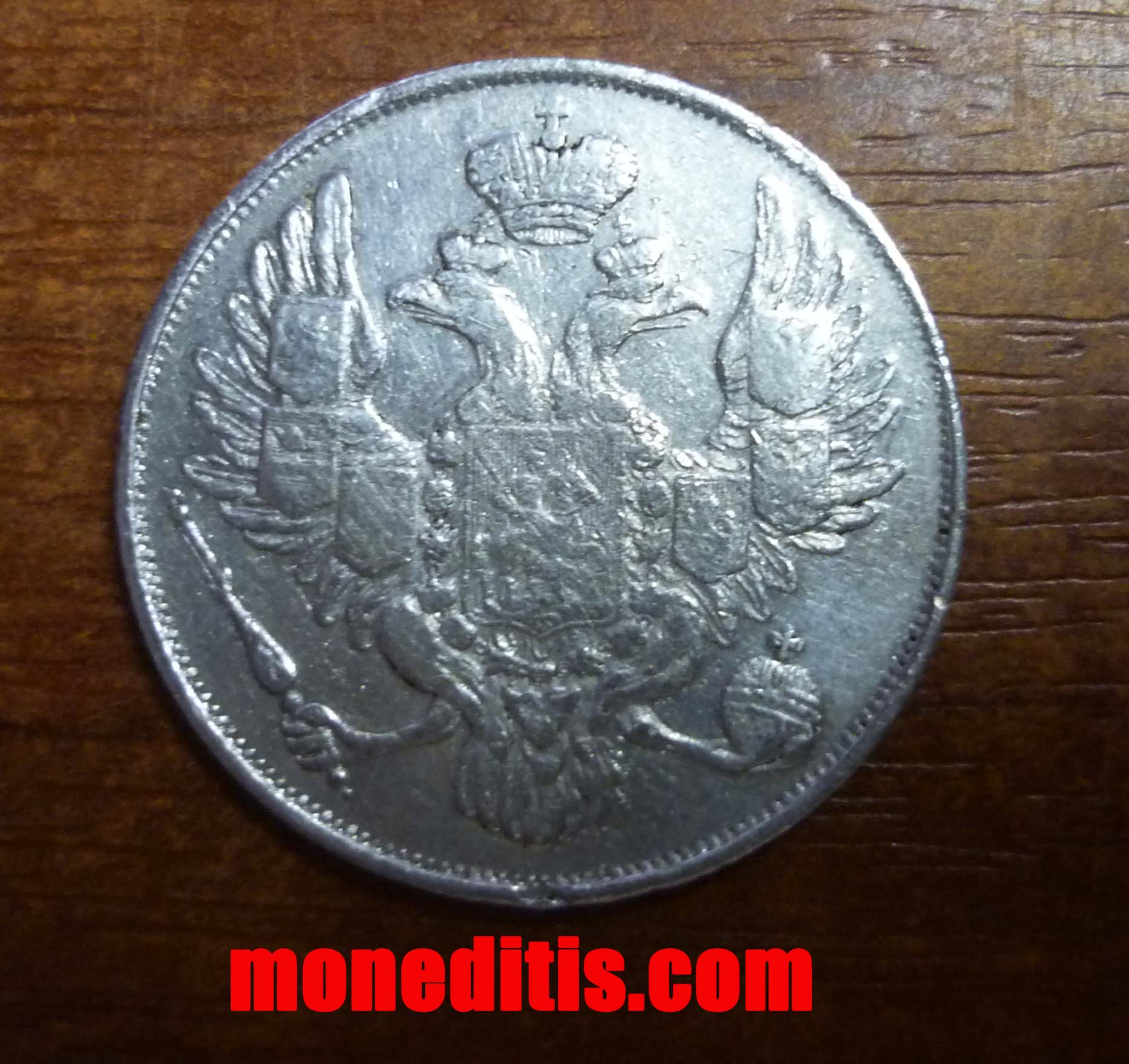
Esta es un poco más rarita y carita. Platino. +- 1000 euros de nada.
Durante los años 20 de la Revolución y/o con Stalín se reacuñaron, Novodel parece no oficiales en la ceca de San Petersburgo, monedas de 3 y 6 rublos de platino, por imperativo económico (compra de material agrícola-industrial).
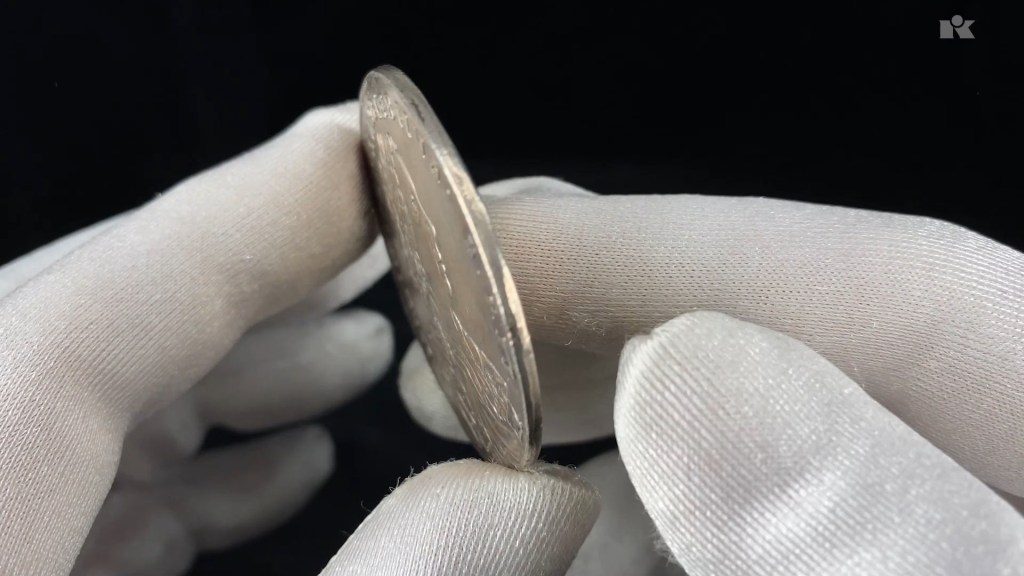
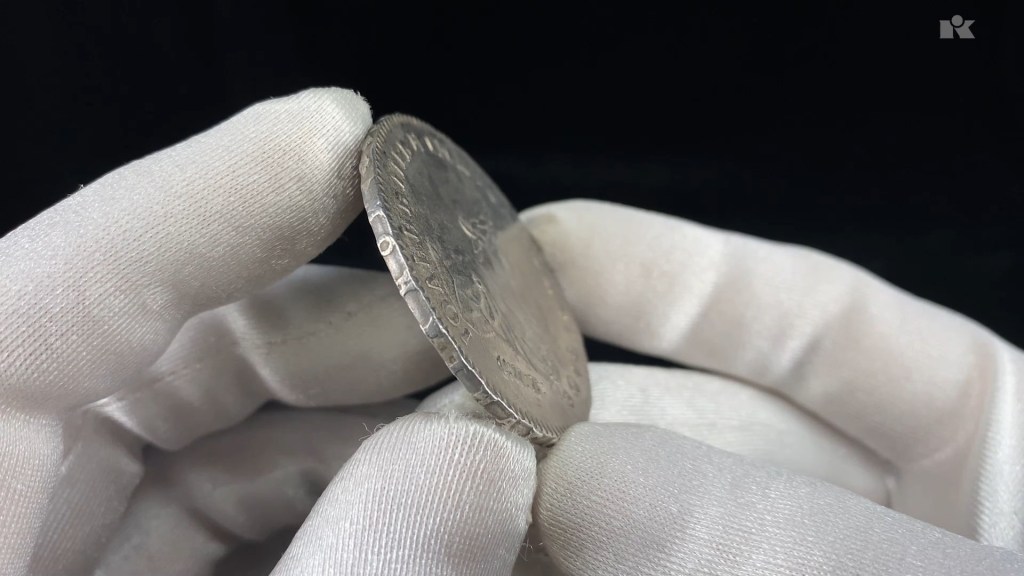
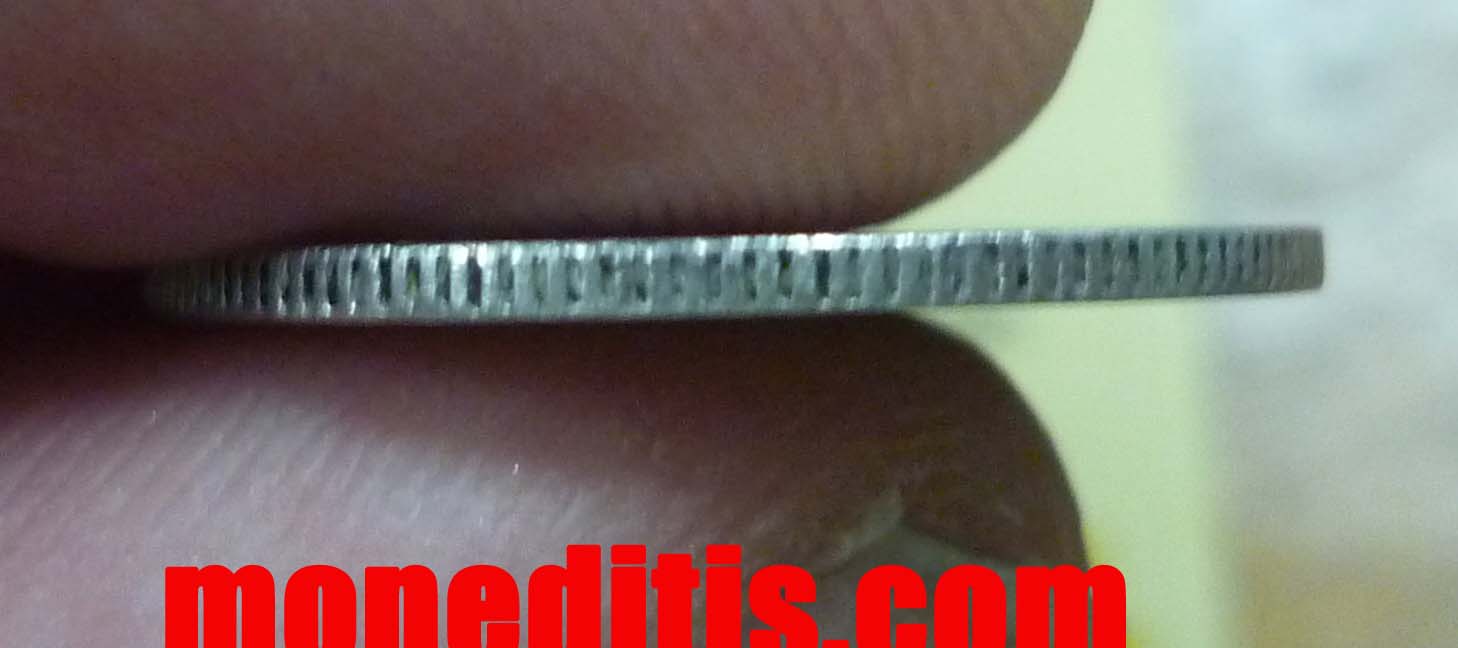
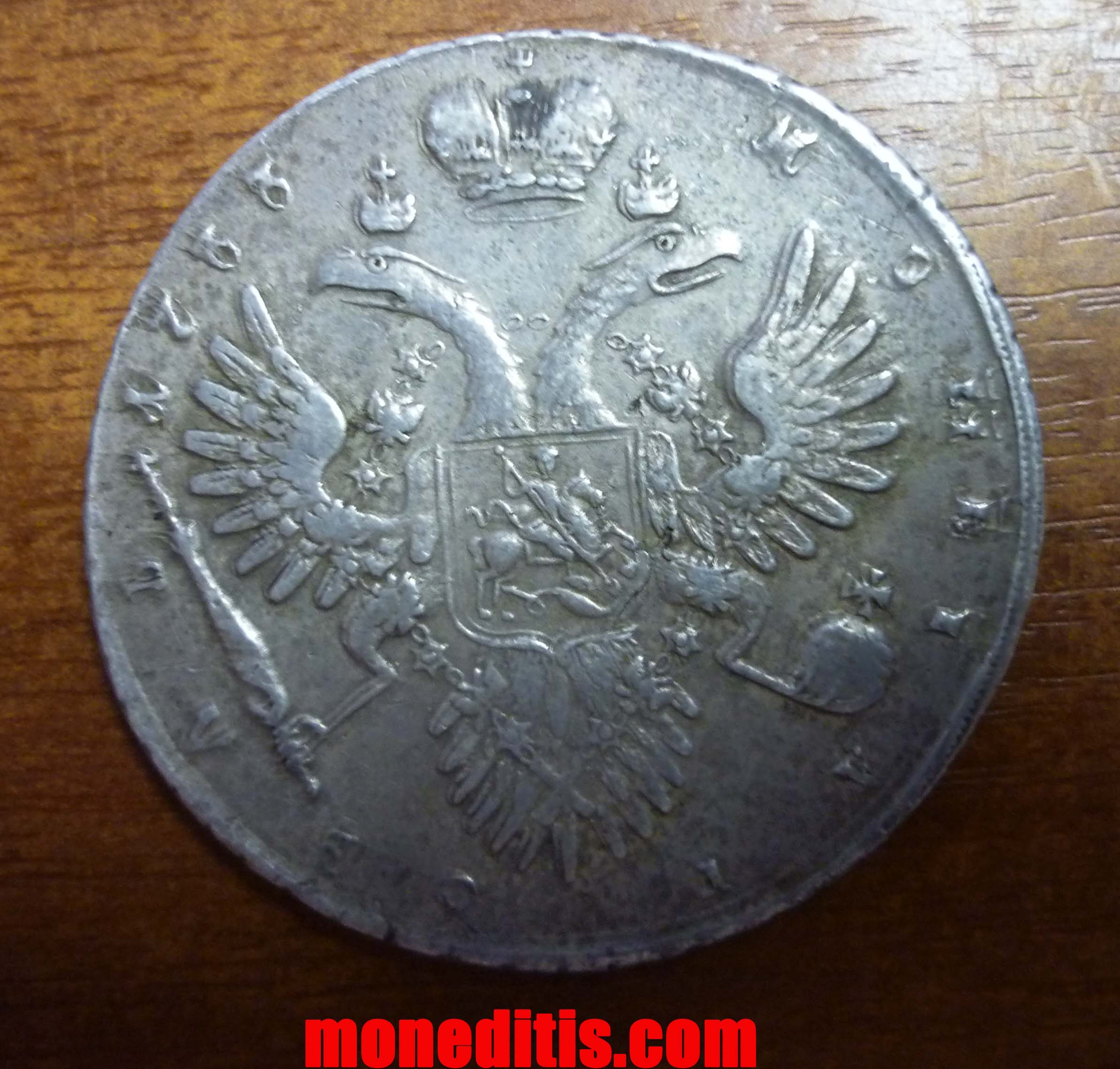
Рубль / 1 rublo 1733 25,77 g Ag VF Anna I Ioánnovna
Interesante rublo. En mano es un monedón que ocupa toda la palma. Cerca de 400 euros
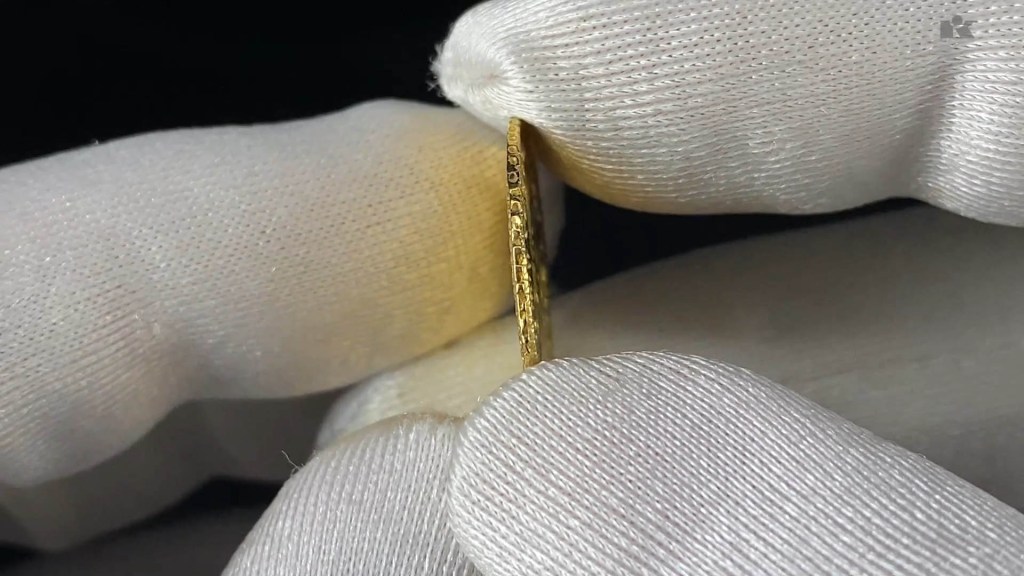
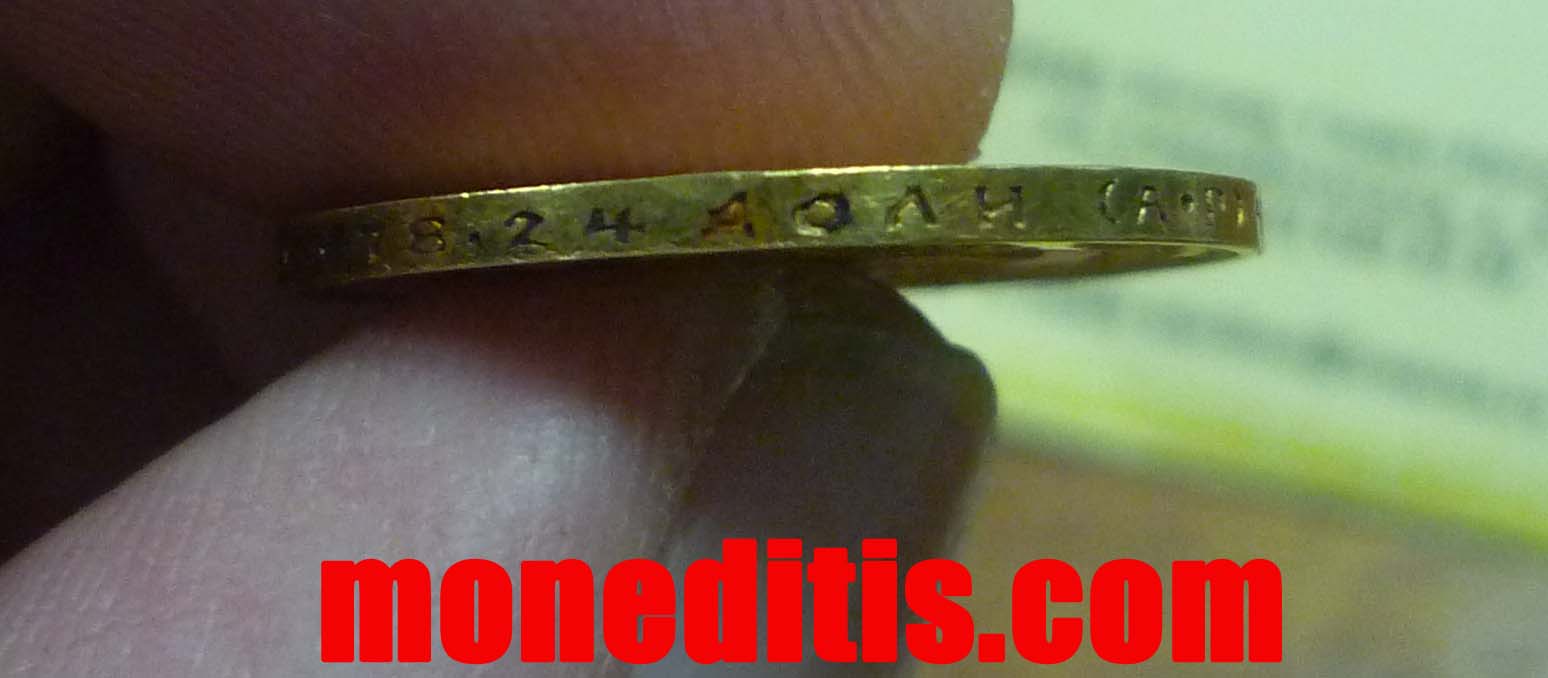
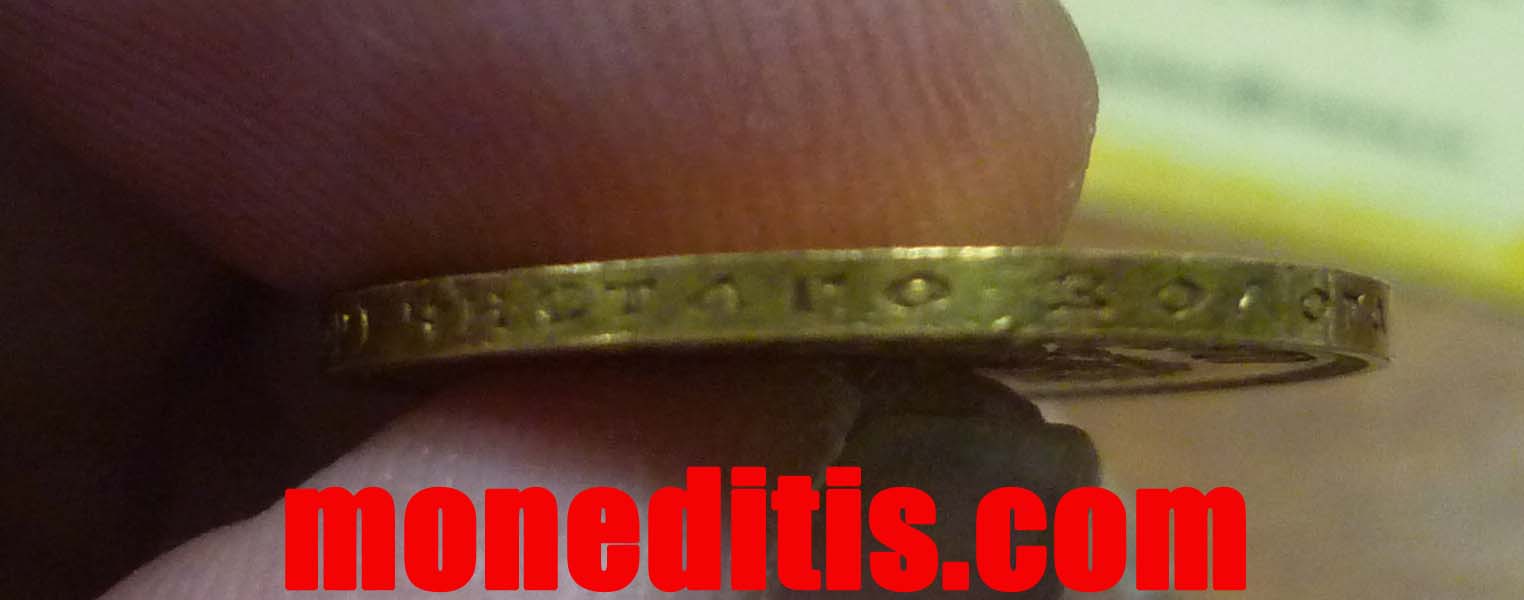
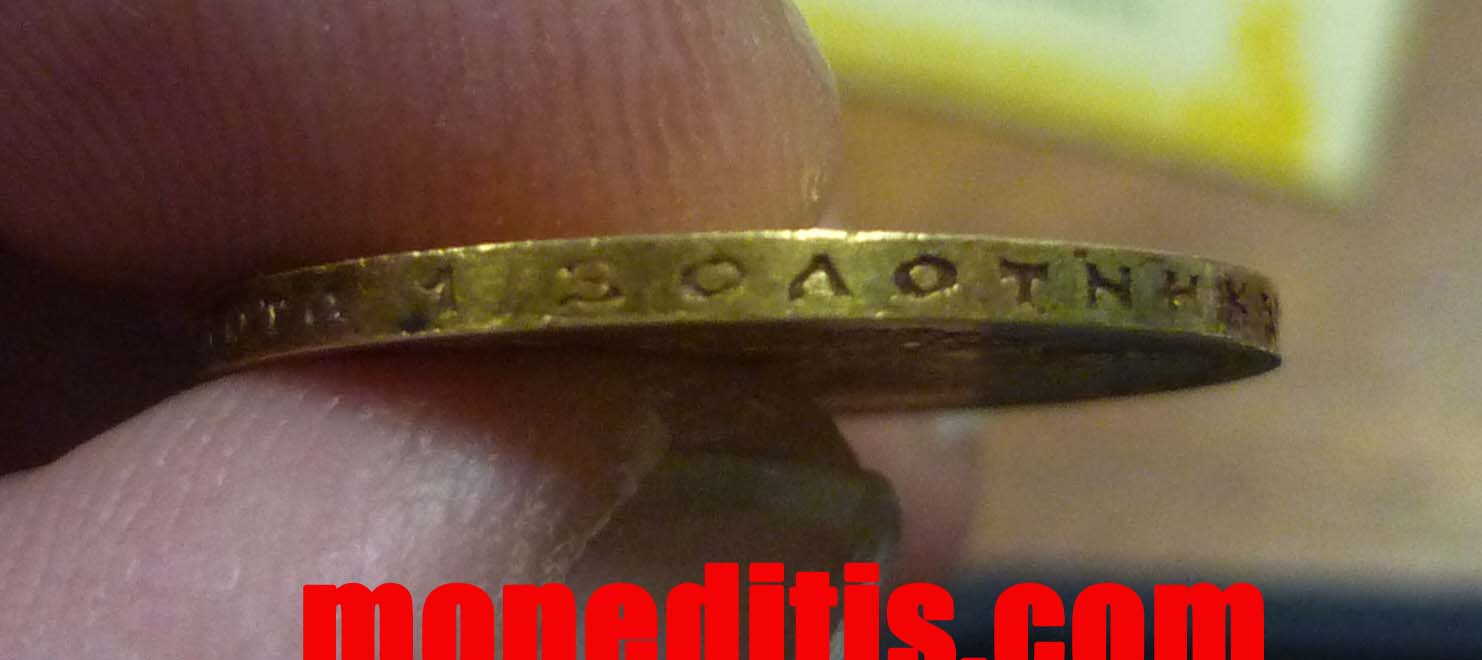
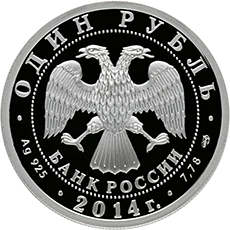
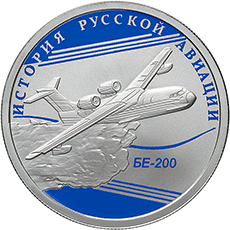
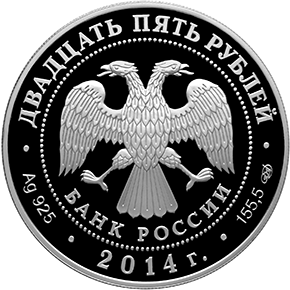
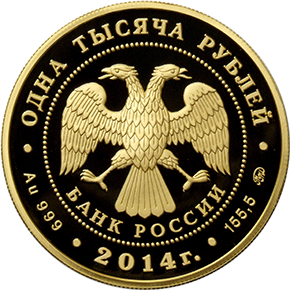
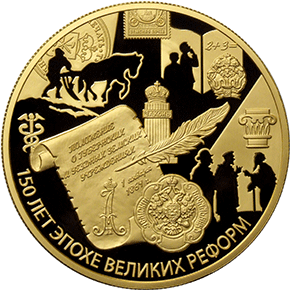
Aquí os dejo una representación de los tres metales preciosos monetarios por excelencia, platino, oro y plata y 3 zares / zarinas distin@s de la historia de Rusia












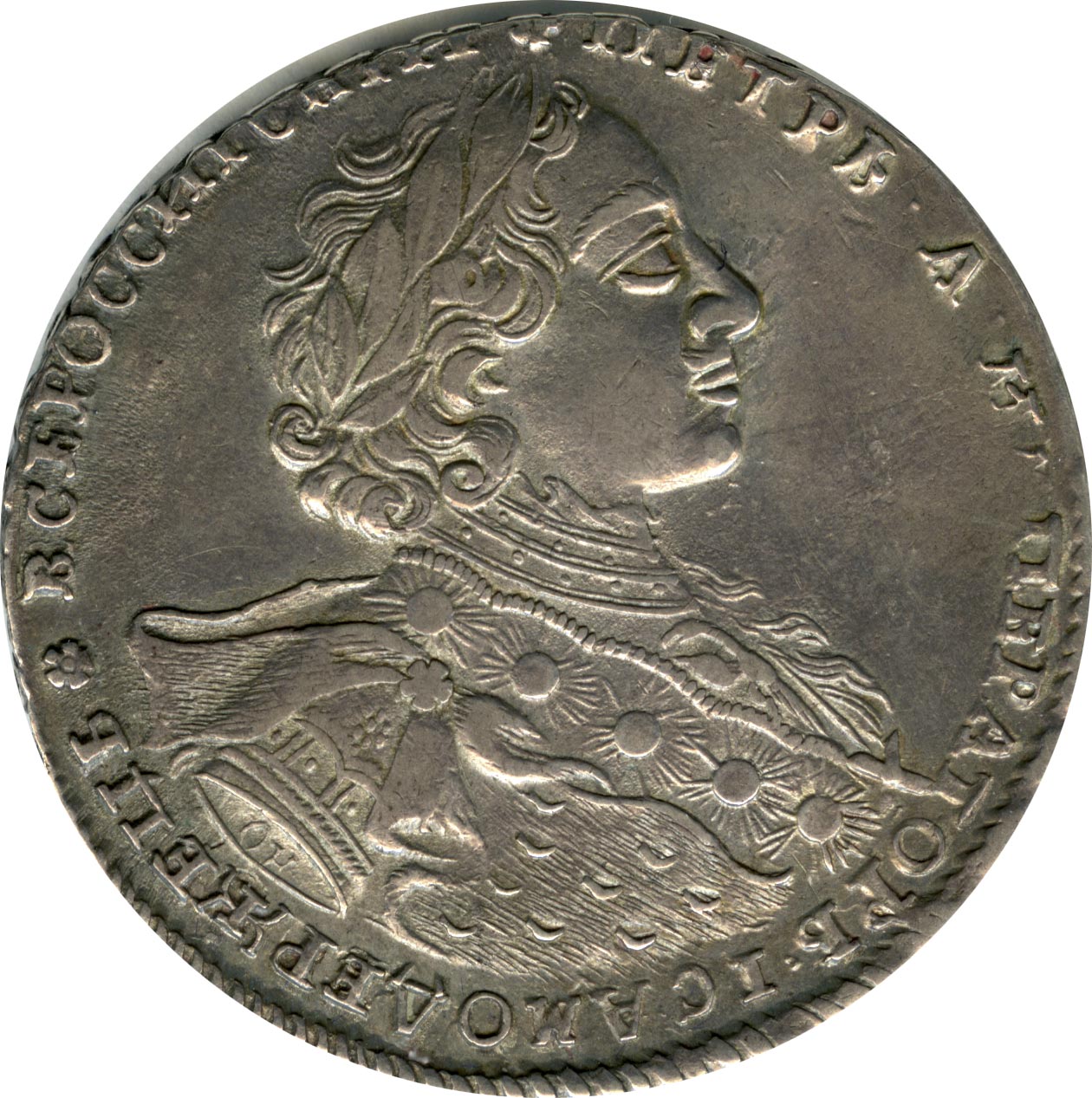
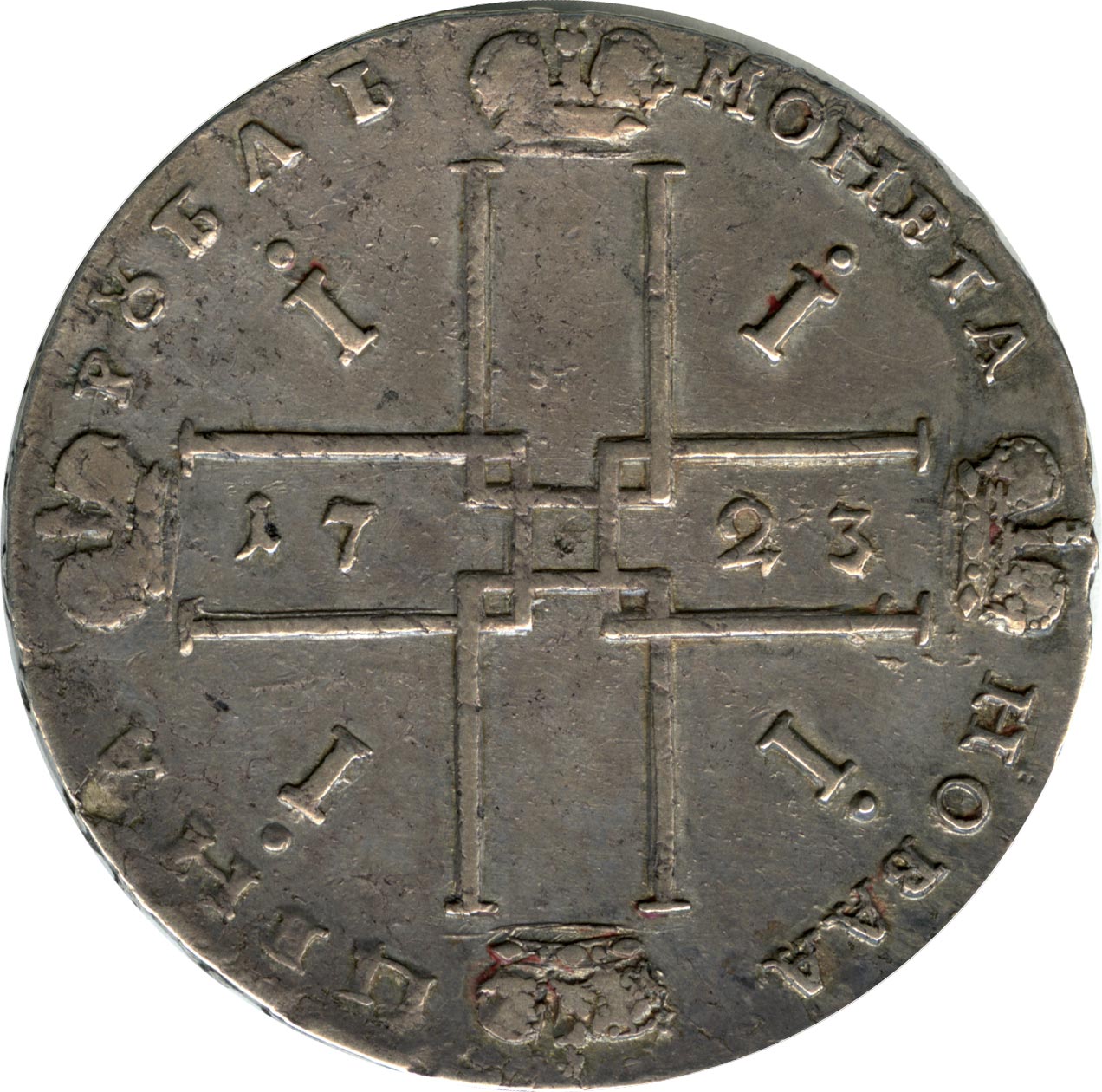
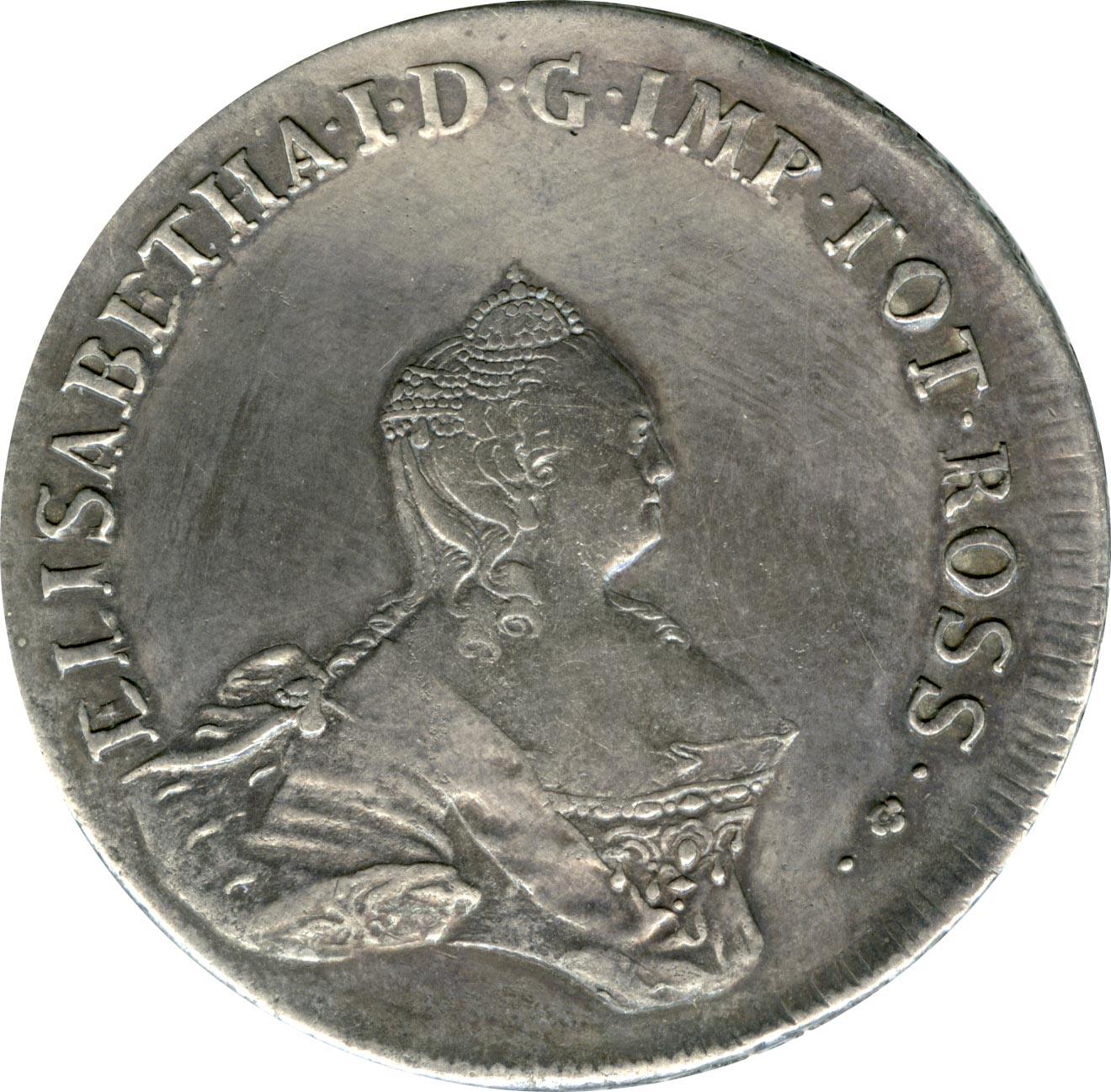
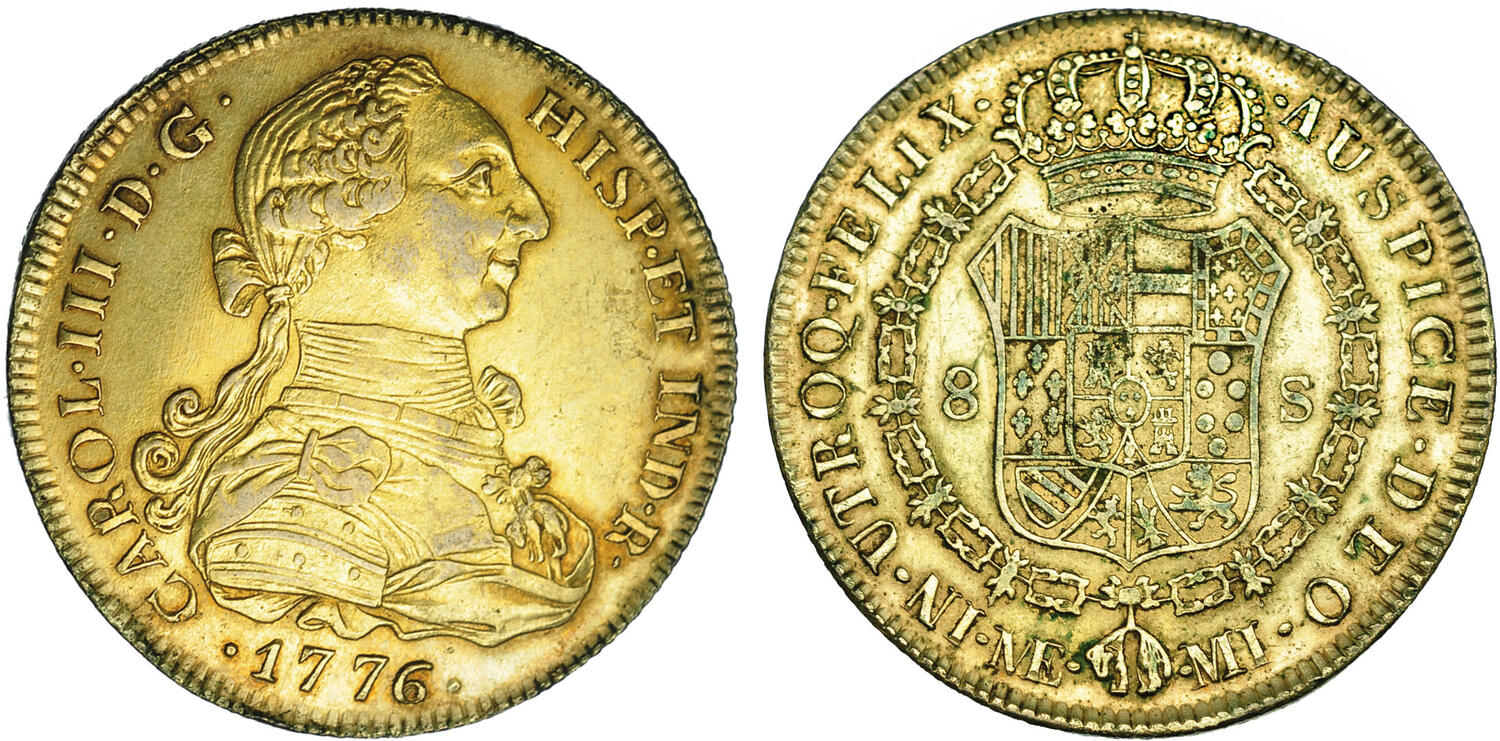









 moneditis real deaocho