Monedas del Mundo Fascículos

Enlace a mi tienda en ebid. Iré subiendo más moneditas de mi colección

https://stores.ebid.net/moneditis

————————————————————————————————————————————–

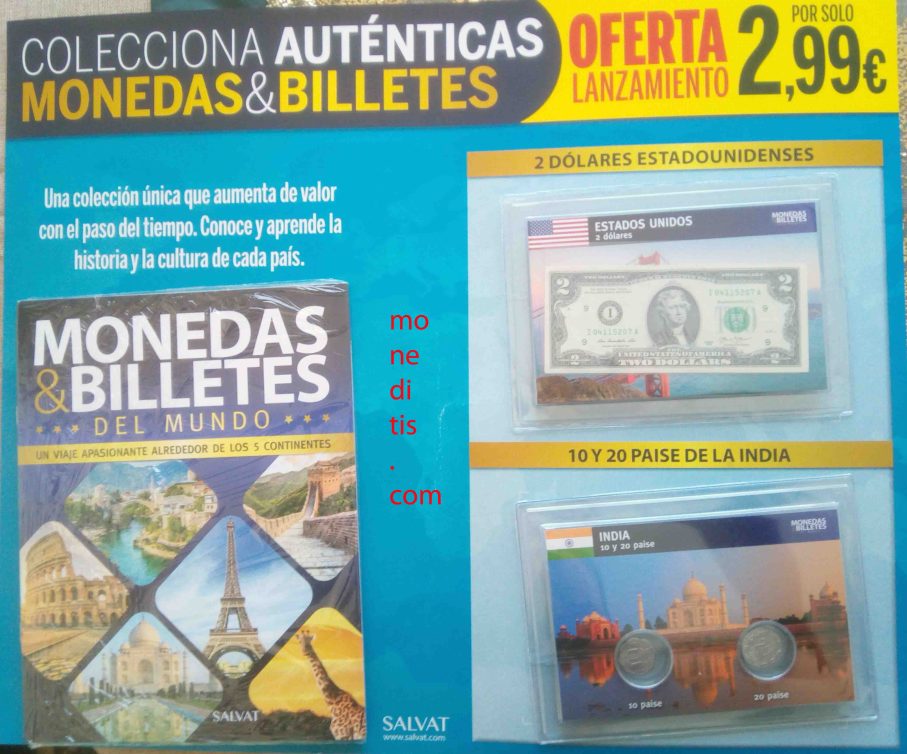
Esta semana se ha puesto en venta el primer fascículo de la colección «Monedas & Billetes del Mundo» de la editorial Salvat    https://www.salvat.com/colecciones/monedas-y-billetes/

Muy aparatosa la primera entrega, cartón colorido, billete, monedas…todo un clásico en el marketing editorial

He aquí el primer fascículo

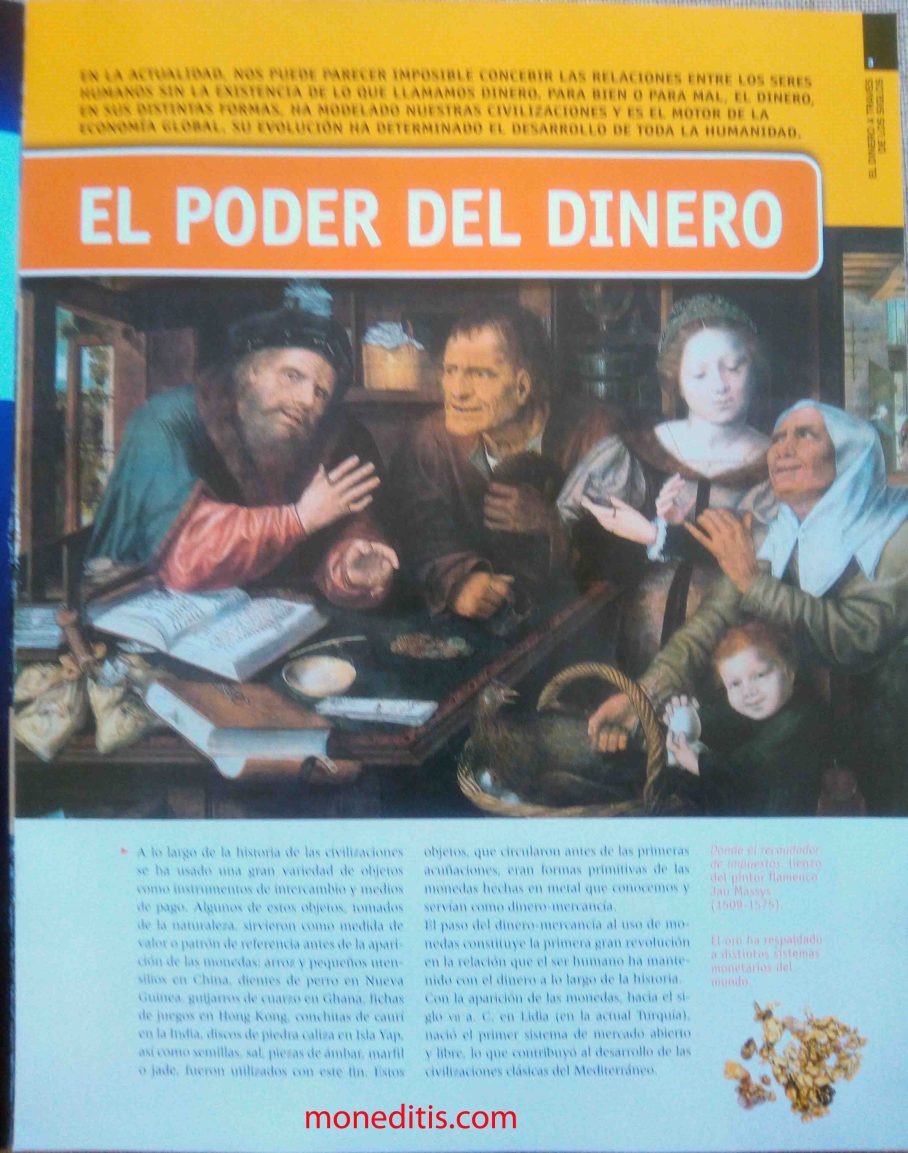
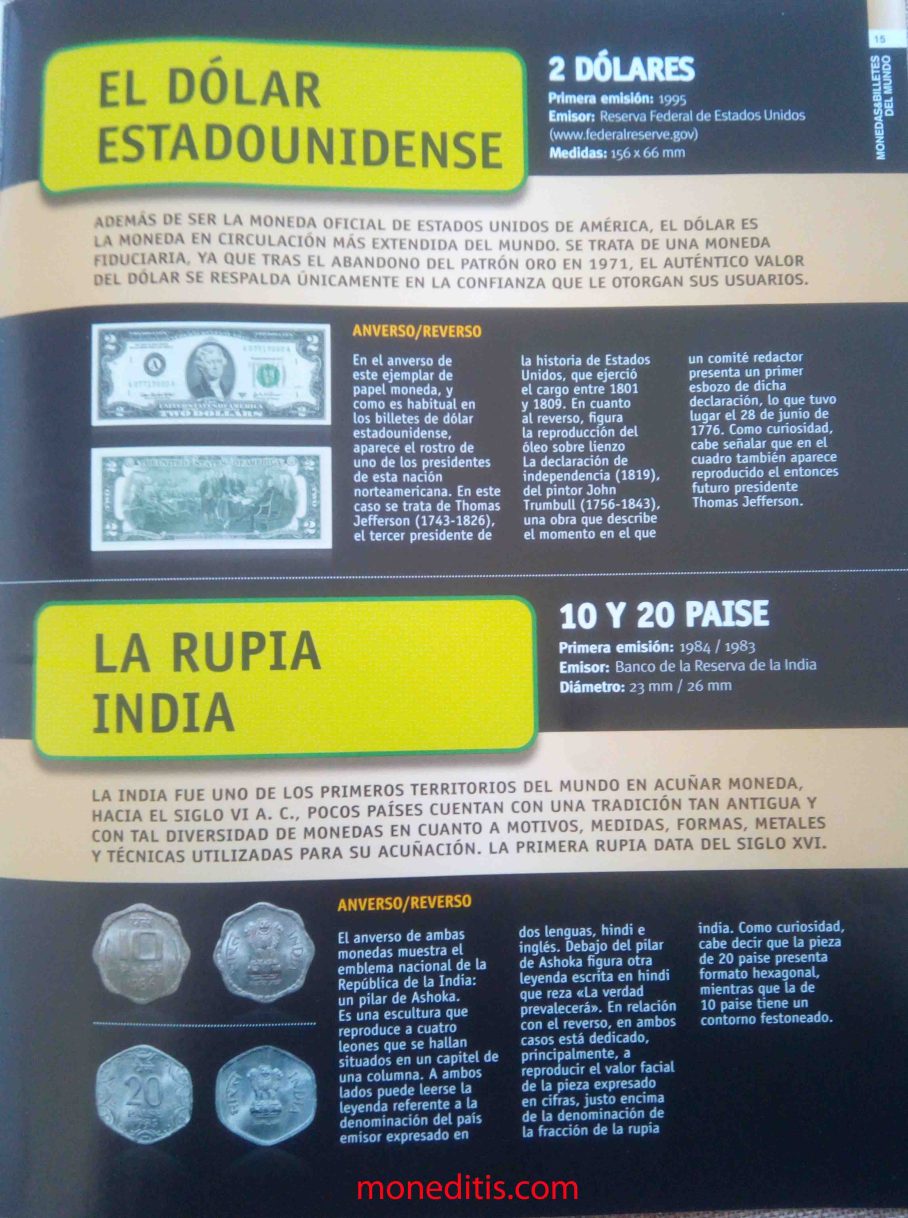
Alguna página interior

Las colecciones por fascículos se llegan a hacer aburridas…lo digo por experiencia, ya que yo hice, hace algunos años 🙂 , esta   https://moneditis.com/2018/09/10/historia-de-la-peseta-el-pais/

2 años en los que con la complicidad del kioskero acabé completando la colección

Como veis, todo cambia para seguir igual…

P.S.  https://coinweek.com/ancient-coins/treasure-coins-ancient-gold-coins-recovered-from-shipwrecks/

Rome. Aurelian, 270-275. Aureus (Gold, 4.29 g 12), Milan, late 270. Image: Leu Numismatik AG.

The Corsica Hoard

Sunk shortly after 272 CE, one of the more controversial ancient shipwrecked treasures was partially discovered in the Gulf of Lava located off the southern coast of Corsica. The Lava Treasure, also known as the “Corsica Hoard” and the “Mediterranean Sea Hoard” was first discovered in the late 1950s by two brothers.

P.S.II  https://sdbullion.com/silver/junk-silver

Красцветмет Metales Preciosos Reciclados

Enlace a mi tienda en ebid. Iré subiendo más moneditas de mi colección

https://stores.ebid.net/moneditis

————————————————————————————————————————————–

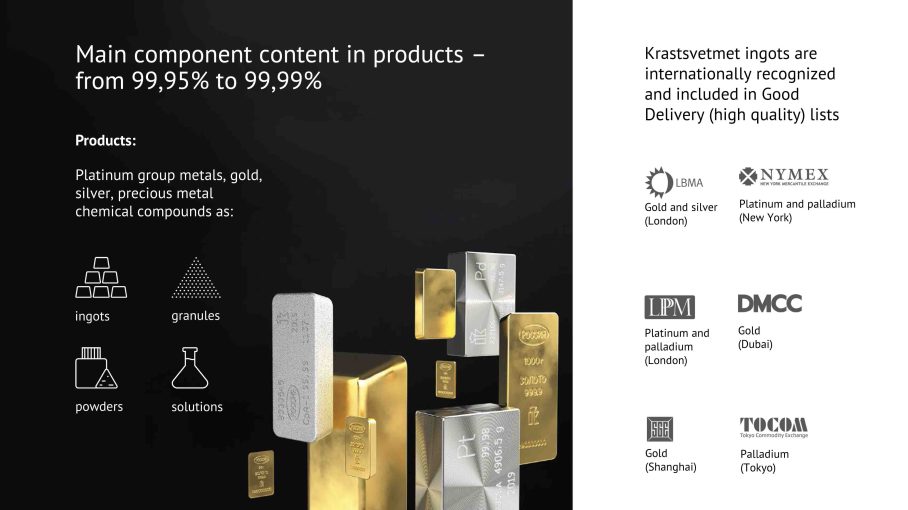
Красцветмет (Krastsvetmet), empresa rusa de reciclaje y recuperación de metales preciosos en Krasnoyarsk, ciudad y región   https://es.wikipedia.org/wiki/Krasnoyarsk

https://www.krastsvetmet.com/

Absorben el 75 % del oro, el 50 % de la plata y el 95 % de Pt, Rh, Ru, Pd, Ir y Os (PGM) del reciclado «metalero» ruso.

En este artículo   https://meduza.io/feature/2020/12/31/eto-ne-soderzhimoe-pesochnitsy-a-chistoe-zoloto   explican sin demasiado detalle el proceso de recuperación, desde la recepción de chatarra diversa, pasando por valoración, análisis, tratamiento…hasta su venta

Resumiendo el artículo (traducción automática)

«Antes de comenzar a refinar, debe comprender cuántos elementos preciosos y no preciosos hay en la materia prima. Incluso en la etapa de expedición, el proveedor informa de antemano cuánto oro puede haber en su materia prima después del procesamiento, pero las expectativas no siempre se corresponden con la realidad. El veredicto final se dicta en el centro analítico Krastsvetmet, que es uno de los diez mejores laboratorios del mundo en el campo de los metales preciosos, esto lo confirma la acreditación anual. Los especialistas del centro analizan varios cientos de miles de muestras al año. 

Para el análisis de materias primas se toma una muestra que refleja todas las propiedades del lote; luego se prepara (triturado, disuelto, aserrado o derretido) y enviado al grupo de expertos para su investigación. Para controlar el proceso tecnológico, se toman muestras en cada etapa del ciclo productivo.»

«El contenido del crisol se funde en un horno y luego se vierte en formas especiales (gotas). La forma absorbe metales oxidados, queda oro y plata»

«La primera muestra ayuda a determinar el valor de la materia prima y a elegir cuál será el proceso de refinado. Por ejemplo, una forma de separar el oro de otros metales no ferrosos e impurezas es disolver la aleación triturada en ácido nítrico: el exceso se disolverá, pero el oro no. Luego se enviará para una mayor purificación y la plata refinada se aísla posteriormente de la solución de ácido nítrico.»

«Una forma de determinar qué tan puro es el oro es mediante el uso de un espectrómetro de arco de emisión óptica. Durante el análisis del arco, un arco se quema constantemente entre el electrodo y el metal, el material se funde, se evapora y, bajo la acción de una alta temperatura (6000 ° C), se forma un plasma que emite luz. Cada elemento tiene su propia longitud de onda, y cuanto más brillante brilla, mayor es la concentración del elemento en el material de prueba. Basado en los datos sobre el brillo de las líneas espectrales, el dispositivo determina qué metales y en qué cantidades están contenidos en el producto terminado.»

«Después de la limpieza química, al oro se le da la forma deseada: gránulos o lingotes. Para obtenerlos, el metal se calienta al menos a 1070 ° C. Al mismo tiempo, los moldes (moldes) se calientan en un horno, luego se retiran, se rocía grafito sobre ellos y se calienta con gas. Esto ayuda a que el oro se enfríe de manera uniforme y evita la formación de una cavidad de contracción . Derramar oro es generalmente un trabajo manual. Las fundiciones con trajes refractarios pueden determinar a simple vista cuánto oro verter en un molde para obtener un lingote del peso deseado y luego llevarlo caliente a un pequeño baño de agua fría: el 75% de todo el oro ruso lo atraviesa anualmente. Al final, los lingotes se toman para su procesamiento con el fin de moler y eliminar todo el exceso.» 

«Los lingotes de oro puro son un metal pesado y blando al mismo tiempo. Incluso las uñas y los callos en los dedos pueden dejar daños, por lo que antes de recoger los lingotes terminados, los clientes los examinan: busque daños externos y verifique el cumplimiento de GOST. Cualquier defecto significa que el lingote no será aceptado y será refundido, por lo que se manipulan con cuidado y exclusivamente con guantes. Los lingotes terminados se envuelven en papel de aluminio y se envasan en contenedores de envío. En cuanto a la masa, la estándar pesa de 11 a 13,3 kg, pero a veces también se piden lingotes no estándar a la empresa Krasnoyarsk.»

«Los principales consumidores de lingotes de oro son los bancos que trabajan con metales preciosos. Los fabricantes de joyas tienen una demanda de gránulos para la producción de aleaciones de metales preciosos y para los industriales y las empresas farmacéuticas: polvos y compuestos químicos. Pero es la industria de la joyería la que consume más de la mitad de la producción mundial de oro.»

“Krastsvetmet trabaja no solo con oro, sino también con platino, paladio, rodio, iridio, osmio, rutenio y plata. Todos estos metales terminan más tarde en diversas industrias y, por ejemplo, están involucrados en los procesos de limpieza de gases de escape de vehículos, producción de alimentos, medicamentos y derivados del petróleo.»

Como veis y leéis, una de las mayores empresas en su sector. Ni que decir tiene que no me pagan nada por esta entrada…aunque no me importaría recibir una pequeña muestra de todos los metales con los que trabajan 🙂


Russian Coins New York Sale Goldberg

Enlace a mi tienda en ebid. Iré subiendo más moneditas de mi colección

https://stores.ebid.net/moneditis

————————————————————————————————————————————–

¡Año Nuevo, nuevas moneditas! 🙂 …aunque la subasta no sea presencial…

https://www.numisbids.com/n.php?p=sale&sid=4375

https://www.numisbids.com/n.php?p=lot&sid=4375&lot=1002

Lot 1002  Estimate: 2500 USD   Minimum bid: 2000 USD
Jefimok Half Ruble, 1655. 15.29 gm. Counterstamped on a Saxon Taler, Dresden mint
(16)15 of Johann Georg and August. Spaskii – unlisted, Zander p. 15. This Half Ruble was made from a bisected host already counterstamped. Spasski suggest that this halving of already counterstamped pieces reflects a step to salvage some badly cracked Jefimoks by cutting away the damaged half. Extremely rare. Pleasing medium gray
Extremely fine.Ex The New York Sale, January 7, 2010, lot 1004: Ex Albert Kruse Collection, Gorny & Mosch Sale 106, October 11-12, 2000, lot 4204
Otras entradas sobre efimok en este blog             https://moneditis.com/tag/efimok/

https://www.numisbids.com/n.php?p=lot&sid=4375&lot=1071

Lot 1071  Estimate: 4000 USD   Minimum bid: 3200 USD

Rouble 1770 MMД-ДM.

Moscow, Red mint. 23.01 gm. Bit 132 (R2), Ilyin (25 Rubl), Petrov (30 Rubl), Konros 4350 (R3). Very rare. Reverse laminations, and struck from dies in late stage of erosion. At point of wear –
Extremely fine.Ex ‘The New York Sale’, XXXVIII, January 7, 2016, lot 2133. Comes with sales tag.

Lot 1118   Estimate: 1000 USD  Minimum bid: 800 USD

3 Roubles 1836 СПБ. Platinum.

Bit 82 (R), Ilyin (10 Rubl.), Konros 37/10. Mintage of only 43,752 pcs.
Extremely fine.
Monedas interesantes…aunque pocas sobresalientes…muchas medallas y algún billete y condecoración al final de la subasta. No pongo más enlaces a otras entradas en este blog relacionadas con las monedas significadas para no hacer tediosa la vista y lectura…

Lot 1190    Estimate: 25 000 USD        Minimum bid: 20 000 USD

Medal. GOLD. 46 mm. Unsigned. 50th Anniversary of The Imperial Odessa Society for History and Antiquities, 1889.

Diakov 1031.1 (R5), Sm. 979. Portraits of Alexander III, Alexander II and Nicholas I within wreath / Legend within wreath. Extremely rare. Some hairlines.
Uncirculated.

Lot 1240   Estimate: 3000 USD   Minimum bid: 2400 USD

Rouble 1924 ПЛ.

Fed 11, Y 90. Arms of USSR with seven ribbons divides circle with denomination within / Young worker, supporting the old farmer and pointing forward. Sunrise and industry scene behind. Authenticated and graded by NGC PR 65. Among the best graded.
Gem brilliant PROOF.

Lot 1520   Estimate: 90 000 USD    Minimum bid: 72 000 USD

Russian Government Archival Proof Book. Includes Front and Back Proofs of the Far Eastern Provisional Government, Credit Note 50 Kopecks, and 25 and 100 Roubles, dated 1918-1919.

Russian Government Archival Proof Book. Includes Front and Back Proofs of the Far Eastern Provisional Government, Credit Note 50 Kopecks, and 25 and 100 Roubles, dated 1918-1919. P-S1244p, S1248p, S1249p; Front and Back Proofs of the Russo-Asiatic Bank, Harbin Branch 50 Kopecks, 1, 3, 10 and 100 Roubles (1917). P-473p-478p; Front and Back Proofs of the proposed 1919 5, 25, 100 and 500 Roubles Vladivostok issue of the Banque de l’Indo-Chine; and Front and Back Proofs of the proposed 1919 50, 250, 500, 1000 Roubles Credit Note issues of the Far Eastern Provisional Government. The Proofs are mounted on the heavy paper pages of this folio archival book. The Back Proofs of the proposed 1919 Far Eastern issues are loose and mounted on card stock; also includes a group of Vignettes and Design Proof Mechanicals for various Russian Government banknotes and bonds – Classical Women designs for the Far Eastern issues, steam locomotive for the Russo-Asiatic issue, etc. An Extremely Rare and Important group of Russian Government Proofs.
Extremely fine-Uncirculated.
P.S. 

The Spanish National Police arrested a teenager who lives near Barcelona, accusing him of counterfeiting euro bank notes of high quality and selling them to clients across Spain, as well as in Portugal and the United Kingdom.

The teen allegedly forged €10, €20, and €50 bank notes.

Christmas Scrooge Crown Dickens

Enlace a mi tienda en ebid. Iré subiendo más moneditas de mi colección

https://stores.ebid.net/moneditis

————————————————————————————————————————————–

Llega la Navidad…Adiós 2020.

Ascension Island – Christmas Scrooge Crown to Commemorate the 150th Anniversary of Charles Dickens in Proof Sterling Silver

Coin Specifications

Metal: Proof Sterling Silver; Cupro Nickel
Diameter: 38.60 mm
Weight: 28.28 g
Issue Limit: Silver: 2,000; CuNi: 10,000

https://coinweek.com/world-coins/new-crown-coin-commemorates-150th-anniversary-of-dickens-christmas-carol/

https://www.pobjoy.com/ascension-island-christmas-scrooge-crown-to-commemorate-the-150th-anniversary-of-charles-dickens-in-proof-sterling-silver

A Christmas Carol está ambientado en la City de Londres durante un día «frío, desapacible, cortante y con niebla» de Nochebuena. Está estructurado en cinco capítulos denominados «estrofas», de los cuales tres hacen referencia a los encuentros de los «fantasmas de la Navidad» —pasadopresente y futuro— con Ebenezer Scrooge, un anciano avaro y egoísta que desprecia todo lo relacionado con la Navidad.

https://es.wikipedia.org/wiki/A_Christmas_Carol

P.S. Interesante coloquio radiofónico económico-metalero-energético

https://www.rankia.com/blog/llinares/4753686-grabacion-coloquio-steelman1234-fernan2-que-suscribe

https://www.ivoox.com/coloquio-un-nuevo-orden-mundial-ante-la-audios-mp3_rf_57662975_1.html

¡Casi tres (3) horas de nada!  🙂

fakes gold & silver coins

Enlace a mi tienda en ebid. Iré subiendo más moneditas de mi colección

https://stores.ebid.net/moneditis

————————————————————————————————————————————–

Saliendo del 2020…aunque hasta el rabo todo es toro

Otros enlaces relacionados con el tema de cabecera…

https://moneditis.com/2020/09/18/most-counterfeited-u-s-and-world-coins/

https://moneditis.com/2020/08/09/mas-falsas-monedas/

Un par de páginas de empresa tecnológica que vende «aparataje» para detección de falsas (monedas y/o lingotes de metales preciosos) donde nos muestra variados ejemplos de timo metálico.

http://aurotest.de/counterfeit_silver.htm

http://aurotest.de/counterfeit_gold.htm

http://www.aurotest.de/news.htm

Mi alemán es prácticamente inexistente pero el traductor ayuda bastante

P.S. https://www.numismaticnews.net/article/record-silver-shortage-in-2020

«…The forecasted combined net result of physical supply and demand is a 2020 surplus of 31.5 million ounces. However, that figure is not the bottom line. In 2020, it looks like net investment in exchange-traded products (especially exchange-traded funds like SLV) will reach 350 million ounces. When you factor in this demand, which is touted as physical demand, but may be largely on paper), the net silver shortage for 2020 could be 318.50 million ounces!…»


Más Julia Denarios y Áureos y dioses

Enlace a mi tienda en ebid. Iré subiendo más moneditas de mi colección

https://stores.ebid.net/moneditis

————————————————————————————————————————————–

Venimos de aquí  https://moneditis.com/2020/10/29/yo-julia-denarios/  

Continuamos con Y Julia retó a los dioses de Santiago Posteguillo; segundo (2º) y último libro de la bilogía sobre Julia Domna y, como en la anterior entrada, dejo en manos de las webs tesorillo.com  y  denarios.org  las imágenes y datos aportados, aunque no sólo 🙂

Este libro se divide en seis (6) Asambleas de Dioses, contando la final, y algún liber con representación monetaria menos, aunque al final de la obra aparecen unos cuantos áureos

https://www.tesorillo.com/altoimperio/plautila/plautilla.htm

http://denarios.org/imperio/

https://www.forumancientcoins.com/catalog/roman-and-greek-coins.asp?vpar=433

Y esta falsa   https://falsasmonedas.blogspot.com/2016/01/plautilla-denario-falso-de-sadigh.html

No contaré nada sobre la novela, para que la disfrutéis…Nada es lo que parece ante esta escena monetaria de amor filial 😉  No encuentro denarios con Basiano/Antonino/Caracalla (todos el mismo) y Geta representados juntos…¿por qué será?…

https://www.cgbfr.es/caracalla-et-geta-pentassaria-fdc,bpv_481602,a.html

http://denarios.es/imperio/index.asp?fuseaction=contingutframes&id_emperador=3161

Ref
RIC 5 (corr.), Cohen 1 (corr.)

Anverso
P SEPT GETA CAES PONT. Busto drapeado de Geta a derecha.

Reverso
AETERNIT IMPERI. Bustos laureados, drapeados y acorazados de Septimio Severo y Caracalla, uno frente al otro.

Calidad
EBC / 3,44 gr. / Cuños: 6 h.

Ceca / Año
Roma 201-202 dC

Valor
R3

Publius Septimius Geta
(7 de marzo de 189 dC – 26 de diciembre de 211 dC) Emperador desde 211 hasta su asesinato en 212. Fue el segundo hijo de Septimio Severo y de su esposa Julia Domna. Hermano menor de Caracalla. Compartió el poder imperial con su hermano Caracalla, que lo mandó asesinar en 212.
En 209 fue nombrado César por su padre. En febrero de 211, tras la muerte de Septimio Severo asumió la herencia y compartió el poder con su hermano Caracalla.
A finales de este mismo año Caracalla mató a Geta en el palacio imperial. Geta murió en los brazos de su madre Julia Domna. Muchos de sus seguidores también fueron asesinados.
La causa para este desenlace era según algunas fuentes celos de la creciente popularidad de su hermano. Otras apuntan a que Geta planificaba por su parte apartar a su hermano del trono y este sólo se defendió adelantándose a los acontecimientos.

El Senado romano, forzado por Caracalla, decretó una «damnatio memoriae» sobre Geta tras su muerte. Se borran toda representación, busto, imagen…de monedas, estatuas, cuadros y se modifican textos, obras… https://es.wikipedia.org/wiki/Damnatio_memoriae

https://arraonaromana.blogspot.com/2016/09/julia-domna-una-dinastia-siria-en-la.html

Caracalla fue un Augusto peculiar, cruel y déspota…nada fuera de lo normal; a quien hierro mata a hierro muere. El más conocido de los Césares/Augustos aquí detallados,.

https://www.tesorillo.com/altoimperio/caracalla/caracalla.htm

Jefe del pretorio e instigador del asesinato de Caracalla. Duró pocos meses.

http://denarios.es/imperio/

Y Julia, siempre Julia…(lo entenderéis al leer el libro)

Aureus del 193 por Septimio Severo, en honor de la (Legio XIV Gemina) XIIII Gemina Martia Victrix, la legión que le proclamó emperador.

Un (1) áureo = 25 denarios = 100 sestercios = 400 ases

https://es.wikipedia.org/wiki/Diadumeniano

Julia Domna Aureus, RIC 536, Cohen 193, BMC 47

Julia Domna AV Aureus. 193-196 AD. IVLIA DO-MNA AVG, draped bust right / VENERI VICTR, Venus standing right, holding apple & palm, resting left elbow on column. Cohen 193.

https://www2.uned.es/geo-1-historia-antigua-universal/ROMA%20HISTORIA/emperatrices%20siriasII-JULIA%20%20DOMNA%202.htm

Julia Domna Aureus, RIC 548, Cohen 31, BMC 14

Julia Domna AV Aureus. 198-207 AD. IVLIA AVGVSTA, draped bust right / DIANA LVCIFERA, Diana standing left, holding long torch with both hands. Cohen 31.

https://rua.ua.es/dspace/bitstream/10045/97704/6/Lucentum_38_13.pdf

Áureo de Septimio Severo con su familia, Julia Domna y sus dos hijos

P.S. La moneda falsa, de Caracalla en este caso (aunque hay otra al principio de Plautilla…no puedo evitarlo jeje)  https://falsasmonedas.blogspot.com/2016/02/caracalla-denario-falso.html

http://www.tesorillo.com/fakes/index.htm

Subastas Reales Rusas

Enlace a mi tienda en ebid. Iré subiendo más moneditas de mi colección

https://stores.ebid.net/moneditis

————————————————————————————————————————————–

Noviembre es un mes intercalado entre octubre y diciembre…de paso, por el medio… por lo que voy a echar un vistazo a las subastas de Sedwick y Konros, USA y Rusia, a falta de nada mejor que hacer… numismáticamente hablando  🙂  Añadir que, por la cercanía de la Navidad, todos los años desde hace unos cuantos, siempre hay una gran concentración de subastas por estas fechas; mera política comercial.

https://www.numisbids.com/n.php?p=sale&sid=4266

https://auction.sedwickcoins.com/auctionlist.aspx

Multitud de lingotes, macuquinas, peluconas, galanos, onzas…

https://www.numisbids.com/n.php?p=lot&sid=4266&lot=21

Mexico City, Mexico, cob 8 escudos Royal (galano), 1713J, extremely rare, NGC MS 66, finest and only example graded by NGC, ex-1715 Fleet (designated on special label). S-M30; Cal-2194; KM-R57.1. 27.03 grams. From the 1715 Fleet (Corrigan’s site), pictured on the cover of the November-December 1998 issue of Treasure Quest (a copy of which is included), with Fisher photo-certificate #42933, ex-Rudman. NGC #5909759-001.

Without question, the pinnacle of Spanish colonial coinage is the Mexican 8 escudos Royal (galano), a coin so large and beautiful and perfect as to be considered among the most desirable gold coins in the world. These 8 escudos Royals are quite rare, currently represented by just over 40 specimens across about a dozen dates within the 53-year span in which Mexico made gold cobs (1680-1732). There is no mistaking these special coins; while some regular cob issues come close (normally they are chunky and misshapen) and even some regular-planchet issues were struck with Royal dies (arguably trial or test strikes), only true Royals are perfectly round and evenly struck on planchets of uniform thickness, not to mention that they were generally struck with obverse and reverse in medallic alignment (the present specimen actually rotated 90 degrees, but still oriented with cross aligned). These are formal presentation pieces, to be sure, but the exact purpose of Royals remains unknown, the details behind their commission apparently missing in archival records beyond simple line-item figures labeled “galanos.” While some dates of 8 escudos Royals today are represented by multiple specimens (the most abundant being 1702, 1711 and 1714) others are extremely rare or even unique. The date 1713 is in fact among the rarest, with only two known, the specimen offered here being the finer of the two and the only one graded by NGC. In terms of condition and quality of strike, we feel it is also among the finest of all the known dates.

Like the majority of known 8 escudos Royals, this coin was recovered from the wreckage of the Spanish Plate Fleet of 1715, eleven ships sunk on the reefs off the east coast of Florida in a hurricane in July 1715. It was actually two fleets, the combined Tierra Firme Fleet coming from Cartagena loaded with Peruvian and Colombian treasures, and the New Spain Fleet coming from Mexico with freshly minted coins and Asian jewels from the Manila Galleon trade, united in Havana for the northeasterly trip back to Spain. What had been an annual system of shipping to and from the New World was delayed for many years by the War of Spanish Succession after Charles II’s death in 1700, causing the treasure to pile up in Mexico and Colombia. Spain desperately needed this wealth back home and could not wait for the Fleet to delay any longer when it finally left Havana in July, evidently right into the path of a hurricane. There were many survivors, who encamped on the shores opposite the wrecks, and Spain was able to organize some salvage, only to experience their other nemesis when pirates absconded with much of the recovered treasure. It is impossible to say how much of the 1715 Fleet treasure was saved in its time, or even how much was on board (as contraband could account for perhaps double the amount on the manifest); suffice to say the currently eight known wrecksites (some of which may be parts of the same ship) from present-day Melbourne down to Stuart (aptly called the “Treasure Coast”) have kept divers and beachcombers busy since at least the early 1960s, when Kip Wagner and the Real Eight Co. began organized salvage and instituted a State lease system that is still in place today. The first Royals, in fact, were found by Real Eight and offered at auction as early as 1964.

The coin we are offering here was recovered in August 1998, the find of a lifetime for diver Clyde Kuntz of the salvage vessel Bookmaker (captained by Greg Bounds), under a lease held by the Mel Fisher company , whose photo-certificate (“GRADE: One ++”) accompanies the coin. According to the November-December 1998 issue of Treasure Quest magazine, the cover of which features a photo of this coin, Clyde was working the “Corrigan’s” site , about five miles north of Vero Beach, when on the same day he found both this coin and another 8 escudos Royal dated 1698 (currently unique) that is now permanently housed in the State of Florida collection. The biggest single find of Royals came in the 2015 diving season, in which a staggering ten pieces (dated 1711, 1712 and 1715) were recovered under leases held by Queens Jewels, LLC (the current owner of the 1715-Fleet site leases). Subsequently, we appraised those coins for millions of dollars for Queens Jewels and the State of Florida, which gets a 20% cut of all finds.

The only other known 1713 example , reportedly found on the beach in the 1980s, made headlines in 1985 when it was sold at the January F.U.N. auction (Kurt Krueger) in Florida. The same coin sold in Switzerland in 1991 as part of the Emilio Ortiz collection. According to census information, that coin has not been graded, but we note that it was struck on a smaller flan (also slightly lower weight, at 26.84 grams) with slightly fewer peripheral details than the piece we offer here.

While any one of the Royals is a joy to behold, with full and well-struck details on big, round flans, in our 2015 appraisal we noted that there is actually a good bit of difference in quality (strike and condition) between all the known specimens, even within the same date, in addition to the differences in rarity. Anyone who has ever attempted striking a coin by hand knows that making coins like these requires great strength and dexterity. Hitting on dead center with full pressure on the entire canvas—without bouncing the hammer—is easier said than done. It is no exaggeration to say that a well-struck handmade coin demonstrates a level of skill far greater than what is required to make a beautiful milled coin. In fact, at least one researcher asserts instead that Mexican Royals must have been struck with a screw-press instead, using multiple pressings to achieve such completeness of detail. Also consider the dies: Each Royal die was specially prepared with as much care and aesthetics as the mint could muster, using the same punches available for regular issues but with greater attention paid to concatenation and placement, usually allowing for more ornamentation in the legends and around the inner details. The 1713 issue, for example, has strange X-shaped flowers that appear both as stops in the legend and as space-fillers in the four “corners” of the shield (an aspect of this date only). Presumably important and wealthy people (some would say the King himself) were depending on the mint to make these jewels as near to perfect as possible.

The twelve or thirteen known dates come in five basic types, most easily recognized by their styles of crosses:
Plain Cross: 1695 , 1698
Box-End Cross: 1702
Crosslet Cross: 1711, 1712, 1713
New Cross: 1714
New Cross with Bouquets: 1715, 1717, 1718 (if it exists), 1723, 1728/5, 1729
It should be noted that regular-issue 8 escudos also use these styles, in addition to two more types (used concurrently with others) that at present are NOT represented by any Royals:
Jeweled Cross: 1680-1699
Ornate-Tressure Cross: 1711-1712

While each date within the Crosslet-Cross type of Royals dated 1711-1713 is slightly different in execution, the basic design did not change and in fact marks the end of a rustic style replaced in 1714 with a vastly sharper and more polished design, which some believe can be traced to the implementation of press-type machinery. These post-1713 issues are also generally on smaller, thicker flans.

The 1713 we offer here—arguably finer than any of the known 1711’s and 1712’s and easily superior to the other known 1713—therefore represents the final perfection of the rustic style of the Crosslet-Cross type. Of course the complete lack of wear is a factor, but there is more to it than that: This coin is just SO WELL STRUCK that it glistens from every angle, its color changing from yellow to gold as it turns in the light, the exceptionally deep and skillful strike making sharp peaks out of every design element, with near-perfect centering (especially the obverse) and no doubling or weakness anywhere, all on a huge and essentially flawless flan that extends beyond the outer border of dots. This is best appreciated in hand, or at least in video, where movement reveals the flash of luster that so distinguishes this coin. Just as it has been up till now (in the Isaac Rudman numismatic cabinet), such a perfect specimen will be at home in any of the best coin collections currently being formed around the world, whether focused on colonials, U.S., world or even shipwreck. Mexican 8 escudos as a type are so rare that we have never offered one in our auctions before, and we are honored that our first is indeed one of the most beautiful coins we have ever offered. It will be hard to match this rarity and perfection for a long time.

Updated Census of Known Mexican 8 Escudos Royals by Date
Date King Assayer Quantity known
1695 Charles II L 1
1698 Charles II L 1
1702 Philip V J 7
1711 Philip V J 8
1712 Philip V J 4
1713 Philip V J 2
1714 Philip V J 9
1715 Philip V J 5
1717 Philip V J 1
1718 Philip V J 0
1723 Philip V J 1
1728/5 Phi.V/Louis I D 1
1729 Philip V R 1

_________________________
FOOTNOTES:

– As the table at the end of this article shows, only twelve dates are confirmed, with one more mentioned in references.

– Mel Fisher had worked with Real Eight from 1963 to 1972 and then moved to Key West to pursue salvage on the 1622 Fleet (Atocha and Santa Margarita). Real Eight maintained the 1715-Fleet leases until abandoning them in 1977. Mel Fisher resumed salvage on the 1715 Fleet in 1979. In 2010, Mel Fisher’s family sold the leases to Queens Jewels LLC, which manages salvage there today.

– The wrecksites of the 1715 Fleet are referred to by nicknames as opposed to the actual names of the ships themselves, because in most cases it is uncertain where each of the ships sank. “Corrigan’s” is named after 1950s beachcomber Hugh Corrigan, whose house fronted that stretch of beach.

– Amazingly, this other 1713 was struck from different dies from the present coin. In fact, most if not all of the non-unique dates exhibit multiple dies. Our theory is that the amount of striking pressure required to properly make these big coins with full and bold details caused the dies to break after only a few strikes, and probably there were lots of failed attempts that were just re-melted. While it seems like a waste of resources to make fresh dies to net just a few coins (or less!), consider that these were special issues commissioned by or for wealthy dignitaries who could afford the extra expense and didn’t need lots of coins.

– The single-known specimen of the date 1695, originally sold in the Ubilla-Echevez auction by Christensen in 1967, set a record in 2009 for the most ever paid for a Spanish American gold coin at close to $600,000.
The “bouquets” are floral-bouquet ornaments in the dimples of the tressures and appear only on Royals. They are not the same as the “daggers” in the same positions on the New Cross issues of 1714 and 1715.

– Researcher Philip Flemming points out that the Plain Cross was “aesthetically a better choice” for Royals than the Jeweled Cross, but why the Ornate-Tressure Cross was not used on Royals is a mystery (December 2016 issue of the U.S. Mexican Numismatic Association’s Journal).

– This table is adapted from Kent Ponterio’s preface to Ponterio and Associates’ Auction #108 on April 7-8, 2000. Kent listed only publicly known examples, with detailed information of their appearances. Our only updates to Kent’s work are the addition of ten 8 escudos Royals found in 2015 (seven 1711s, two 1712s and one 1715) and a correction to the 1728 (now recognized as 1728/5 and PHILIPPVS/LVDOVICVS).

– Spanish references by Calicó (Numismática española [2020] and La Onza [2004]) and Tauler (Oro Macuquino [2011]) do list the date 1718, but without photos or any other information. The whereabouts of any specimen(s) is unknown to us, so for now we treat it as quantity 0.

https://www.numisbids.com/n.php?p=lot&sid=4266&lot=487

Lote 487. Nueva clasificación / asignada erróneamente con anterioridad

https://auction.sedwickcoins.com/Mexico-City-Mexico-cob-8-reales-Royal-galano-1615-4F-very-rare-three-known-NGC-AU-details_i38817259

https://www.numisbids.com/n.php?p=lot&sid=4266&lot=490

Lote 490. Raro galano

Y muchas moneditas más, además de objetos de naufragio, joyas…Curiosa subasta. ¡Os invito a dar una vuelta y disfrutarla! Habrá que estar atentos a los precios de adjudicación.

Más asequible – menos exclusiva, además de muchas otras diferencias y/o características, es la subasta de noviembre en sala de Konros

https://auction.conros.ru/olive/816/flash/

Pocos oros a la venta; hay demanda – poca disponibilidad. Bastantes rublos y medios de plata, además de denominaciones menores

https://auction.conros.ru/lot/2669306/816/0/

Adjudicado en 155.000 rublos + comisión (+- 1.900 €)

Рубль 1723 года «В горностаевой мантии»

В 1723 году портрет на рублевых монетах меняется, причем дважды. Первый вариант — у нумизматов он получил прозвище «тигровик» – примечателен тем, что на нем латы царя прикрыты горностаевой мантией, а на груди — знаки ордена Св. Андрея Первозванного. В обрезе рукава вновь появляется знак ОК. Выделяют четыре типа лицевой стороны по наличию и размеру андреевского креста на груди.

Разновидности оборотной стороны различаются расположением букв легенды против i.

Гуртовая надпись – «Российский рубль Московского двора», по всей видимости, такое обозначение продукции московского Кадашевского двора связано с ожидаемым началом работы нового монетного двора в Санкт-Петербурге.

Легенда лицевой стороны – «Петр А (Алексеевич) Император и Самодержец Всероссийский», оборотной – «Монета новая цена рубль» и дата арабскими цифрами. Проба — 729, вес 28, 44 грамма.

96 копеек 1757

https://auction.conros.ru/lot/2669315/816/0/

Adjudicado en 160.000 rublos + comisión (+- 1.950 €)

96 копеек «Ливонез»

Следующий номинал является очень непривычным для российской системы денежного обращения, поскольку ориентирован не на десятеричную, талерную. Внешнеполитические успехи елизаветинского времени оставили свой след в двух региональных выпусках монет. Первый — это монеты для прибалтийских провинций Ливонии и Эстляндии.

Необычный номинал свидетельствует о попытке привязать русскую денежную систему к талерной, основанной на 12-кратном счете и привычной для населения провинций. На оборотных сторонах монет 96, 48 и 24 копейки в клювах орла на лентах подвешены гербы городов Риги и Ревеля (с 1917 года — Таллин).

Чеканились в Москве на Красном дворе петербургскими штемпелями работы Б. Скотта.

Лицевая сторона — портрет императрицы, оборотная — российский двуглавый орел с гербами Риги и Ревеля и надпись MONETA LIVOESTHONICA, цифра 96 и дата. Проба — 750, нормативный вес — 26,38 грамма, гурт — узор.

Por aquí os dejo los enlaces de las dos (2) últimas subastas en sala anteriores, para que comparéis

https://auction.conros.ru/clive/809/flash/

https://auction.conros.ru/clive/805/flash/

P.S. En próxima subasta de Vico, curioso 8 escudos platino 1776 – Lima, falsa de época

https://www.numisbids.com/n.php?p=lot&sid=4291&lot=538

Lot 538         Starting Price: 600 EUR  Minimum bid: 600 EUR

8 escudos. 1776. Lima. MI. Falsa de época en platino dorado. 27,1 g. Barrera-358. MBC+.

Abriendo la imagen en pestaña aparte se aprecian mejor los detalles

Real de a Ocho Audio

Enlace a mi tienda en ebid. Iré subiendo más moneditas de mi colección

https://stores.ebid.net/moneditis

————————————————————————————————————————————–

Continuando con la anterior entrada «ocho (8) realera», aquí os dejo un interesante podcast sobre los reales de a ocho, aunque no solo

https://memoriasdeuntambor.com/

https://memoriasdeuntambor.com/infomemoriasdeuntambor-com-2

El primer tercio del audio hace un repaso introductorio al sistema monetario y particularmente a la Península ibérica (+- hasta minuto 33)

En el minuto 44 empiezan los reales de plata, Segovia, RRCC, América…minuto 53 macuquinas; minuto 58 Reales de a Ocho por fin

Cerca de una hora de introducción casi más interesante que la escasa media hora final de reales de a ocho 😉 1:11:22 peso y ley, 1:15:09 chopmarks, 1:17:25 peseta. Interesante información en su conjunto. ¡Gracias Miguel!

P.S. Falsificaciones de ducados austro-húngaros de Francisco José I

https://coinsweekly.com/how-to-detect-counterfeits-at-all-times-part-2-austrian-ducats/

How to Detect Counterfeits at All Times. Part 2: Austrian Ducats

Uno (1) y cuatro (4) ducados oro

https://es.ucoin.net/coin/austria-1-ducat-1852-1859/?tid=90774

Número de Krause KM# 2263
País Austria
Denominación 1 ducado
Año 1852-1859
Período Gulden austrohúngaro (1857 – 1892)
Tipo de monedas Monedas en circulación
Gobernante Francisco José I
Aleación Oro 0.986
Canto Estriado
Forma Redonda
Alineación Moneda (180°)
Peso (g) 3.49
Diámetro (mm) 20

https://es.ucoin.net/coin/austria-4-ducat-1860-1865/?tid=90780

Número de Krause KM# 2272
País Austria
Denominación 4 ducados
Año 1860-1865
Período Gulden austrohúngaro (1857 – 1892)
Tipo de monedas Monedas en circulación
Gobernante Francisco José I
Aleación Oro 0.986
Canto Estriado
Forma Redonda
Alineación Medalla (0°)
Peso (g) 13.96
Diámetro (mm) 39.5

https://ciode.es/producto/1-ducado-francisco-jose-i-de-austria-1-10-onza/

https://www.coininvest.com/es/monedas-de-oro/ducado/4-ducados-oro-nueva-edicion/

¡Ojo! Estas dos (2) últimos enlaces a tiendas no presuponen nada en cuanto a autenticidad o falsedad de las monedas en venta; son simples ejemplos informativos

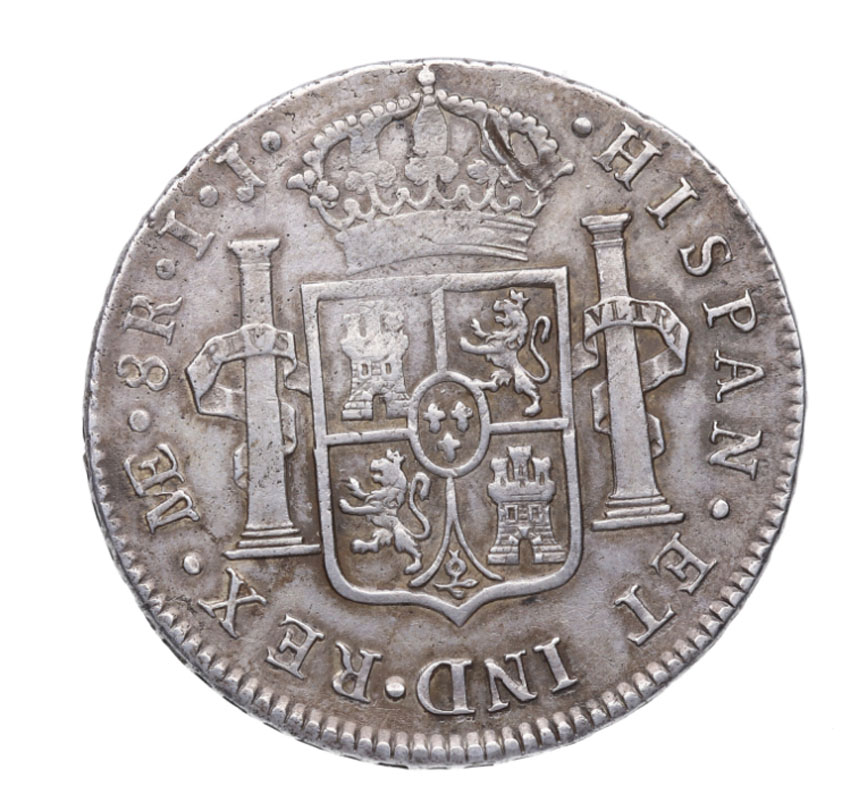
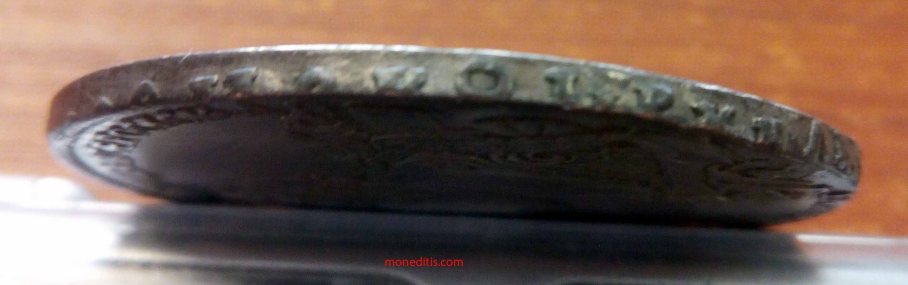
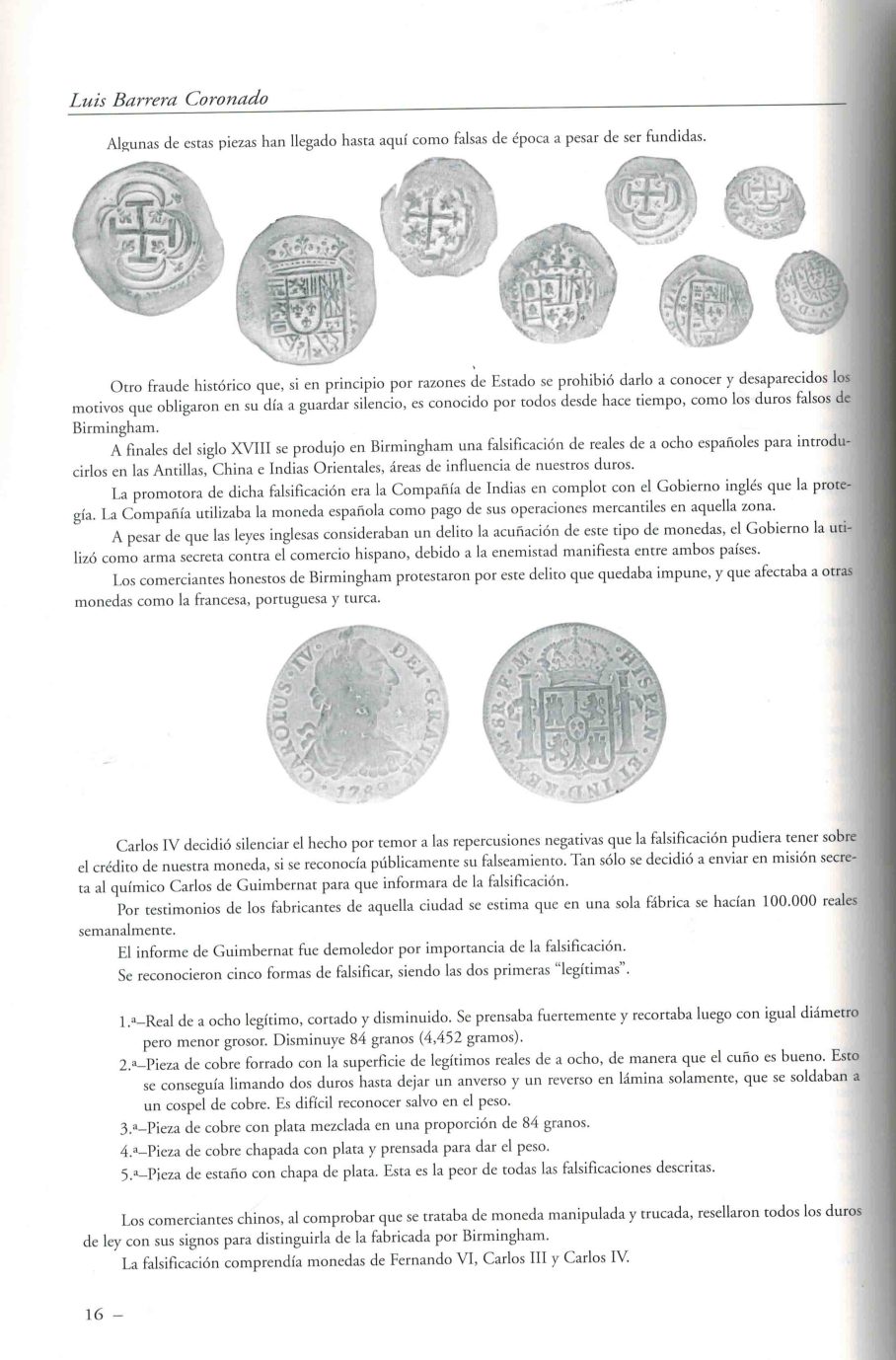
8 reales Carlos IV Ibercoin lotes ¿cruz?

Enlace a mi tienda en ebid. Iré subiendo más moneditas de mi colección

https://stores.ebid.net/moneditis

————————————————————————————————————————————–

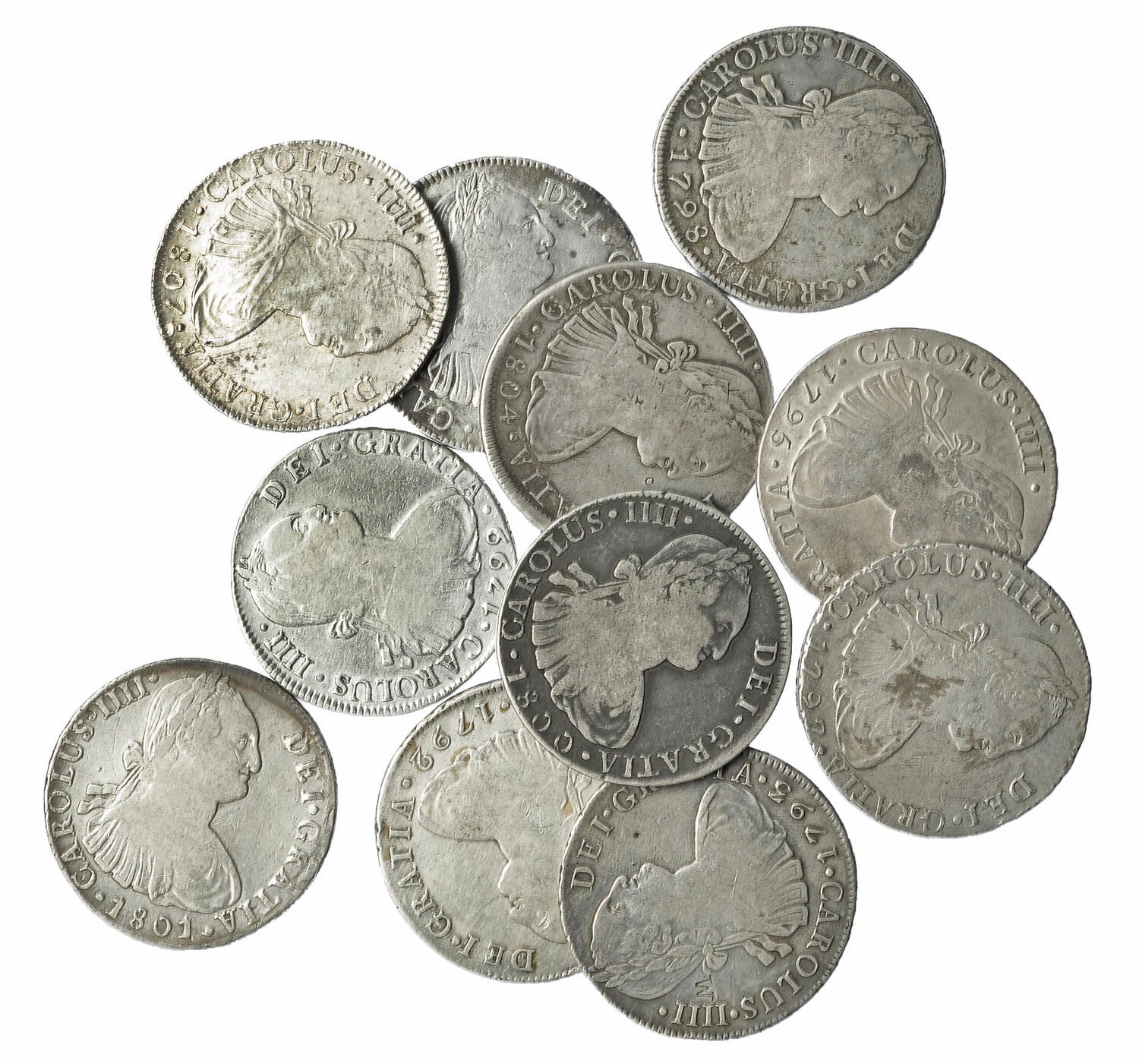
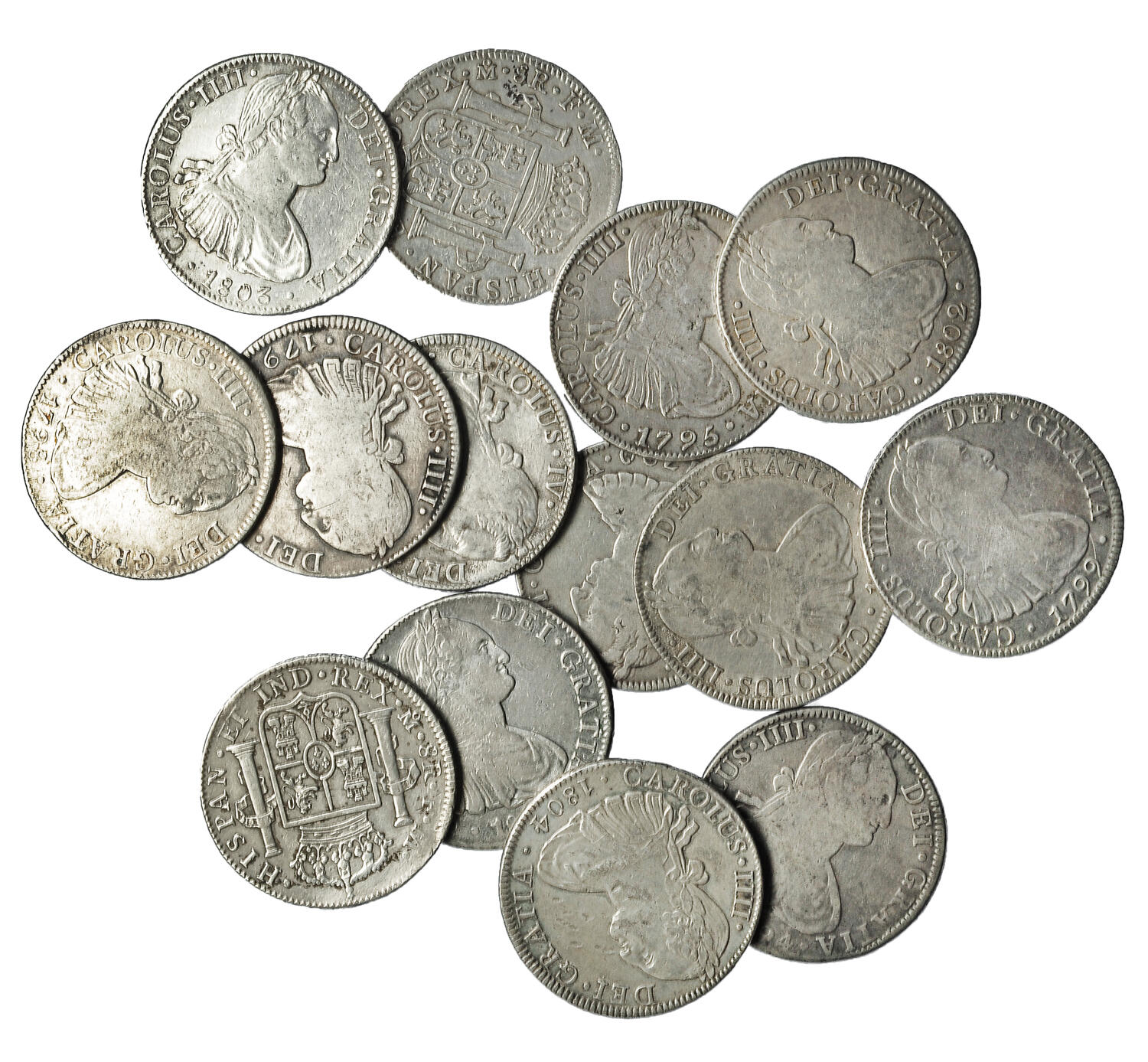
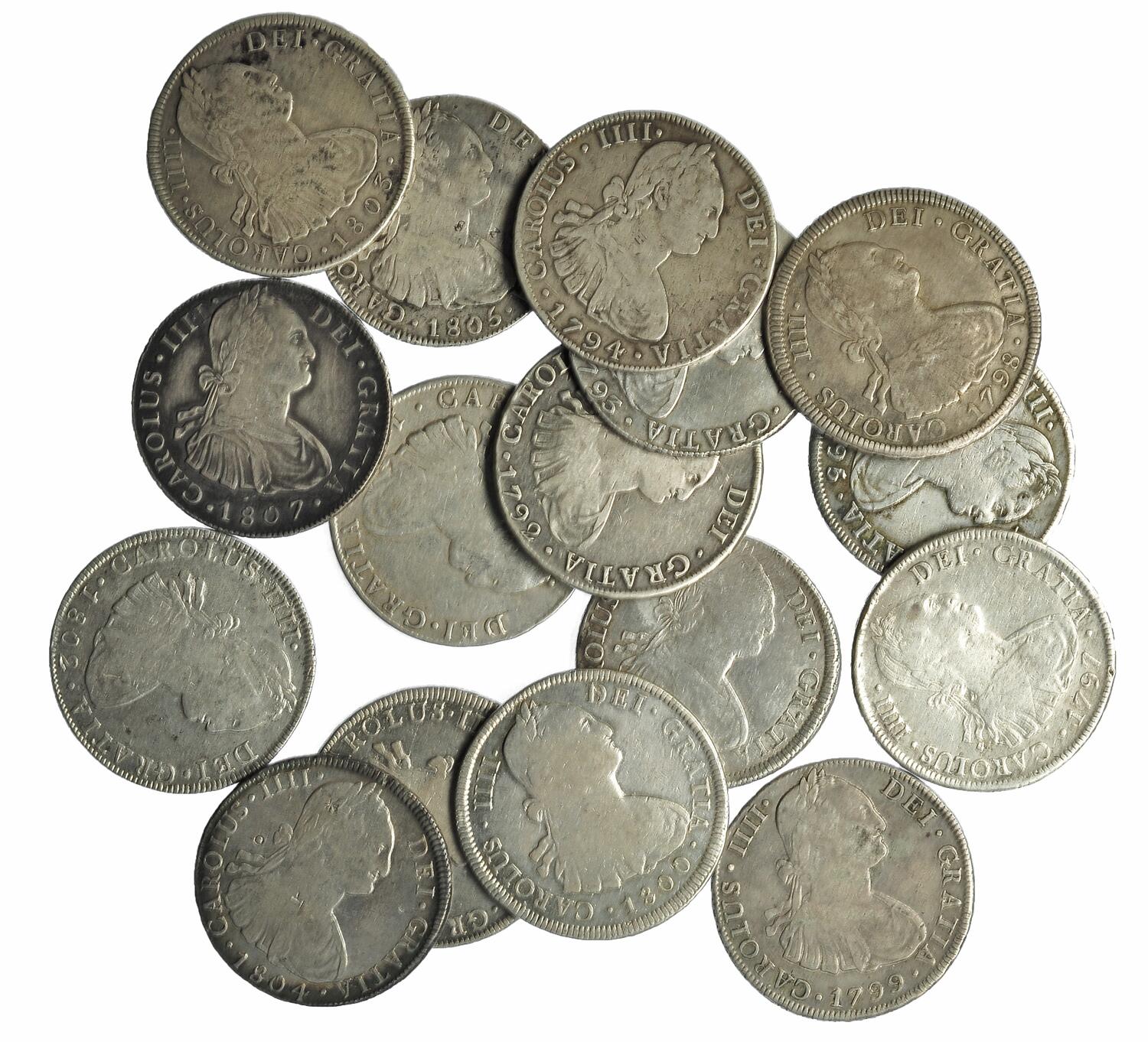
8 reales Carlos IV Ibercoin lotes.

Caras sin cruz, o lo que es lo mismo, anverso sin reversos…o viceversa

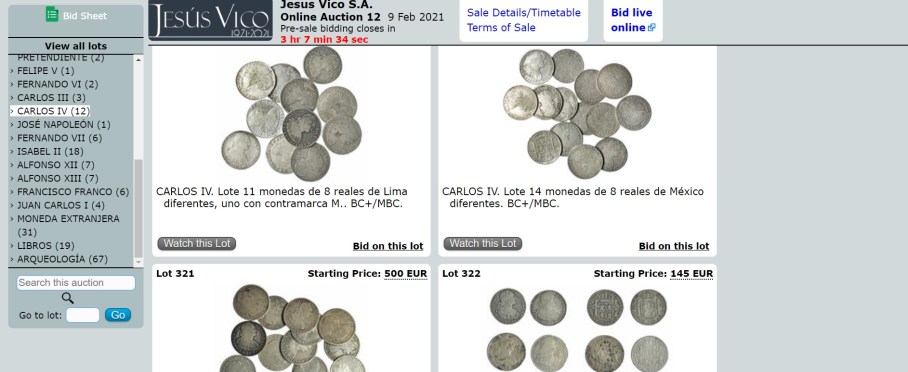
Aquí os dejo unos cuantos lotes de 8 reales vendidos recientemente por Ibercoin.

Lote 2479 Anversos y Reversos

https://www.numisbids.com/n.php?p=sale&sid=4249&cid=129138&pg=2&so=1&search=&s=1

Todos procedentes de naufragio y de Carlos IV

https://www.numisbids.com/n.php?p=lot&sid=4249&lot=2470

https://www.numisbids.com/n.php?p=lot&sid=4249&lot=2471

https://www.numisbids.com/n.php?p=lot&sid=4249&lot=2472

https://www.numisbids.com/n.php?p=lot&sid=4249&lot=2473

https://www.numisbids.com/n.php?p=lot&sid=4249&lot=2474

https://www.numisbids.com/n.php?p=lot&sid=4249&lot=2475

https://www.numisbids.com/n.php?p=lot&sid=4249&lot=2476

https://www.numisbids.com/n.php?p=lot&sid=4249&lot=2477

https://www.numisbids.com/n.php?p=lot&sid=4249&lot=2478

https://www.numisbids.com/n.php?p=lot&sid=4249&lot=2479

https://www.numisbids.com/n.php?p=lot&sid=4249&lot=2480

https://www.numisbids.com/n.php?p=lot&sid=4249&lot=2481

https://www.numisbids.com/n.php?p=lot&sid=4249&lot=2482

https://www.numisbids.com/n.php?p=lot&sid=4249&lot=2483

En casi todos sólo vemos el «careto» de Carlos IV; los lotes 2471 y 2472 vienen con PDFs en los enlaces directos de subasta en ibercoin donde si vemos la otra cara de las moneditas

https://www.ibercoin.com/es/subastas-numismaticas/20-Subasta-Online-Monedas-28-10-2020/lote-2471-CARLOS-IV

https://www.ibercoin.com/es/subastas-numismaticas/20-Subasta-Online-Monedas-28-10-2020/lote-2472-CARLOS-IV

Ni que decir tiene que los lotes de conjunto nunca admiten devolución…y con esto del covid-19, ir a ver monedas o pujar en sala…es «complicao». Debajo os dejo detalle de las condiciones de venta

10. The descriptions of the present catalogue have been meticulously realized by our technical team which guaranteed his condition and genuineness, in any case, if some not mentioned fault was concerning someone of the pieces this one will be able to be returned in the space of ten days. Into the lots that avenge described by the expression “A EXAMINAR” returns will not be admitted, it is for it that bids ask to abstain from being expressed by them if it has not been checked previously and in addition one agrees in his state and in this condition.

De peso, detalles, cantos… ni hablamos.

Por supuesto, suponemos la procedencia lícita de todos estos reales de a ocho, ¿no?. Hay muchos tesoros rescatados de pecios legalmente…y se puede comerciar con sus monedas…

https://moneditis.com/2014/07/30/museo-arqueologico-nacional-fragata-mercedes/

Se me ocurren diversas ideas/alternativas/variaciones (otras procedencias)…aunque suele ser la explicación más sencilla la que habitualmente es cierta/más probable  https://es.wikipedia.org/wiki/Navaja_de_Ockham

P.S. Este Real de a Ocho de Carlos III en Aureo… no sé yo…¿fundida?

Lot 2589                Starting Price: 30 EUR  Price realized: 110 EUR      Estimate: 50 EUR

1772. Carlos III. México. FM. 8 reales. (AC. 1105). 24,17 g. Ceca y ensayadores invertidos. Pequeños resellos orientales. Escasa. BC+.

https://www.numisbids.com/n.php?p=lot&sid=4168&lot=2589

P.S.II Recordatorio a posibles nuevos lectores: las subastas de cayón y soler, entre otros, no las miro; prepotencia y chulería, entre otras, son las causas…(no pongo enlaces…no me apetece recordar…ya sabéis, el mejor desprecio es no hacer…)