Venimos de aquí
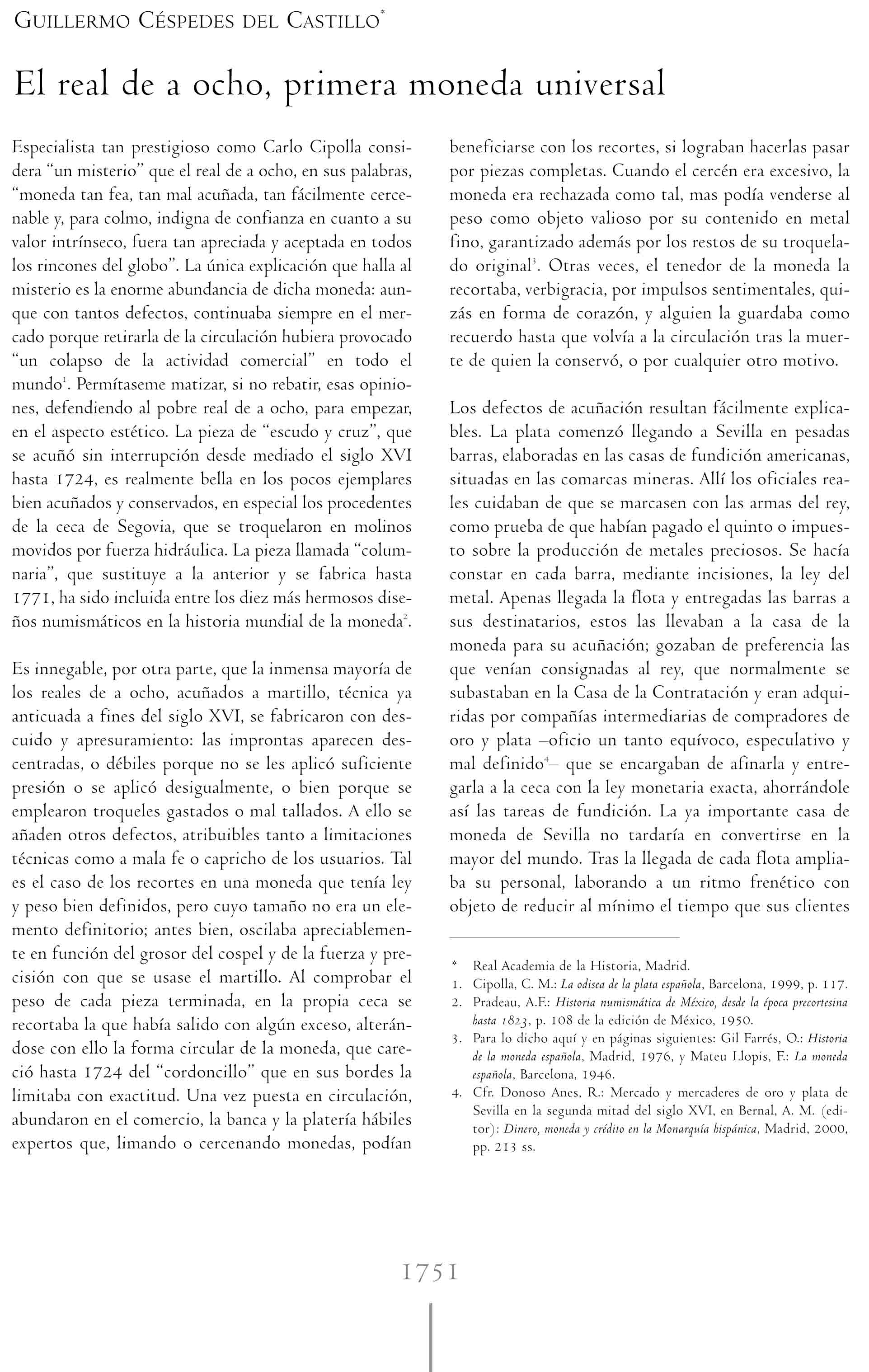
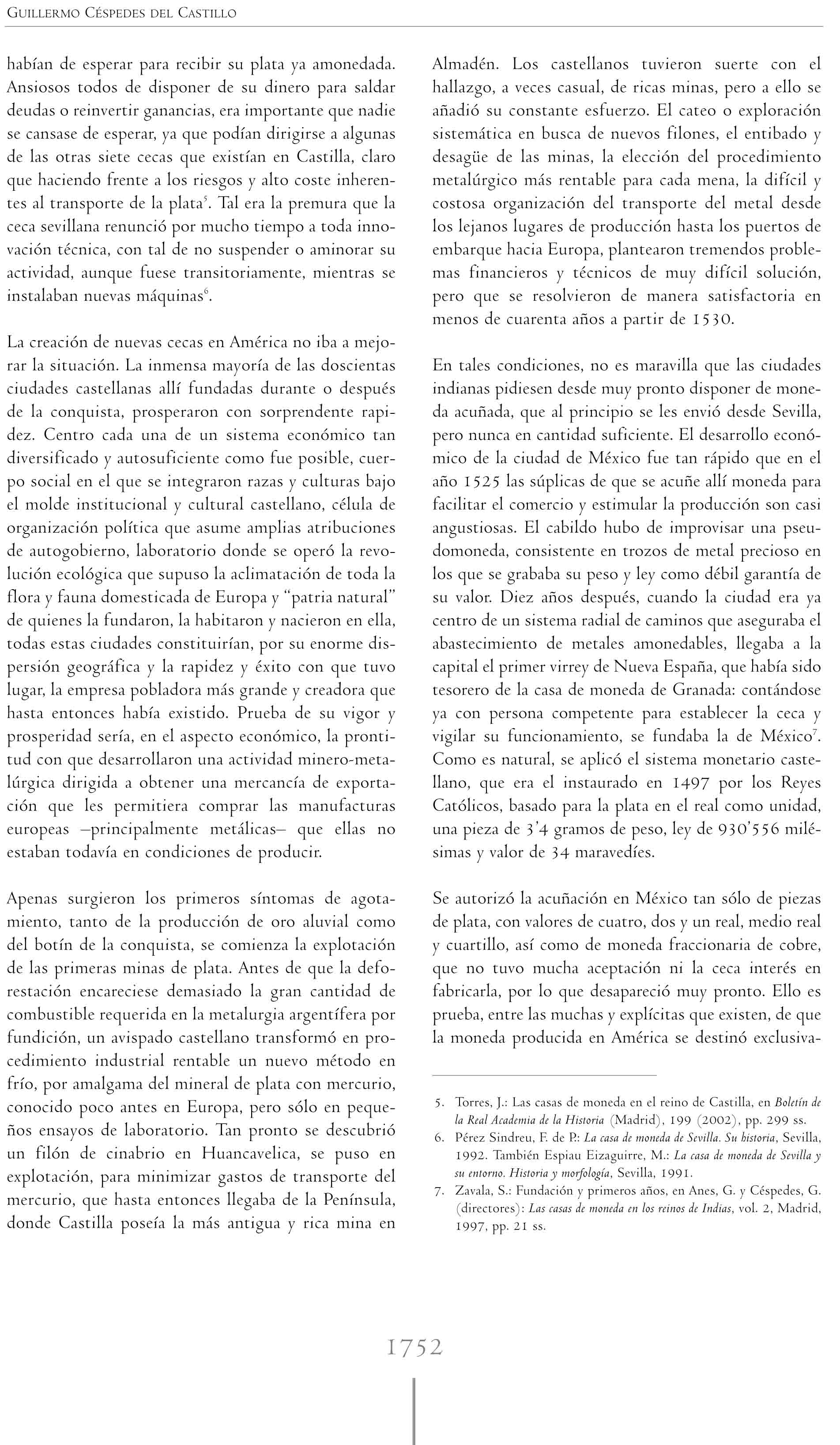
https://moneditis.com/2014/10/20/real-de-a-ocho/
Más de lo mismo pero con algún dato más.
«…por qué la plata americana iba a China a través
de Europa y por qué exactamente el precio de la plata era tanto o más alto en
China que en otra parte del mundo. La respuesta es que después de haberse colapsado
completamente el sistema de papel moneda a mediados del siglo XV, la
economía de la China Ming se convirtió gradualmente al patrón de la plata…»
ISSN: 0213-2079
ITINERARIOS MUNDIALES DE UNA MONEDA SUPRANACIONAL:
EL REAL DEA OCHO O PESO DURANTE LA
EDAD MODERNA*
Worldwide Itineraries of a Supranational Coin: The real de
a ocho or peso during the Early Modern Period
Elena María GARCÍA GUERRA
Instituto de Historia. Consejo Superior de Investigaciones Científicas.
<eguerra@ih.csic.es>
RESUMEN: Este artículo describe la difusión universal del real de a
ocho desde los siglos XVI al XVIII. Múltiplo del real, la moneda de plata por
excelencia de Castilla, esta pieza sirvió de medio de pago en Europa, en el
Báltico, en el Mediterráneo Oriental, en el Extremo Oriente y, por
supuesto, en el interior del continente americano. El análisis de las causas
y consecuencias de su expansión da pie a repasar los flujos internacionales
del dinero y el cuadro’de la división internacional del trabajo durante la
Edad Moderna.
Mercaderes y banqueros de todo el mundo respetaban el real de a ocho
porque sabían que era una moneda que conservó intactas durante más de
siglo y medio sus características intrínsecas, pero la estabilidad de su peso
y su ley fueron la causa, precisamente, de su drenaje desde Castilla hacia
el exterior.
Se concluye que, si bien, desde siempre se ha asociado la moneda fuerte
a la hegemonía, poder y prosperidad de una entidad política y que, en líneas
* Este artículo forma parte de las actividades llevadas a cabo para el proyecto «Monarquía
Hispánica e identidad urbana» (BHA 2000-1510), financiado por el Ministerio de Educación y Ciencia
y dirigido por el doctor Alfredo Alvar Ezquerra. Es, a su vez, la reelaboración de la lección que
impartí en el Curso de Verano de la Universidad Complutense celebrado en El Escorial en agosto
de 2002 titulado El desafío europeo de España en la Época Moderna, bajo la dirección del profesor
Henry Kamen.
© Ediciones Universidad de Salamanca Stud. his, H.a mod., 28, 2006, pp. 241-257
generales, Castilla en su cénit no sería una excepción, sin embargo, a diferencia
de la libra o del dólar, la moneda española de plata no estuvo respaldada
por una economía potente.
Palabras clave: moneda de plata, comercio exterior, balanza comercial,
flujos monetarios, política monetaria.
ABSTRACT: This article deals with the worldwide spread of a Spanish
coin called real de a ocho from the 16th to the 18th century. Múltiple of the
real (1 real de a 8 equals 8 reales), this typically castilian silver coin was
used as a means of payment in Europe, the Baltic lands, Eastern Mediterranean
áreas, the Far East and, of course, the inner American continent.
Thanks to an analysis of the causes and consequences of its expansión, it
is possible here to review the way money flew internationally and to sketch
the international labour división in the early modern period.
Merchants and bankers all over the world accepted the real de a ocho
because they were aware of its intrinsic features, which had been left
untouched for more than a century and a half. Due to its weight and legal
standard of fineness, this coin flew regularly from Castile abroad.
Finally although it has been claimed that a valuable coin is always
linked to a hegemonic political power and Castile followed this rule to a
great extent, we draw the conclusión that the Spanish silver coin was not
correlated to a steady economic framework, as was the case with the pound
or the dollar.
Key words: silver coin, external commerce, comercial balance, monetary
flows, monetary policy.
1. ORÍGENES DE LA PIEZA Y DESCRIPCIÓN DE TIPOS
Para iniciar nuestro viaje, debemos remontarnos al siglo XIV, momento en el
que se acuña por primera vez en Castilla el real, la moneda de plata creada por
Pedro I (1350-1369) que pesaba entre 3,43 y 3,48 gramos, tenía una ley de 11
dineros y cuatro granos y una talla de 67 piezas por marco. Su diámetro estaba
entre los 25 y 26 milímetros. Su valor por entonces era de 3 maravedís. Bajo Juan II
pasó a valer 7 maravedís, mientras que equivalía a 31 maravedís a comienzo del
reinado de los Reyes Católicos y a 34 desde 1497, año de la publicación de la pragmática
sobre la reforma monetaria de Medina del Campo. Acuñada sin interrupción
con diferentes tipos, fue la unidad para la moneda de plata hasta el siglo XIX,
concretamente hasta 1864, cuando se instaura el sistema del escudo de plata.
Dadas las características del real, su múltiplo, la pieza de a ocho venía a pesar
entre los 27 y los 27,5 gramos y el contenido de metal fino o ley debería alcanzar
los 25,5 gramos. Su valor era de 272 maravedís y su talla se estableció en 8,375
piezas por marco. Tenía un diámetro de 40 milímetros. Una pieza, pues, en línea
con las otras maximonedas europeas aparecidas a finales del siglo XV y que
empezó a acuñarse con profusión a partir de los reinados de Carlos V y Felipe II.
Esta pieza pronto se convirtió en la moneda más solicitada pues proporcionó la
liquidez necesaria para hacer funcionar el sistema de los intercambios internacionales.
Reales de a ocho o pesos que se acuñaron en las cecas peninsulares, especialmente
en las de Sevilla y Madrid, y en las Casas de Moneda de México (1535),
Santo Domingo (1536), Lima (1565), Potosí (1572), Bogotá (1620), Guatemala
(1731) y Santiago de Chile (1743).
En cuanto a la tipología de estas piezas, los reales de a ocho acuñados en la
Península en tiempos de Felipe II llevaban en el anverso la leyenda
PHILIPPVS.II.DEI GRATIA y en el reverso aparecía + HISPANIARVM REX. Los
acuñados en América variaban respecto a los batidos en la Península y así, en el
anverso la figura representada era el escudo coronado con las armas de Castilla,
León, Granada, Aragón, Sicilia, Austria, Borgoña, Brabante, Portugal, Flandes
y Tirol. En el campo, a la izquierda, (adorno) VIII (adorno) y doble gráfila de
puntos. La leyenda que llevaban era PHILIPPVS D (adorno) G (adorno) HISPANIARVM.
En el reverso se representaba o una cruz de Jerusalén, si la moneda
procedía de la ceca de México, o una cruz equilateral si procedía de las cecas de
Potosí, Santa Fe o Lima, ambas con pares de castillos y leones en sus cuarteles
dentro de doble orla de ocho lóbulos. También portaban una doble gráfila de
puntos1. La leyenda era ET (adorno) INDIARVM (adorno) AÑO (adorno). Véanse
los apéndices «Reales de a ocho acuñados en la Península» y «Reales de a ocho
acuñados en América».
El real de a ocho o peso indiano también fue llamado patacón, piece of eight,
piastres, peso fuerte y más tarde, duro y no tardaría en convertirse en la primera
moneda universal utilizada como instrumento de cambio en todo el mundo, -pues
comerciantes que negociaban con regiones en las que existía una demanda de metales
preciosos como el Báltico, Rusia, Levante, India y China la requerían-, amén de
usarse en el mercado interior americano hasta finales del siglo XVIII2. Finalmente,
1. CÉSPEDES DEL CASTILLO, Guillermo: Las casas de moneda en los reinos de Indias, vol. I: Las
cecas indianas en 1536-1825. Madrid, 1996.
2. MARICHAL, Carlos: «El peso o real de a ocho en España y América: una moneda universal»,
en El camino hacia el Euro. El real, el escudo y la peseta. Madrid, 2001, pp. 25-38.
el peso de plata fue el antecesor directo de las monedas aparecidas en el siglo XIX
en numerosos países hispanoamericanos y, también, del dólar estadounidense3.
De esta universal expansión y de las consecuencias que implicó, trataremos
en este artículo.
2. LA DIFUSIÓN EUROPEA
En efecto y como es sabido, la creciente difusión del peso de plata se produjo
a partir de la puesta en marcha de numerosas minas argentíferas en los virreinatos
del Perú -como la del Cerro Rico de Potosí- y de Nueva España o México -como
las de Guanajuato y Zacatecas-. Hacia finales del siglo XVII, el descubrimiento y
explotación de las minas de oro brasileñas convirtió en menos apremiante la dependencia
monetaria del mundo entero respecto a las fuentes de producción españolas.
Sin embargo, cuando se considera todo el período comprendido entre 1500 y 1750,
es verdad que de México y Perú provino más del 80% de la producción mundial
de plata que osciló, en las mismas fechas, entre las 40.000 y las 70.000 toneladas 4.
Como resultado de esta avalancha de metales preciosos, durante los siglos
XVI, XVII y XVIII, la estructura de los sistemas monetarios nacionales y del
comercio internacional se modifica profundamente. La manifestación más espectacular
de este cambio es la circulación acelerada del oro y de la plata y, en menor
medida, de la del cobre. Este aumento de la liquidez se generalizó a través del
mundo. Las monedas de oro y plata se dispusieron a franquear todas las fronteras
entre los Estados, legal o ilegalmente. Las sacudidas generadas por este movimiento
de metales preciosos tuvieron un gran alcance. En primer lugar, el
descubrimiento de la ruta del Cabo en 1498 trastornó todo el sistema de las zonas
monetarias y comerciales intermediarias en el Próximo Oriente y en el Mediterráneo,
y estableció una línea directa de enlaces económicos entre Asia y Europa
a lo largo de la cual los metales preciosos podían, bajo forma de monedas, desplazarse
en adelante mucho más fácilmente por el mundo. El segundo efecto
concernía al cambio experimentado en la situación monetaria de España.
El monopolio ejercido por la Corona de Castilla sobre las reservas americanas
y, por ende, sobre la oferta monetaria, creó una situación excepcional para sus
3. GARCÍA GUERRA, Elena María: Voz «Real» y Voz «Peso» de la Gran Enciclopedia Cervantina,
editada por el Centro de Estudios Cervantinos de Alcalá de Henares (en prensa). Remitimos
también para todo lo anterior a RuiZ TRAPERO, María: «El real de a ocho: su importancia y trascendencia
», en GALENDE DÍAZ, J. C. (dir.): IVJornadas Científicas sobre Documentación de Castilla
e Indias en el siglo XVI. Madrid, 2005, pp. 357-377.
4. CHAUDHURI, K. N.: «Circuits monétaires internationaux, prix compares et spécialisation
économique, 1500-1750», en DAY, John (ed.): Etudes d’histoire monétaire. Lille, 1984, pp. 49-67.
gobernantes. Los reyes de la Casa de Austria pudieron, de este modo, multiplicar
sus gastos y construir un imperio, lo que permitió, a su vez, a los otros países de
Europa desarrollar su comercio 5.
Así, podríamos preguntarnos qué pasó con los pesos de plata una vez que se
introdujeron en los países europeos. Al parecer, cerca de una tercera parte fue a
parar a las respectivas casas de moneda de Francia, Inglaterra y Holanda, donde
fueron refundidos o, en algunos casos, simplemente resellados 6. Aunque estos
tesoros metálicos tuvieron por origen la plaza de Sevilla, su verdadero centro de
redistribución se encontraba en otra parte: en el mercado financiero internacional
de Amberes. El eje del Atlántico norte continúa funcionando hasta 1566, antes de
la revuelta de los Países Bajos y antes de que los azares de la ruta marítima no
condujeran a buscar una solución de recambio que fue finalmente el Mediterráneo.
Aquí, las antiguas relaciones entre Sevilla y los mercaderes y banqueros
genoveses se revelaron particularmente útiles a la Corona española. La plata que
hacía falta a Felipe II para sus gastos civiles y militares en Italia, Alemania y
Flandes fue transferida de Barcelona a Genova. De Genova, familias de banqueros
como los Spinola y los Fugger velaban para mandar esos fondos al norte de los Alpes,
muy a menudo transformados en oro que conseguían a cambio de la plata, por
ejemplo, en Florencia 7. Desviar los tesoros americanos hacia Genova significaba
introducir una enorme cantidad de monedas nuevamente acuñadas en todas las
economías mediterráneas.
Pero con la llegada de la República Holandesa a una posición de supremacía
comercial y financiera en Europa occidental, el centro del comercio de los metales
preciosos pasa a Amsterdam. Y la creación casi simultánea de dos compañías de
las Indias Orientales en Inglaterra y en los Países Bajos dio una nueva dimensión
a los movimientos monetarios a escala planetaria. El comercio europeo con Asia
por la ruta del Cabo conoció un gran impulso a partir de 1620, y antes de finales
de siglo había alcanzado tales proporciones que toda la economía mercantil y
monetaria de Occidente se encontró profundamente afectada 8.
Así pues, otra parte importante de los pesos de plata no se entregaron a las
cecas europeas, sino que siguieron en manos de comerciantes que los requerían para
llevar a cabo sus negocios con otras regiones donde existía una demanda de metales
preciosos: esto es, el Báltico, Rusia, India, China y otros territorios orientales.
5. CHAUDHURI, K. N.: «Circuits monétaires internationaux, … », p. 52.
6. MARICHAL, Carlos: «El peso o real de a ocho en España…», p. 33.
7. ClPOLLA, Cario M.: «La moneda en Florencia en el siglo XVI», en El gobierno de la moneda.
Ensayos de historia monetaria. Barcelona, 1994, pp. 63-95.
8. CHAUDHURI, K. N.: «Circuits monétaires internationaux, …», p. 58.
3. LA DIFUSIÓN POR ORIENTE
Existen diversas monografías especializadas que analizan el comercio con el
Báltico en los siglos XVI-XVIII, demostrando que las exportaciones de maderas,
pescado, pieles y otras materias primas a Inglaterra y países de la Europa Central
producían un importante reflujo de metálico, incluyendo cantidades considerables
de pesos de plata. De igual forma, se han realizado algunos estudios sobre
los flujos de metálico al Levante, en particular a través del Imperio Otomano, en
los siglos XVI-XVIII, aunque dicho tránsito tendió a disminuir con la extraordinaria
intensificación de la navegación alrededor del cabo de Buena Esperanza.
No obstante, una parte de la citada plata salió con dirección al
Mediterráneo musulmán. Los reales de plata aparecieron en los Balcanes hacia
1530, mientras que el peso o real de a 8 lo hizo en Argel en 1570. En 1610 tenía
carta de naturaleza en todo el Mediterráneo oriental 9.
De todas formas, hay que señalar que el litoral norteafricano y las escalas
levantinas fueron en buena medida simples escalas de un viaje más largo hacia el
Extremo Oriente. Efectivamente, a la China la plata no sólo llegaba para atesorarse,
como han sostenido algunos autores como Charles Kindleberger 10, sino
que se demandaba para circular en el mercado interno. De hecho, el oro apenas
circulaba como moneda. Atwell 11 afirma que la demanda de plata se intensificó
de manera notoria desde principios del siglo XVI, siendo complementada por la
demanda externa creciente de productos chinos, incluyendo sedas naturales,
textiles de seda y algodón, té, porcelanas, mercurio, piedras preciosas y otros
productos.
Durante el siglo XVI, gran parte de la demanda de plata en China fue suplida
por Japón, que experimentó un auge en su minería de plata entre 1540 y 1650,
pero luego fue superada por la llegada de cargamentos de pesos de plata hispanoamericanos
que llegaron a China por tres rutas: a través de Levante y la India,
a través de las compañías mercantiles europeas de Indias Orientales y a través del
comercio con Manila. La famosa Nao de Manila, que cruzaba el Océano Pacífico
directamente de México a Filipinas, cargaba un promedio de dos a tres
millones de pesos-plata por año desde fines del siglo XVI hasta fines del siglo XVIII.
Parte del metálico provenía del Perú, donde existía una fuerte demanda de
9. MARTÍN CORRALES, Eloy: «La «saca» de plata americana desde España hacia el Mediterráneo
musulmán, 1492-1830», en BERNAL, A. (ed.): Dinero, moneda y crédito en la Monarquía
Hispánica. Madrid, 2000, pp. 471-485.
10. KINDLEBERGER, Charles: Spenders and Hoarders: The World Distribution of Spanish
American Silver, 1550-1750. Singapur, 1989.
11. ATWELL, William S.: «International Bullion flows and the Chínese Economy, circa 1530-
1650», Past andPresent, núm. 95, (1982), pp. 68-90.
productos asiáticos, pero en el siglo XVIII la gran mayoría era plata mexicana. Una
de las razones técnicas que permitían que tales cantidades de plata pasasen de
Occidente a Asia era que si en Europa la relación oro/plata era de 1 a 10 (entre
1585 y 1600), en China no era más que 1 a 5, lo que significaba una fuerte prima
sobre la plata 12.
Por otro lado, hay que tener en cuenta las diferencias entre los costes de
producción y los niveles de precios como motor del crecimiento del comercio
entre Europa y Asia. Las importaciones del Próximo Oriente, de la India, de la
Insulindia y de la China estaban reguladas en metal blanco, cuyos costes de extracción
eran más bajos en América que en cualquier otro sitio, exceptuando Japón.
En este sentido, no hay duda de que las economías occidentales se beneficiaban
de una ventaja relativa en la producción minera y en la creación monetaria. Los
productores asiáticos, por su parte, se beneficiaban de una ventaja relativa por lo
que se refería a los costes de los productos elaborados, ya fuera por una alta
productividad, por bajos salarios o por niveles bajos de precios 13.
No obstante, lo que fluía entre Europa y China eran miles de toneladas de
plata americana. Durante 1550-1650, sin embargo, China es conocida por haber
exportado oro a Europa (así como a Japón y México a través del Océano Pacífico).
Si la explicación tradicional del déficit comercial europeo fuera válida,
entonces diferentes tipos de moneda habrían fluido a Asia para pagar el supuesto
déficit de Europa con China. La realidad histórica, al contrario, nos indica que
sólo fue la plata la que fluía desde América a través de Europa hacia China y esto
porque el poder adquisitivo de la plata en China era el doble que en cualquier
otro sitio del mundo. Y ya hemos señalado que otro importante tipo de moneda
-el oro- fluía en la dirección opuesta a la plata, de China a Europa porque aquí
el poder adquisitivo del oro era más alto que en China.
Es decir, y siguiendo a Dennis Flynn, lo que ha sido erróneo hasta ahora ha
sido no dividir el oro de la plata, hablar de metales preciosos en general a la hora
de analizar los flujos internacionales del dinero en la Edad Moderna.
En otras palabras, es verdad que los europeos controlaban los movimientos
de la plata en todos los mares comerciales del mundo, pero enmarcando estos
movimientos generales sólo en términos de balanzas comerciales euroasiáticas 14
12. CHAUDHURI, K. N.: «Circuits monétaires internationaux, …», pp. 59-60.
13. CHAUDHURI, K. N.: «The Monetary and Currency Problems of European Trade with Asia
during the 17th and 18th Centuries», en BARBAGLI BAGNOLI, Vera (ed.): La moneta nell’economía
europea. Secoli XIII-XVIII, Florencia, 1981, pp. 699-731.
14. FLYNN, Dennis y GlRÁLDEZ, Arturo: «Imperial Monetary Policy in global perspective»,
en BERNAL, A. (ed.): Dinero, moneda y crédito en la Monarquía Hispánica. Madrid, 2000, pp.
385-403.
se pierde parte de la explicación de por qué la plata americana iba a China a través
de Europa y por qué exactamente el precio de la plata era tanto o más alto en
China que en otra parte del mundo. La respuesta es que después de haberse colapsado
completamente el sistema de papel moneda a mediados del siglo XV, la
economía de la China Ming se convirtió gradualmente al patrón de la plata 15.
Además de la conversión del sistema monetario chino a la plata, en 1570 se asistió
a una aceptación en todo el imperio de la plata como base de la recogida de
impuestos. Fue esta conversión de la más grande economía mundial tanto en
términos monetarios como fiscales, lo que empujó la demanda de la plata
en China. Según este panorama, los flujos monetarios no deben ser vistos
exclusivamente como asuntos de una balanza comercial pasiva sino que, en este
caso, la plata por sí misma desempeñó el papel principal 16.
Pero no era China el único mercado asiático con una fuerte demanda de plata
hispanoamericana. Desde fechas muy tempranas se dio una exportación muy
fuerte de telas estampadas de algodón desde Bengala, Madrás y otras regiones de
la India, colocándose en una gran diversidad de mercados internacionales.
A cambio, los comerciantes entregaban mayoritariamente plata, siendo especialmente
importante la participación de la famosa Compañía Inglesa de las Indias
Orientales 17.
4. LA CIRCULACIÓN EN AMÉRICA
Hasta aquí hemos centrado la atención en la circulación muy extendida del
peso de plata en Europa y Asia, pero debe recordarse que en el continente americano
esta moneda no sólo se producía, sino que además era claramente hegemónica
en algunos sectores de la economía. Una abundante bibliografía demuestra
15. Informaciones detalladas sobre esta transformación del sistema monetario chino pueden
encontrarse en las obras de GLAHN, Richard von: Fountain of Fortune: Money and Monetary Policy
in China, 1000-1700, 1996; «Myth and Reality of China’s l/^-Century Monetary Crisis», Journal
of Economic History, vol. 56, núm. 2, pp. 429-454; «Money-use in China and Changing patterns of
Global Trade in Monetary metáis, 1500-1800», en NÚÑEZ, Clara Eugenia (ed.): Monetary history
in globalperspective, 1500-1808, 1998. pp. 51-58.
16. FLYNN, Dennis y GlRÁLDEZ, Arturo: «Imperial Monetary Policy …», pp. 390-393.
17. MARICHAL, Carlos: «El peso o real de a ocho en España…», pp. 25-38; CHAUDHURI, K. N.:
The Trading World of Asia and the English EastAsia Company, 1660-1760, Cambridge University
Press, 1965; PRAKASH, Om: «Precious metal flows into India in the Early Modern Period», en
NÚÑEZ, Clara Eugenia (ed.): Monetary history in global perspective, 1500-1808. Madrid, 1998, pp.
73-84 y CHAUDHURY, Sushil: «The inflow of silver to Bengal in the global perspectiva circa 1650-
1757», en NÚÑEZ; Clara Eugenia (ed.): Monetary history in global perspective, 1500-1808. Madrid,
1998, pp. 85-97.
la importancia de los pesos de plata en el comercio al por mayor en los diversos
virreinatos y capitanías generales del Imperio español, en las operaciones de
ingresos y gastos de la Real Hacienda americana y en la mayoría de las actividades
realizadas en las regiones mineras aun cuando había un fuerte drenaje hacia
el exterior, que provocaba una escasez cíclica de pesos de plata y permanente de
moneda menuda en dichas colonias americanas 18. No obstante, la gran paradoja
de la historia latinoamericana de los siglos XVI al XVIII es que, gracias a los piratas
y a las ambiciones de otras naciones, un alto volumen de los metales tuvo que
invertirse en América, lo que dio lugar a una disminución de las remesas hacia
Europa 19.
Por último, debemos mencionar a los comerciantes de las Trece Colonias
angloamericanas que desde mediados del siglo XVIII crearon canales de intercambio
a través de las Antillas. Particularmente boyante fue el comercio con
Cuba, a donde llegaban anualmente docenas de navios de Boston, Filadelfia y
Baltimore para vender harinas y textiles a cambio de pesos de plata acuñados en
la Casa de Moneda de México 20.
5. EL PRECIO DE LA PLATA
Por tanto, si estos fueron los caminos de la plata, para la Corona española
y para los agentes económicos privados encargados de la explotación minera y
del avituallamiento de las colonias había un interés compartido en conocer la
cuantía de los metales extraídos: a la primera, por lo que le suponía en cuanto
ingresos extraordinarios cada vez más imprescindibles en su política hegemónica
en Europa y por la capacidad que las remesas indianas tenían para afianzar
su crédito internacional; para los segundos porque la cuantía de los metales
monetarios era la que regulaba la relación oferta/demanda entre metrópoli y
colonias 21.
Si se reconstruye la red por la cual se transmitieron las novedades sobre los
caudales americanos, se puede observar que el centro de la red estaba en Madrid.
Las noticias procedentes de Madrid, Sevilla y Lisboa se juntaron y coleccionaron
18. MARICHAL, Carlos: «El peso o real de a ocho en España …», p. 37.
19. TOVAR PINZÓN, Hermes: «Remesas, situados y Real Hacienda en el siglo XVII», en BERNAL,
A. (ed.): Dinero, moneda y crédito en la Monarquía Hispánica. Madrid, 2000, pp. 241-267.
20. MARICHAL, Carlos: «El peso o real de a ocho en España…», p. 38.
21. BERNAL, Antonio Miguel: «Dinero, moneda y crédito. De la Monarquía Hispánica a la integración
monetaria», en BERNAL; A. (ed.): Dinero, moneda y crédito en la Monarquía Hispánica.
Madrid, 2000, pp. 11-28.
en Venecia, Roma y Amberes. De allí se distribuyeron a los interesados en el
Imperio Germánico y en Italia 22.
Ahora bien, la aceptación de que el Imperio español estaba financiado por las
minas americanas no contesta por sí misma a una importante pregunta. ¿Por qué
el boom inédito de la plata en América y en Japón no consiguió bajar rápidamente
el precio de la plata mundial a sus precios de coste? Si debido a la abundancia,
los precios mundiales de la plata hubieran bajado rápidamente, los
beneficios de la industria de la plata se habrían eliminado, no habrían existido, lo
cual hubiera reducido considerablemente las bases financieras del Imperio
español. Pero los precios de la plata descendieron muy lentamente y fue gracias
a la masiva utilización de la plata dentro de China; la abundante producción de
la plata de América y Japón bajó los precios de la plata sólo gradualmente porque
la demanda cada vez mayor de China empujaba el precio de la plata. Proceso que
se afirmó durante el siglo XVIII por la triplicación de la población. Por tanto, el
lento declive del valor mundial de la plata fue crucial para la Corona española 23.
No obstante, la idea que me gustaría resaltar es que los reales de a ocho españoles
se convirtieron en las más buscadas piezas europeas para los tratos en todo
el mundo, no sólo porque abundasen, sino porque sus cualidades intrínsecas
inspiraban confianza a los mercaderes y a los banqueros. Todos respetaban esta
moneda porque reconocían su calidad, porque reconocían que era una moneda
íntegra tanto en su peso como en su ley. Porque, y a diferencia de lo sucedido
con otras monedas europeas, los reales no experimentarán ninguna mutación, no
ya sólo en el peso o en la ley, sino ni siquiera en su valor nominal entre 1497 -año
de la citada reforma llevada a cabo por los Reyes Católicos- y 1686 -año de la
segunda gran reforma del numerario castellano realizada en tiempos de Carlos
II-, a excepción de los efímeros cambios efectuados en 1642.
6. LAS DECISIONES EN MATERIA MONETARIA
Así pues, la Corona española para sostener sus ambiciones imperiales apostó
por desarrollar un tipo de política monetaria en el plano internacional y otro en
22. PlEPER, Renate: «Consideraciones acerca del uso de los metales preciosos americanos en la
Europa de los Austrias, en BERNAL, A. (ed.): Dinero, moneda y crédito en la Monarquía Hispánica,
Madrid, 2000, pp. 425-438.
23. FLYNN, Dennis y GlRÁLDEZ, Arturo: «Imperial Monetary Policy …», pp. 392-394; CHAUDHURI,
K. N.: «The Monetary and Currency Problems of European Trade with Asia during the 17^
and 18th Centuries», en BARBAGLI BAGNOLI, Vera (ed.): La moneta nell’economía europea. Secoli
XIII-XVIII. Florencia, 1981, pp. 699-731.
el plano doméstico. Es decir, adoptó una política de moneda plena, buena y fuerte
en el frente internacional mientras que adoptó una política de moneda débil en
el frente doméstico que tuvo su manifestación más evidente en las masivas acuñaciones
de moneda de vellón realizadas a partir de finales del siglo XVI en Castilla.
Capítulo aparte merecería el análisis de las consecuencias que para el interior de
dichos reinos tuvo esta doble política, claramente favorable a las élites rentistas
y perjudicial para el sector empresarial, pero lo que sí está claro es que fue rentable
desde el punto de vista exterior, pues permitió a sus reyes el pago de sus ejércitos
en el extranjero con buena moneda y la conservación de su prestigio como autoridad
política mundial 24.
Y esta doble política tuvo su reflejo en la rentabilización al máximo que consiguieron
de la renta del señoreaje, o porcentaje que en virtud del ejercicio de un
derecho real, se cobraba a los dueños de los metales en pasta que iban a las cecas
a acuñarlos.
De un modo general, los monarcas podían obtener un caudal estable de señoreaje
a largo plazo, manteniendo también estables y sin cambios las unidades
monetarias. Por el contrario, podían buscar, de manera oportunista, mayores
ingresos a corto plazo, elevando las tasas de señoreaje o emitiendo más cantidades
de numerario, siempre y cuando controlaran la producción, circunstancia
que no estaba en su mano. La aplicación de estas posibilidades en el mercado
de las monedas preciosas castellanas, implicaba distintos tipos de costes: la oposición
política, la pérdida del prestigio internacional de las piezas y la reacción
adversa del público, el cual podía no acuñar sus metales o hacerlo en un país
vecino. Circunstancias que harían descender las entradas futuras debidas a esta
renta.
Pero si nos centramos en el mercado de las monedas menores, el hecho de
que su acuñación fuera, prácticamente, un monopolio estatal y de que la elasticidad
de su demanda fuera pequeña, hizo de estas piezas una fuente de ingresos
cómoda para el Erario público. Cuando en la Edad Moderna los reyes de la Casa
de Austria se vieron presionados por los elevados gastos que debían realizar, se
aprovecharon de que la reacción del pueblo castellano no podía ser excesivamente
airada ante una política oportunista a corto plazo ejercida sobre las monedas fraccionarias,
pues las necesitaban para el gasto diario y no podían sustituirse con facilidad,
al contrario de lo que sucedía con las monedas de oro y plata 25.
24. GARCÍA GUERRA, Elena María: Las alteraciones monetarias en Europa durante la Edad
Moderna. Madrid, 2000, pp. 54-58.
25. MOTOMURA, Akira: «The Best and Worst of Currencies: Seignoirage and Currency Policy
in Spain, 1597-1650», The Journal of Economic History, Liv, (1994), pp. 109-112.
Si lo observamos desde una perspectiva global, la aparentemente contradictoria
política monetaria fue una estrategia coherente. Los porcentajes cobrados
por acuñar monedas preciosas eran deliberadamente modestos, pero el hecho de
que la Corona transmitiera y mantuviera la confianza en su moneda de plata,
impulsó la acuñación de millones de pesos lo que le permitió obtener sustanciosos
beneficios de señoreaje. Por tanto, la política monetaria internacional de
España ayudó a financiar su imperio. De nuevo, la Corona se comportó racionalmente
desde el punto de vista financiero. Dado que el mercado de la moneda
de vellón era pequeño comparado con el mercado de las monedas preciosas de
circulación internacional, se pensó que era más conveniente cobrar más porcentaje
por señoreaje a nivel doméstico 26. Es, pues, evidente, que, en líneas generales,
las decisiones políticas primaban por encima de los estímulos económicos
durante la Edad Moderna y no se puede poner en cuestión el hecho de que
entonces el Estado fue el gran regulador de los stocks de oro y de plata en los
diferentes países 27.
7. FRAUDES Y FALSIFICACIONES
Pero a pesar del prestigio internacional del real de a ocho, éste no estuvo
inmune al peligro de defectos en su ley, de recortes intencionados y de descaradas
falsificaciones, debidas en gran parte a las burdas técnicas de estampado
y acuñación existentes entonces. En este sentido, la falsificación de los reales
de a ocho de Potosí, sucedida a mediados del siglo XVII, es el episodio más conocido,
el cual tuvo serias repercusiones en Castilla y en el mundo. Desde antes
de 1640, las mermas en las barras peruanas se hicieron tan frecuentes que ya
desbordaban la categoría de fraude ocasional para convertirse en abuso generalizado,
con la complicidad de los ensayadores de Indias. El asunto comenzó
a revestir extrema gravedad cuando, en vez de la plata en pasta, comenzaron a
llegar grandes cantidades de reales de a ocho de calidad cada vez más deficiente
que, pronto, por vía del comercio y de los asientos, llegaron a los restantes países
de Europa.
En cuanto a las medidas tomadas por el gobierno de Castilla -cuya máxima
preocupación era conservar intacto el crédito de su moneda de plata- para atajar
las consecuencias del fraude en el comercio y en las provisiones exteriores, se
aplicó la pena de muerte a los ensayadores de la Casa de la Moneda de Potosí y
26. FLYNN, Dennis y GlRÁLDEZ, Arturo: «Imperial Monetary Policy …», pp. 395-400.
27. MORINEAU, Michel: «Fonction de base et diversification des roles de l’or et de l’argent dans
la vie économique á l’époque moderne», en NÚÑEZ; Clara Eugenia (ed.): Monetary history in global
perspective, 1500-1808. Madrid, 1998, pp. 11-19.
en octubre de 1650 se estableció que se pagaría a sus dueños, de contado, por cada
real de a ocho del Perú seis reales de plata o nueve de vellón 28. La pérdida total
para la Hacienda y particulares ocasionada por esta deficiencia de los reales se
estimó en dos millones de ducados. Las acuñaciones en la ceca peruana se reanudaron
en 1653, modificándose las improntas y pronto la moneda española de plata
reafirmó su bien ganado prestigio 29.
Será a partir de 1728, con el decreto de modernización de la moneda española,
cuando el proceso de fabricación de la moneda de plata se mecanice y perfeccione,
disminuyéndose en gran medida las posibilidades de falsificaciones y
alteraciones de las piezas 30. Entre los nuevos tipos que los Borbones crearon en
América, a partir de Felipe V, para diferenciar las piezas acuñadas en el Nuevo
Mundo de las de la Península, destacan precisamente los del real de a ocho,
moneda llamada «columnaria de mundos y mares» por los dos hemisferios coronados,
entre las columnas de Hércules y sobre el océano, representados en sus
reversos 31.
8. CONCLUSIONES
En definitiva, fueron el dinero, la moneda y el crédito las piezas maestras
de la profunda transformación que, durante los siglos XVI y XVII, marcan en
Europa occidental los albores del capitalismo. Sólo con la afluencia del oro y
la plata americanos hacia Europa se dieron las condiciones suficientes para
abrir las posibilidades reales a un sistema internacional de cambios. Se tendía
a una racionalización de los sistemas monetarios, lo que en buena parte se
28. Premática en que Su Majestad manda que toda la moneda de plata labrada en elReyno del
Perú se reduzga y ponga conforme a la ley; Pregón en que el rey, nuestro señor, manda que todos los
reales de a 8 y de a 4 del Perú, sin distinción alguna de unos a otros, desde agora en adelante, valgan
los de a 8 a seis reales de plata y los de a 4, tres. Archivo Histórico Nacional, Sección Consejos, Libro
1235, fol. 217 y 237.
29. DOMÍNGUEZ ORTÍZ, Antonio: «Falsificación de moneda de plata peruana a mediados del
siglo XVII», en Homenaje a don Ramón Carande, vol. II. Madrid, 1963, pp. 141-155.
Pregón en que Su Majestad manda que la moneda de plata labrada en el Perú con el cuño
nuevo corra en estos Reynos, como la demás moneda de plata labrada en ellos (23 de
septiembre de 1653). Archivo Histórico Nacional, Sección Consejos, Legajo 50775, Caja 2,
Expediente 29.
GARCÍA GUERRA, Elena María: Voz «Real» y Voz «Peso» de la Gran Enciclopedia Cervantina,
editada por el Centro de Estudios Cervantinos de Alcalá de Henares (en prensa).
30. MARICHAL, Carlos: «El peso o real de a ocho en España …», p. 28.
31. TORTELLA, Teresa: «Introducción», en El camino hacia el Euro. El real, el escudo y la peseta.
Madrid, 2001, pp. 13-24.
conseguiría gracias al papel de divisa que tuviera la moneda de plata española 32.
En nuestra época, en la que se va imponiendo una tendencia hacia la unificación
o integración de los sistemas monetarios, la revisión de diversas experiencias
históricas de monedas universales del Antiguo Régimen tiene un claro interés e,
inclusive, puede llegar a tener alguna utilidad. Quizás igualmente importante sea
el afirmar que la revisión de la historia monetaria internacional del pasado nos
demuestra que los procesos de globalización contemporáneos tienen antecedentes
de larga data 33. Quienes no piensan así es porque no saben gran cosa de la revolución
cultural que tuvo lugar en los siglos XVI y XVII, precisamente los siglos en
los que se desarrolló el pensamiento económico y monetario de los escolásticos
españoles 34.
El cuadro de la división internacional del trabajo entre 1550 y 1750 puede ser
esquematizado así: la plata americana contribuye a financiar el endeudamiento
español. Los beneficios que los banqueros genoveses obtenían de sus operaciones
financieras y, más tarde, los holandeses y los ingleses de su comercio hicieron que
los empresarios europeos más eficaces consiguieran reunir en sus manos importantes
capitales. Estos capitales pagaron también las importaciones de algodones
indios, especias orientales, sedas y té chino. Los tejidos indios son intercambiados
a su vez con esclavos africanos que producían nuevos géneros en el Nuevo Mundo
destinados a ser consumidos en Europa. El círculo se cerraba cuando el azúcar
de las Islas Barbados endulzaba el té chino en las tazas de porcelana europeas
copiadas sobre las producidas en los hornos de la China imperial 35.
Finalmente, desde siempre se ha vinculado la idea de moneda fuerte y estable
como signo de poder y prosperidad. Se estimaba que una moneda sólida era el
símbolo más preciado de la hegemonía y Castilla en su cénit no sería, sin duda
alguna, una excepción. El peso indiano o real de a ocho de plata marcaría durante
casi tres siglos la pauta de la integración monetaria internacional como más tarde
lo consiguieron los ingleses con la libra y hoy los norteamericanos con el dólar
o como sin duda aspira a conseguirlo Europa con el euro36.
32. BERNAL, Antonio Miguel: «Dinero, moneda y crédito…», pp. 11-28.
33. MARICHAL, Carlos: «El peso o real de a ocho en España …», p. 25.
34. GÓMEZ CAMACHO, Francisco: «Globalización, nominalismo y dinero en los doctores españoles
de los siglos XVI y XVII», en BERNAL; A. (ed.): Dinero, moneda y crédito en la Monarquía
Hispánica. Madrid, 2000, p. 323.
35. CHAUDHURI, K. N.: «Circuits monétaires internationaux, …», pp. 64-65.
36. RAJOY, Mariano: «Conferencia inaugural», en BERNAL, A. (ed.): Dinero, moneda y crédito
en la Monarquía Hispánica, Madrid, 2000, pp. 3-6.
Pero no pequemos de triunfalismo respecto a nuestro real de a ocho y permítaseme
reproducir, a modo de colofón, la idea expresada por el maestro Antonio
Domínguez Ortiz, la cual compartimos:
La sobrevaluación de la moneda española de plata, su ley, su baratura, explican su
difusión universal y que fuese un elemento de prestigio para la Monarquía Hispánica,
pero no sería apropiada compararla con la actual hegemonía del dólar, porque
no estaba respaldada por una economía potente; más bien fue causa de debilidad,
porque facilitó la fuga de la plata, acuñada y en barras 37.
37. DOMÍNGUEZ ORTIZ, Antonio: «Juros y censos en la Castilla del Seiscientos: una sociedad
de rentistas», en BERNAL, A. (ed.): Dinero, moneda y crédito en la Monarquía Hispánica. Madrid,
2000, p. 793.
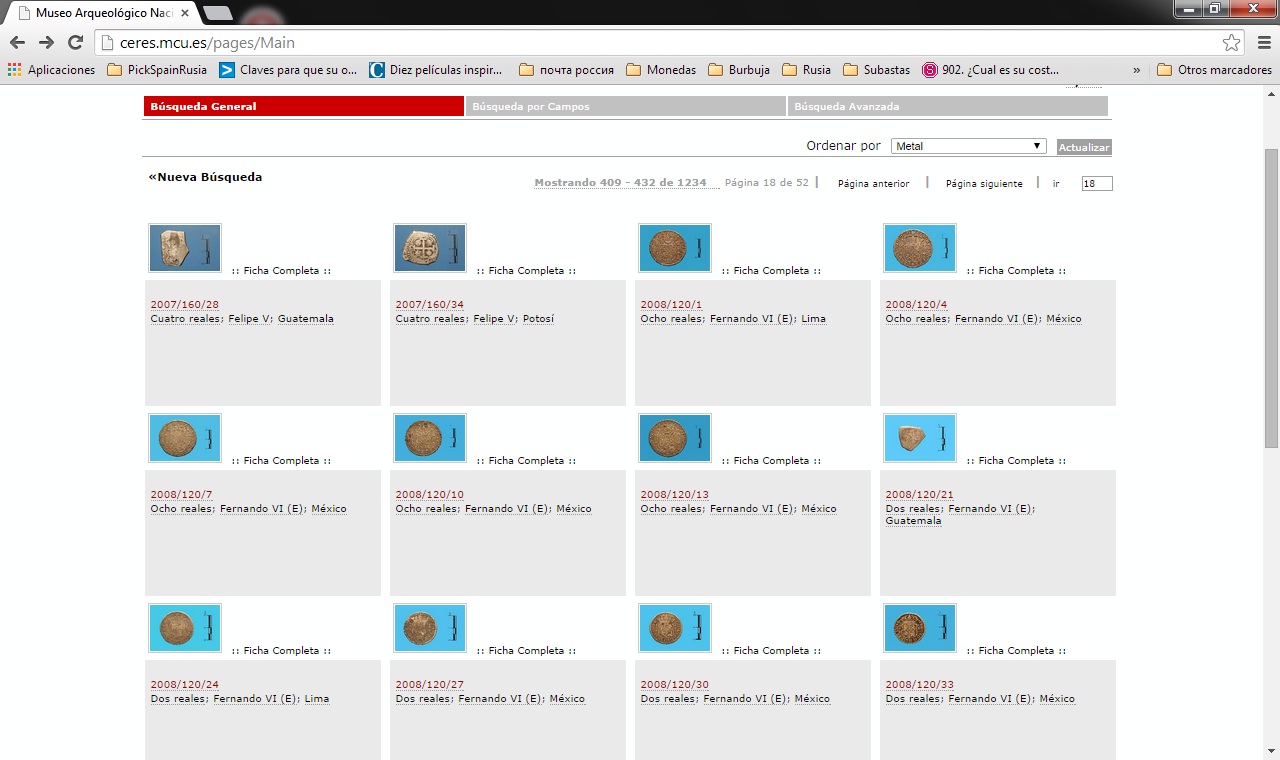
PEDRO I, (1350-1369)
Real. Coruña. Plata
FELIPE II, (1556-1598)
Real de a ocho, 1591. Segovia. Plata
Ocho reales acuñados en Segovia
en 1632 [cat. 322]
Real de a ocho acuñado en Granada
en 1679 [cat. 329]
Real de a ocho acuñado en Segovia
en 1687 [cat. 330]
REALES DE A OCHO ACUÑADOS EN AMÉRICA
Real de a ocho acuñado en Potosí
en 1665 [cat. 345]
Real de a ocho acuñado en México
en 1615 [cat. 341]
Real de a ocho acuñado en Potosí
en 1676 [cat. 353]
FELIPE V (1700-1746]
Real de a ocho, 1737. México. Plata
«Columnaria de mundos y mares»
CARLOS III (1759-1788]
Real de a ocho
1772. México. Plata. PESO: 26,67 gr
© Ediciones Universidad de Salamanca Stud. his., H.a mod., 28, 2006, pp. 241-257
http://gredos.usal.es/jspui/bitstream/10366/70460/1/Itinerarios_mundiales_de_una_moneda_supr.pdf
«…los reales de a ocho españoles
se convirtieron en las más buscadas piezas europeas para los tratos en todo
el mundo, no sólo porque abundasen, sino porque sus cualidades intrínsecas
inspiraban confianza a los mercaderes y a los banqueros. Todos respetaban esta
moneda porque reconocían su calidad, porque reconocían que era una moneda
íntegra tanto en su peso como en su ley. Porque, y a diferencia de lo sucedido
con otras monedas europeas, los reales no experimentarán ninguna mutación, no
ya sólo en el peso o en la ley, sino ni siquiera en su valor nominal entre 1497 -año
de la citada reforma llevada a cabo por los Reyes Católicos- y 1686 -año de la
segunda gran reforma del numerario castellano realizada en tiempos de Carlos
II…»
«…la plata americana contribuye a financiar el endeudamiento
español. Los beneficios que los banqueros genoveses obtenían de sus operaciones
financieras y, más tarde, los holandeses y los ingleses de su comercio hicieron que
los empresarios europeos más eficaces consiguieran reunir en sus manos importantes
capitales. Estos capitales pagaron también las importaciones de algodones
indios, especias orientales, sedas y té chino. Los tejidos indios son intercambiados
a su vez con esclavos africanos que producían nuevos géneros en el Nuevo Mundo
destinados a ser consumidos en Europa. El círculo se cerraba cuando el azúcar
de las Islas Barbados endulzaba el té chino en las tazas de porcelana europeas
copiadas sobre las producidas en los hornos de la China imperial 35.
Finalmente, desde siempre se ha vinculado la idea de moneda fuerte y estable
como signo de poder y prosperidad. Se estimaba que una moneda sólida era el
símbolo más preciado de la hegemonía y Castilla en su cénit no sería, sin duda
alguna, una excepción. El peso indiano o real de a ocho de plata marcaría durante
casi tres siglos la pauta de la integración monetaria internacional como más tarde
lo consiguieron los ingleses con la libra y hoy los norteamericanos con el dólar
o como sin duda aspira a conseguirlo Europa con el euro36…»








 moneditis real deaocho