10 años 2019 – 1

Sigo con los 10 años del blog. Primera entrada del año 2019

Venimos de aquí:  https://moneditis.com/2024/10/19/10-anos-2018-5/

https://moneditis.com/2024/09/20/10-anos-2018-4/

https://moneditis.com/2024/08/06/10-anos-2018-3/

https://moneditis.com/2024/08/06/10-anos-2018-2/

https://moneditis.com/2024/07/12/10-anos-2018-1/

https://moneditis.com/2024/06/23/10-anos-2017-5/

https://moneditis.com/2024/06/01/10-anos-2017-4/

https://moneditis.com/2024/05/25/10-anos-2017-3/

https://moneditis.com/2024/04/27/10-anos-2017-2/

https://moneditis.com/2024/04/11/10-anos-2017-1/

https://moneditis.com/2024/03/22/10-anos-2016-4/

https://moneditis.com/2024/01/25/10-anos-2016-3/

https://moneditis.com/2024/01/25/10-anos-2016-2/

https://moneditis.com/2024/01/25/10-anos-2016-1/

https://moneditis.com/2023/12/16/10-anos-2015-5/

https://moneditis.com/2023/12/08/10-anos-2015-4/

https://moneditis.com/2023/11/25/10-anos-2015-3/

https://moneditis.com/2023/11/18/10-anos-2015-2/

https://moneditis.com/2023/11/04/10-anos-2015-1/

https://moneditis.com/2023/10/28/10-anos-2014-4/

https://moneditis.com/2023/10/14/10-anos-2014-3/

https://moneditis.com/2023/09/30/10-anos-2014-2/

https://moneditis.com/2023/09/16/10-anos-2014-1/

https://moneditis.com/2023/08/30/10-anos-2013/

Vamos a por la vigésimo quinta (25) entrada conmemorativa; el enlace inferior conecta con la parte del blog tratada, a partir de enero de 2019

https://moneditis.com/page/31/
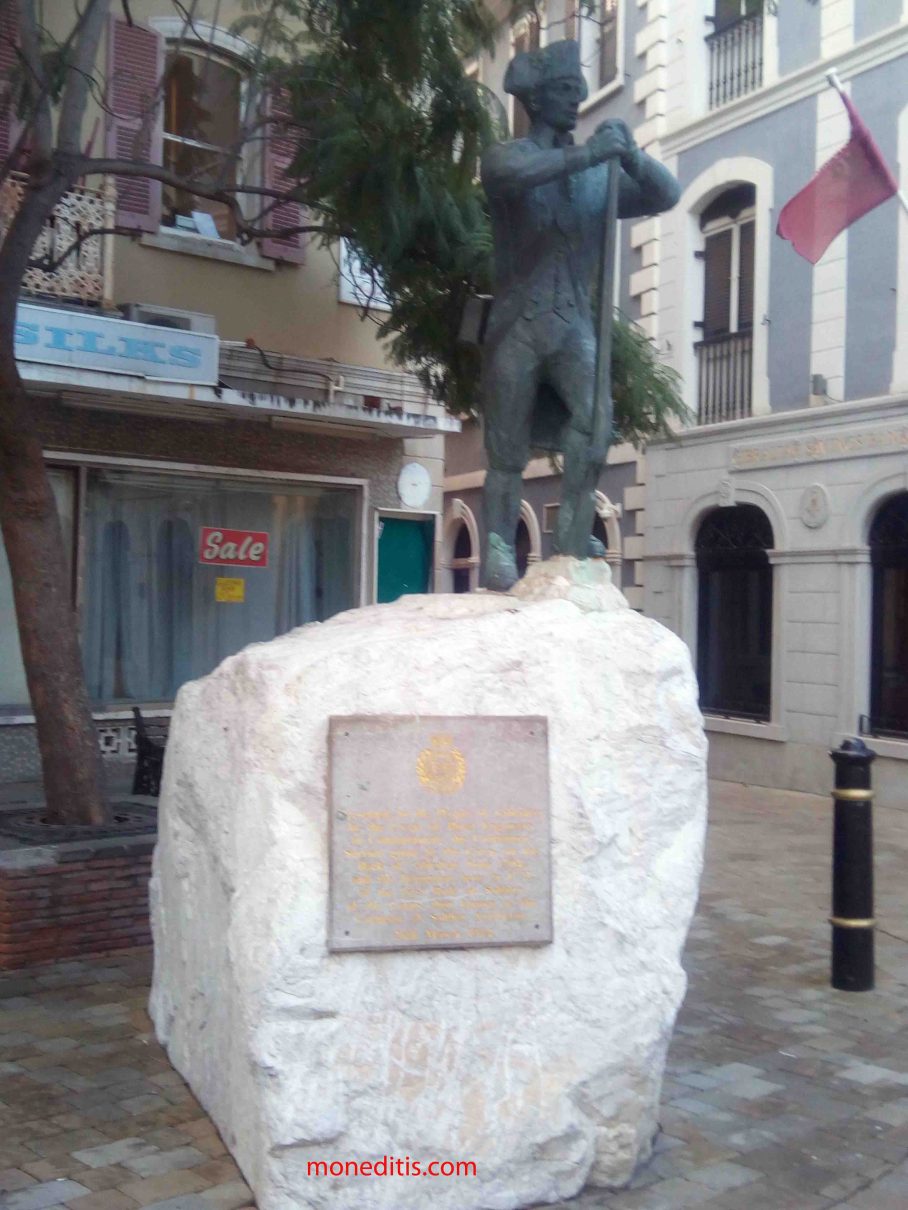
Tras la Convención Numismática de Nueva York   NYINC 2019   y una mirada atrás   2019; moneditis en 2018  me voy a Gibraltar y escribo esta entrada  https://moneditis.com/2019/01/12/gibraltar-numismatico/

Dos (2) entradas sobre la World Money Fair 2019

https://moneditis.com/2019/01/24/world-money-fair-2019/

https://moneditis.com/2019/01/30/kunker-en-la-wmf-2019/

Con  https://moneditis.com/2019/02/05/imperio-espanol-europa-duros-carlos-i/  comienza una serie, de momento inconclusa, de entradas basadas en el siguiente libro

Siguiente entrada de la serie   https://moneditis.com/2019/02/10/imperio-espanol-europa-datos-historicos/

Y vuelvo a San Petersburgo a la subasta presencial mensual en Konros

https://moneditis.com/2019/02/15/%d1%80%d1%83%d0%b1%d0%bb%d1%8c-%d0%bf%d0%b5%d1%82%d1%80%d0%be%d0%b2-7%d1%80-1704-rublo-pedro-i-1704/

Rublo ruso 1704-1705

1704 fue un año importante para la circulación monetaria en Rusia: la Casa de la Moneda de kadashev en Moscú comenzó a emitir rublos de plata con el retrato de Pedro I. Es notable que la ceca de kadashev se creó sin la participación de la orden de la gran tesorería, quedando bajo la autoridad de la Orden Naval, que fue dirigida por uno de los compañeros más cercanos de Pedro, el general Almirante F. A. Golovin. En aquel momento, logró alcanzar el importante objetivo de conseguir una nueva producción de materias primas, lo que parece haber sido posible tras la transferencia de las Series de plata comerciales a la Orden Naval.

La emisión del primer Rublo está asociada con el nombre de Fedor Alekseev (Podoruya), grabador y mecánico que trabajó en Kadashev desde su Fundación hasta al menos el año 1724. Junto con él trabajó el también grabador Venedikht Nikiforov; la autoría del retrato de Pedro I sigue estando en cuestión. La similitud de los estampados del retrato sugiere el uso de la misma matriz.

Las diferencias en el reverso son más significativas y se expresan en la forma de las coronas sobre las cabezas del águila del escudo, así como en la forma de la cola. El peso corresponde a la norma Europea Táler – 28,0 gramos, ley Ag .875.

Leyenda de anverso – «Pedro Alekseevich Señor de Toda Rusia». Leyenda de reverso – «Moneda Buen precio Rublo» y la designación en símbolos cirílicos antiguos del año de acuñación-1704. Canto liso.

Los detalles sobre las distintas variaciones se pueden encontrar en el catálogo básico » monedas de Rusia 1700-1917»
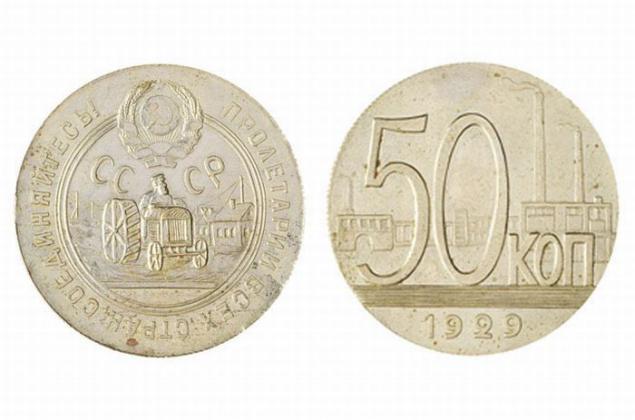
нумизмат мучной переулок / Numismática + 50 копеек – 50 kopeks 1921 y 1922 y полтинник 1924, 1925, 1926 y 1927 + 1929 prueba

Hay monedas que son un misterio. Después del colapso de la NEP (Nueva Política Económica), el gobierno soviético decidió la acuñación de monedas de cobre y níquel en lugar de plata. La plata – metal monetario – es requerida para las necesidades de industrialización. Que los ciudadanos no acumulen plata (Ley de Gresham) es el objetivo de la reforma, preparada en secreto (por documentos supervivientes con la la marca «Top Secret»).  En la Unión Soviética de 1931 circulaban / se acuñaron monedas de cu-ni de 10, 15 y 20 kopeks. No se acuñaron monedas de 1 rublo y de 50 kopeks hasta 1961, por supuesto de cobre-niquel.
En los fondos de la ceca de Leningrado sobreviven los cuños de 10 y 50 kopeks, pero ni una sola muestra de las propias monedas. Sin embargo, hace unos años en una colección privada apareció un cincuenta kopeks, al parecer acuñado en 1929. En mayo de 2011, en la subasta «Znak» fue vendido por teléfono en 10 millones de rublos. Se trata de un precio récord para la moneda soviética durante los últimos años.
Euros conmemorativos Ávila y   Очные Аукционы Конрос Февраль / Nº 56

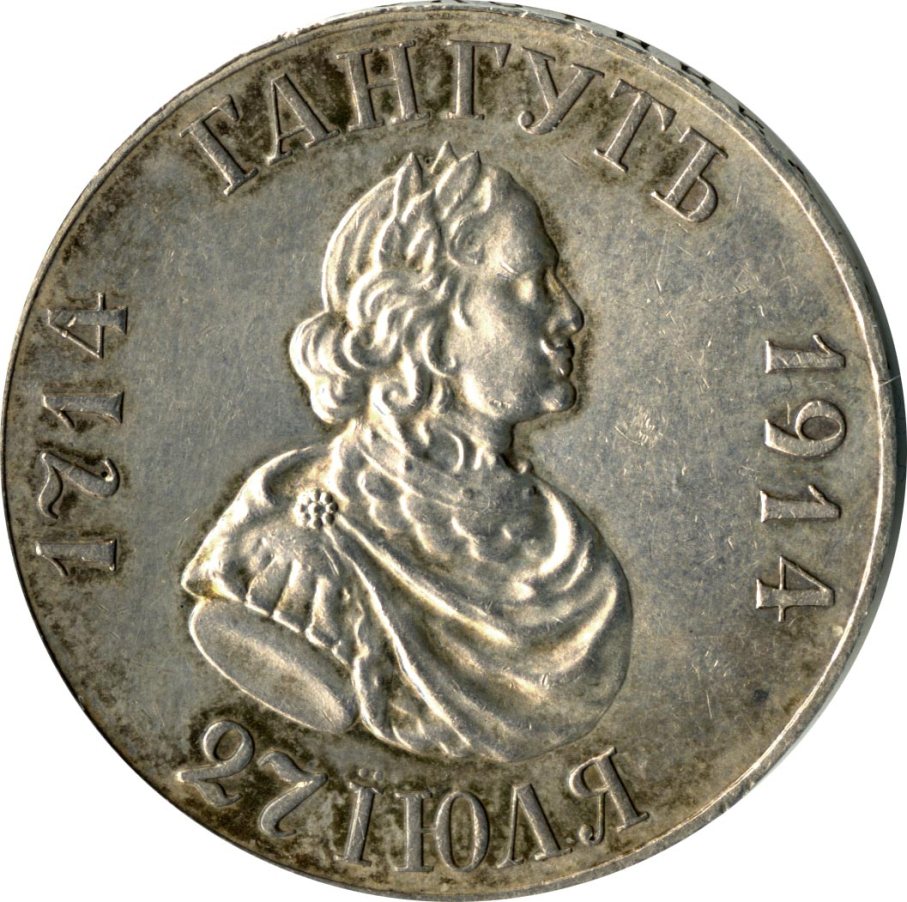
Rublo conmemorativo del 200 Aniversario de la Batalla de Gangut 1714-1914

En 1914, las tradiciones de celebración popular continuan: las actividades festivas celebran el 200 aniversario de la victoria de la flota rusa en el cabo Gangut, 1714, el primer triunfo marítimo en la historia del estado ruso. En 1914, por iniciativa de la Sociedad Imperial de la Historia Militar Rusa, se ampliaron los tableros conmemorativos de mármol en la fachada de la iglesia de Panteleimonov en San Petersburgo con una lista de estandartes que lucharon en esta batalla. (La iglesia fue consagrada en honor a las victorias de Gangut y Grenham en tiempos de Pedro I),

En honor de la primera victoria naval de la flota rusa en la historia de Rusia, también se acuñó una medalla conmemorativa. La medalla se reconoció a nombre Imperial a oficiales y cargos inferiores de la flota rusa que participaron dos siglos atrás en la Batalla de Gangut, así como a los descendientes directos de los combatientes. Esta medalla se convirtió en la última del Imperio ruso. (De las más de 94.000 medallas concedidas sólo fueron entregadas alrededor de 20.000, ya que las celebraciones fueron canceladas debido al comienzo de la Primera Guerra Mundial.)

Un destino similar al de las medallas sufrió el «rublo Gangut» conmemorativo; también se convirtió en la última moneda conmemorativa del Imperio Ruso. Las celebraciones marcarían el renacimiento de la flota rusa después de la derrota en Tsushima.

El cuño para el rublo Gangut lo realizó P. Stadnitsky; el anverso de la moneda lo ocupa el retrato de Pedro I, y el reverso el águila bicéfala que sostiene en sus picos y patas cuatro cartas, que personificaron en Pedro I los cuatro mares rusos (blanco, Báltico, Azov y Caspio), y en Nicolás II el mar blanco, el Báltico, el Negro y el Océano Pacífico.

Estaba previsto que se celebrara un desfile; cada participante en el mismo recibiría un rublo Gangut, pero el comienzo de la Primera Guerra Mundial canceló las celebraciones, y casi todos estos rublos (unos treinta mil) se guardaron.

Una pequeña parte-probablemente unos pocos cientos-se quedó en la reserva de la Casa de la Moneda de San Petersburgo, el resto se fundió (recordemos la necesidad dramáticamente creciente de plata para la fabricación de condecoraciones en el primer año de la guerra). Según documentos de la época, se sabe que otras 300 piezas fueron acuñadas en 1916 por orden del Gran Príncipe Sergei Mijailovich (50 para el Príncipe, 85 para el Cuartel General de la Flota y 165 en la reserva/fondos de la Casa de la Moneda), lo que indica que en el momento de la solicitud por un alto funcionario de estas monedas ya no quedaba ninguna disponible. La versión de la hija de «gangutsky» – rublos en tiempos soviéticos – es poco probable y no hay pruebas documentales; argumentos razonables contra la posibilidad de la hija soviética «Gangutov» se dan, en particular, en el libro «falsificaciones de monedas rusas».

Ley Ag .900, peso normal: 20,00 gramos, inscripción en el canto чистаго серебра 4 золотника 21 доля -plata pura 4 золотника 21 доля  (1 Золотни́к = 4,266 g = 96 долям)
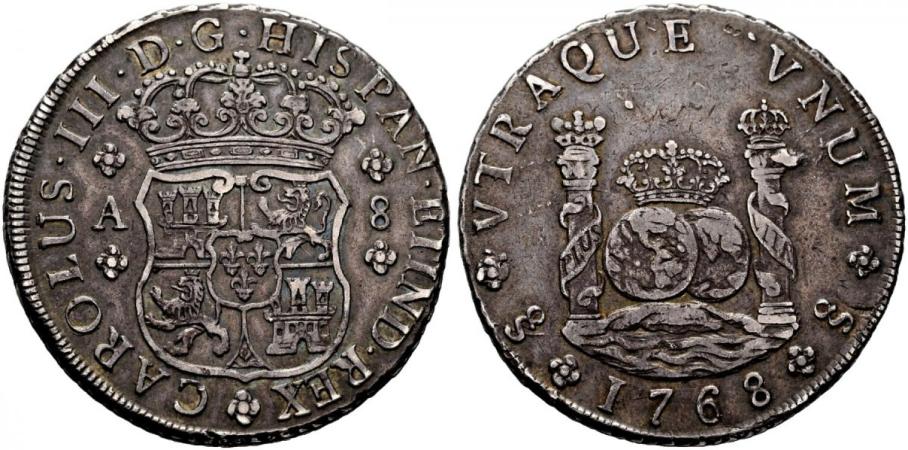
Y termino esta entrada con 8 reales columnarios de Santiago de Chile y Nuevo Reino

https://moneditis.com/2019/03/05/8-reales-columnarios-santiago-de-chile-y-nr/

MONEDAS ESPAÑOLAS COLECCIÓN COLUMNARIA. Felipe V y Fernando VI/PILLAR MILLED COLLECTION Felipe V and Fernando VI Fernando VI. Nuevo Reino. 8 Reales. 1759. JV. Cy10640. Profunda hoja saltada en anverso. Mínima grieta en campo del reverso. Acuñación algo débil. MBC o algo mejor. Muy rara. Estimación 22.000 No vendida
En 1751 se incorporó la casa de moneda del virreinato de Nueva Granada a la Real Hacienda, indicando que mostraría la marca de ceca NR y asumiendo la orden de acuñar con el nuevo modelo columnario. La disposición tardó en darse cumplimiento, ya que aunque puede datarse 1753 como su aplicación efectiva, no pudo implementarse hasta 1756.
El primer director de la misma fue Tomás Sánchez Reziente, zanjando la etapa previa de tesoreros particulares que habían dirigido la casa hasta ese momento. El material necesario para poder abrir la casa de moneda de acuerdo a las ordenanzas y exigencias hubo de llevarse desde España, fabricándolo en Sevilla.
Se conoce muy poca amonedación en plata siguiendo el nuevo modelo columnario, apenas un medio real, un real (véase lote 993), y tal vez tres duros. Este columnario de 1759 es la primera moneda circular de cordoncillo acuñada en Nuevo Reino. Las siglas JV son Joaquín Burgos y Victoriano del Valle encargados del ensaye de estas piezas tanto para Fernando VI como las de Carlos III.
Algunos citan 8 ejemplares conocidos, otros hablan de una docena En todo caso es una de las piezas más raras e importantes en la numismática virreinal colombiana. Magnífica oportunidad para poder contar con un duro columnario de Nuevo Reino.

https://moneditis.com/page/30/ 

Arriba la página donde nos hemos quedado, aunque puede ir variando según vaya añadiendo entradas. Es muy sano echar la vista atrás

NYINC 2019

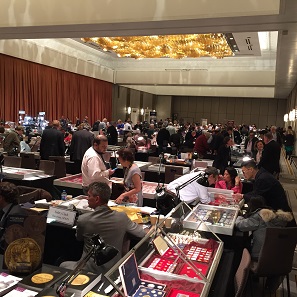
NYINC – New York International Numismatic Convention – 2019. La World Money Fair (Berlín) del otro lado del Atlántico. Del 4 al 13 de enero, distribuído en subastas empezando el 4 de enero, Heritage – examen de lotes – hasta el lunes 14 – Spink, aunque la convención propiamente dicha son tres (3) días

Thursday, January 10 12Noon – 7PM (Professional Preview – $125 Registration)
Friday, January 11 10AM  –  7PM
Saturday, January 12 10AM  –  7PM
Sunday, January 13 10AM  –  3PM

115 expositores. 20 dólares el pase para viernes, sábado y domingo. Menores de 16 años gratis. Otras convenciones importantes son las de Chicago, Florida FUN (Orlando)…

http://nyinc.info/

«…As an event focused on foreign and ancient numismatics, the display of United States coins minted after 1815 is not permitted in the bourse area. I addition, the displlay and/ or sale of antiquities: objects, staturary, lamps, vases, grave objects, etc. is not permitted…»

Features of the NYINC

  • 115 Dealers all world and ancient numismatic boiurse area
  • Educational programs
  • Special Young Numismatists Program
  • Club and society meetings
  • Heritage auction
  • Classical Numismatic Group auction
  • Ira and Larry Goldberg/Sovereign Rarities/M&M Numismatics/Dmitry Markov auction
  • Stack’s-Bowers-Ponterio auction
  • Spink auction
  • Baldwin’s of St. James’s auction
  • Sovereign Rarities auction
  • Discounted room rates at the Grand Hyatt
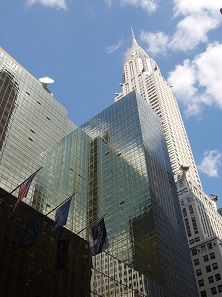
  • Direct indoor connection to Grand Central Station
  • Convenient to midtown restaurant locations
  • Convenient to the theater district
  • Free samples copies of numismatic publications for attendees
  • Numerous booth holders from outside the United States

Cuatro (4) casas de subastas españolas estarán presentes

http://nyinc.info/dealers.php

https://www.coinworld.com/news/world-coins/2016/10/nyinc-organizers-announce-new-location-for-show-in-2018.all.html


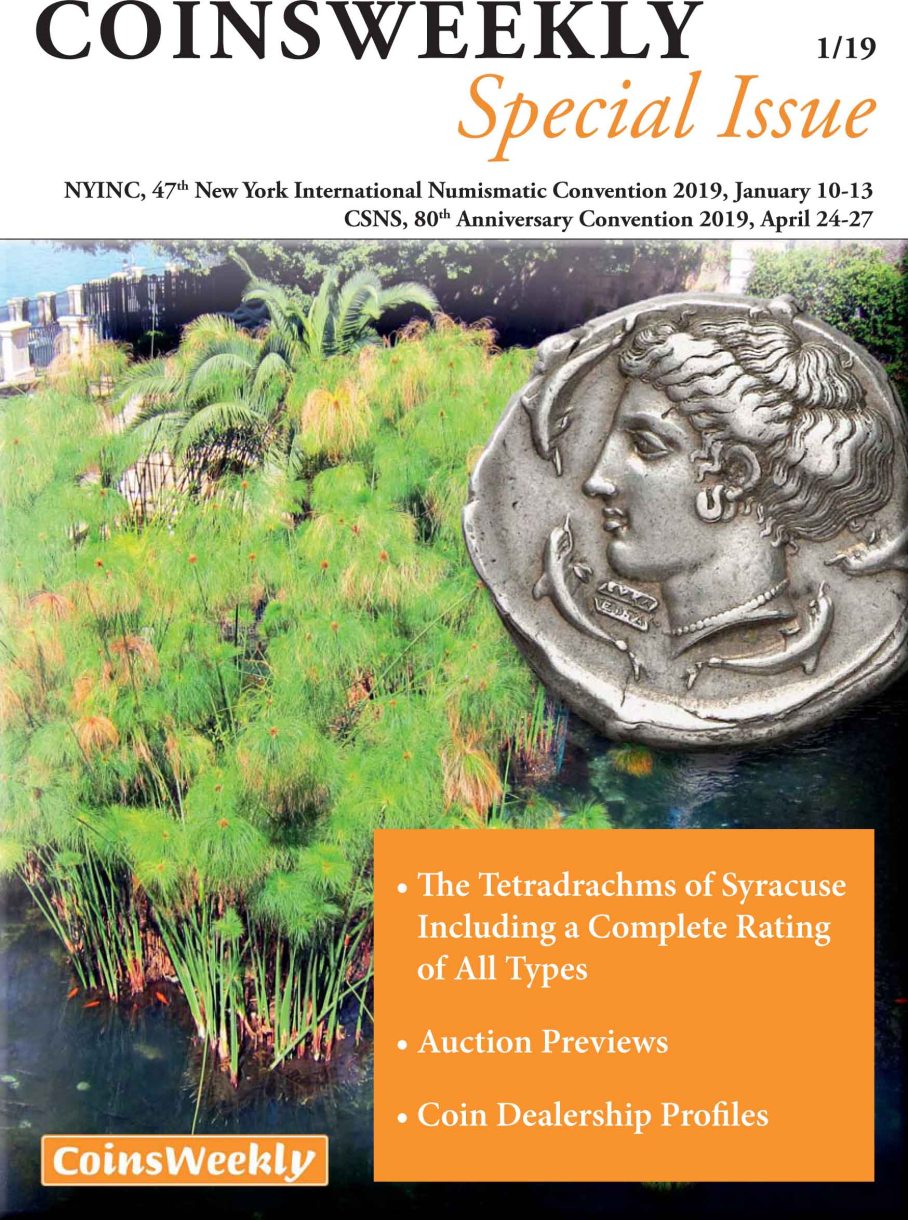
https://www.coinsweekly.com/en/News/The-46th-New-York-International-at-its-new-location/4?&id=5124

Sólo he estado una vez, hace bastantes años, por lo que maybe someone needs me in NYC these days, please contact me for details  jeje (actually in Spain)  Ready for travelling  😛  Cheers

¡Feliz Año Nuevo!  С Новым Годом!  Happy New Year!

P.S.  https://www.coinsweekly.com/en/page/51

mw09_2019newyork_ebook

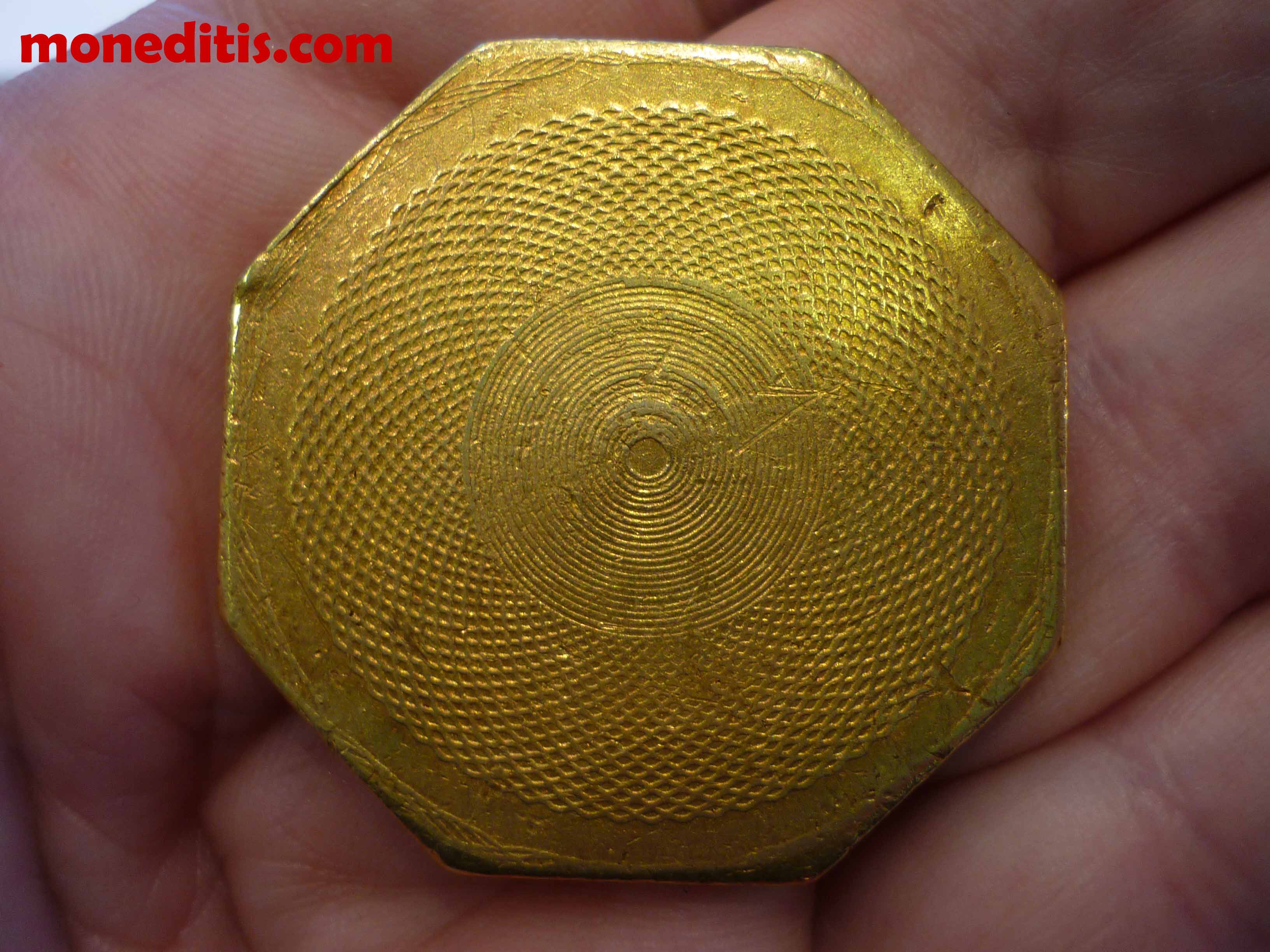
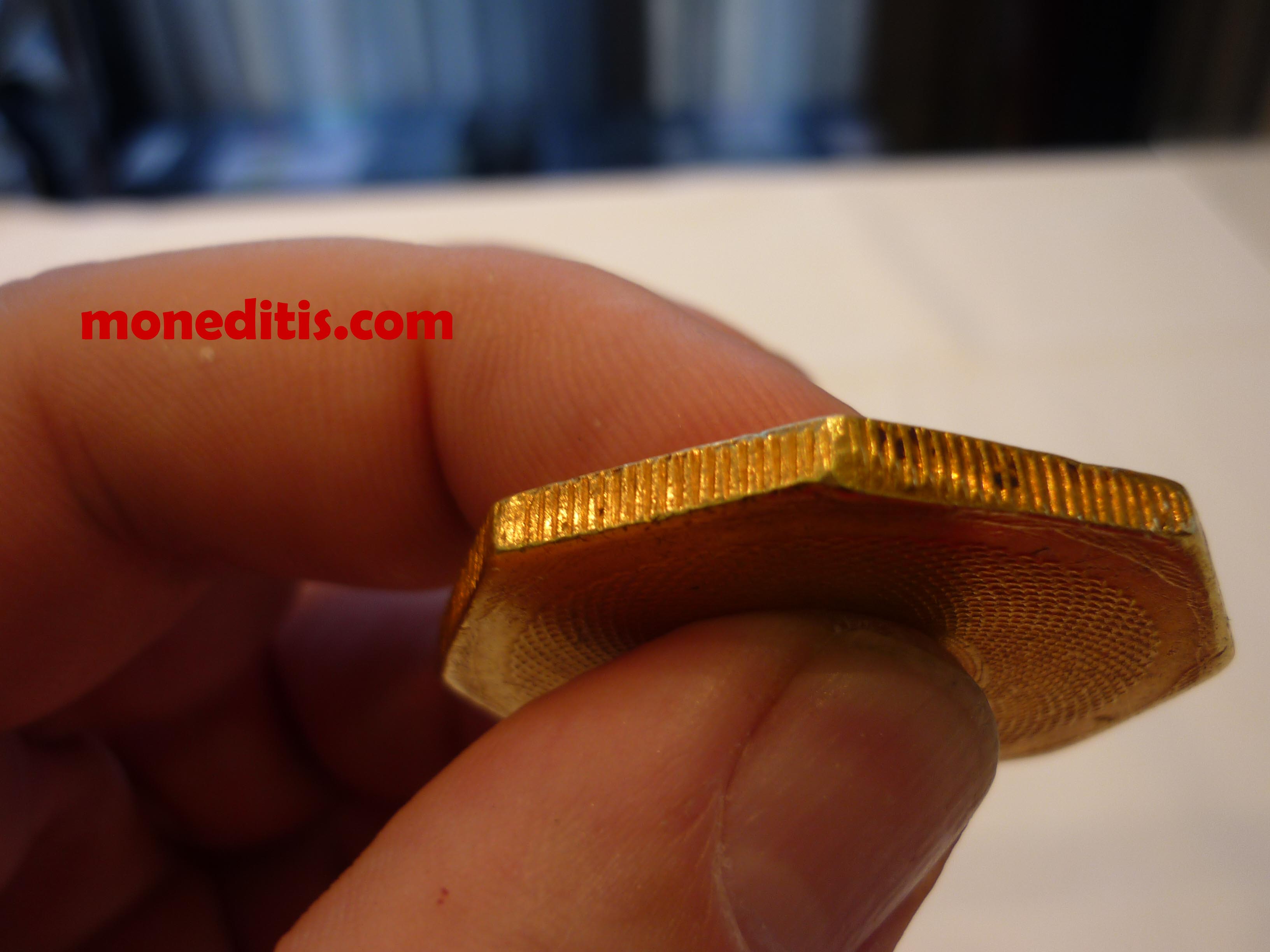
1851 50 US dollars California oktogonal

84,73 g. Au .887 Assayer: Augustus Humbert. San Francisco. Gold Rush

123

Nice and rare freemasonry? 50 $ coin

http://www.christies.com/lotfinder/lot/1851-augustus-humbert-us-1958429-details.aspx?intObjectID=1958429

http://www.christies.com/lotfinder/lot/1852-united-states-assay-1958435-details.aspx?pos=8&intObjectID=1958435&sid=&page=12&lid=1

Die notes: Octagonal format. Obverse with central motif of eagle perched on a rock, holding a shield, and in its beak a long ribbon inscribed LIBERTY. Above, a label or cartouche on which the fineness was stamped. Surrounding: UNITED STATES OF AMERICA, and below, D and C, to be stamped for values in dollars and, if applicable, cents (none are known with a cents imprint). Reverse with engine-turned design. Edge lettered: AUGUSTUS HUMBERT UNITED STATES ASSAYER OF GOLD CALIFORNIA 1851. Die state: Perfect dies. PCGS Data: The single finest of three examples from the S.S. Central America treasure certified by PCGS.The Humbert $50 «Slugs» In California in 1849 and early 1850, monetary matters were in a state of flux. Many different private issues-coins and ingots-had appeared under the imprints of Kohler; Norris, Gregg & Norris; Bowie; the Miners Bank; Baldwin & Co.; Moffat; and others. Some of these had intrinsic or melt-down values close to their stated face values, while others did not. Seeking to add stability to circulating gold coins, in September 1850 Congress authorized the secretary of the Treasury to contract with a well-established assaying business in California to affix the stamp of the United States to bars and ingots, to assay gold, and assign value to it. Moffat & Co., the most respected of the San Francisco coiners, and probably the one with the best «connections,» received the commission. Appointed to the position of United States assayer was Augustus Humbert, a New York City maker of watch cases, who arrived in San Francisco on January 8, 1851. Meanwhile, in preparation for the new franchise, in late 1850, Moffat & Co. curtailed most of their private business and prepared to issue coins under the government contract. New premises were secured on Montgomery Street between Clay & Commercial streets. While Moffat was preparing for issuing coins under the federal franchise, it issued no coins under its own imprint. The gap was filled with alacrity and enthusiasm by Dubosq, Baldwin, and Schultz-earlier discussed in the present catalogue. Not long thereafter, Moffat vanquished its competitors via James King of Wm. and the resultant smear campaign-also related earlier.$50 Slugs MintedThe production of federal coins, determined to be of $50 denomination, promised great profits for Moffat & Co. in early 1851. On February 14, San Francisco Prices Current contained an article relating to the $50 slugs, indicating their regular production was about to begin: «The above cut represents the obverse of the United States ingot, or, rather, coin, of the value of $50, about to be issued at the Government Assay Office. It is precisely of this size and shape…. The reverse side bears an impression of rayed work without any inscription. Upon the edges following: ‘Augustus Humbert United States Assayer-California Gold 1851.’… The fifty-dollar pieces will be of uniform value, and will be manufactured in the same manner as coins…. By order of the secretary of the Treasury these ingots and coin are to be received for duties and other dues to the United States government, and our bankers, we are advised, will receive them at their stamped value. This will produce an important change in the monetary affairs here, gold dust will immediately go up, and as a necessary consequence foreign and domestic [Eastern] exchange will be at a premium 5 to 7…» The Alta California commented on the new $50 pieces on February 21, 1851: «The new 50-dollar gold piece…was issued by Moffat & Co. yesterday. About three hundred of these pieces have already been struck off…. The coin is peculiar, containing only one face, and the eagle in the center, around which are the words ‘UNITED STATES OF AMERICA.’ Just over the eagle is stamped «887 THOUS.» signifying the fineness of the gold. At the bottom is stamped ’50 DOLLS.’ The other face is ornamented with a kind of work technically called engine-turning, being a number of radii extending from the common centre, in which is stamped, in small figures, ’50.’ Around the edge is stamped the name of the United States Assayer….» At the time, some of the pieces were inscribed 880 THOUS., while a few others were noted as 887 THOUS. (per the above newspaper account). Later varieties of $50 issues had the denomination marked «FIFTY DOLLS» and as part of the die inscription. These seem to have replaced the very early issues (such as the S.S. Central America coin offered in this lot) which had the value and fineness individually hand punched. From the preceding, it seems reasonable to conclude that the coin here offered was part of the group released on February 20, 1851, and that later pieces were all of the «DOLLS» type. In the first quarter of 1851 the Moffat-Humbert coiners produced $530,000 worth of pieces. This is equal to 10,600 $50 pieces. It further seems reasonable to assume that only a few of the style with the «50» value, «880» or «887» fineness, and eight edge segments hand stamped were made, and that late February and all March pieces were of the type with the value and fineness in the die and with reeded edge.Steps in Minting an 1851 $50Lettered Edge Type The large and impressive lettered edge $50 coins made in February 1851 were created by a very complicated process involving the following separate steps once the planchet was produced, quite possibly the most complex set of minting steps for any coin ever authorized by the American government (or any other kind of coin of which we are aware). Step 1. The obverse and reverse motifs were stamped from a pair of dies. These dies had been made in New York City by Humbert and brought with him to California. The obverse features an eagle holding a shield, perched on a rock, with a thin ribbon inscribed LIBERTY in its beak. Above is a blank ribbon suitable for inscription. The dies of this style were the work of Charles Cushing Wright. One pattern impression in copper is signed on the edge by Wright as «Wright fec,» for «Wright fecit» (Latin for «Wright made it»). Inscriptions on these patterns as well as the first octagonal ingots produced for circulation have simply the letters D C DWT. GRS. It was intended that the value in dollars and cents and the weight in pennyweights and grains could simply be stamped in the place provided. In this way ingots of $50, $100, $200, or any other desired denomination could be produced, differing from each other only by size, weight, and fineness, but incorporating the same stamp. · The reverse is of a geometric «engine turned» design similar to that used on a watch case, and reflects Augustus Humbert’s skill as a maker of such cases-one of the occupations he had followed in New York City. Steps 2-4. The fineness was hand-stamped on the obverse with three separate numeral punches. Finenesses known to have been thus applied include 880 (as usually seen) and 887. Steps 5-6. The value (50) was hand-stamped on the obverse, from two single punches. Steps 7-14. In eight separate operations each of the eight edge faces was stamped with a logotype punch, the eight punches reading incuse: AUGUSTUS HUMBERT UNITED STATES ASSAYER OF GOLD CALIFORNIA 1851. There was no particular starting or stopping place for the inscriptions, and the position of a given part of the inscription varies with relation to its position to design elements. The several specimens of this variety examined by the writer (QDB) in recent months as part of a numismatic study have each had the lettering inverted in relation to the obverse (this being true of the presently offered S.S. Central America example as well). Thus, it took at least 14 steps to create one of the early $50 pieces. Later coins with the fineness and value in the die and with reeded edge were struck in a single operation. Some had the denomination 50 stamped at the center of the reverse, an additional procedure.Additional Notes While the federal standard for gold coinage was 900 1000 fine, in San Francisco in 1851 this was difficult to attain with the refining processes then in use, and the Humbert coinage was of two finenesses, 800 and 887, the latter coins being slightly lighter in overall weight due to the smaller proportion of alloy. By 1852, coins of 900 fineness were being made, but other finenesses (884 and 887) were employed as well. The remaining alloy was native silver (whereas under the government standard, copper was used). Although the Humbert $50 pieces were clearly produced under government auspices, and although they were receivable for U.S. customs payments in San Francisco, in Philadelphia on April 23, 1851, Mint Director George N. Eckert perversely (it would seem) stated that while Augustus Humbert was the United States Assayer in California, his stamping of bars for owners of bullion did not make them legal tender.$50 Gold: Massett Writes Steven C. Massett, accomplished entertainer and co-owner and co-editor of the Marysville Herald, was in San Francisco on May 3, 1851 to give a concert. He later recalled what happened, this being the time of the great fire: «At the time T. Butler King, Esq., was collector of the port, and running for U.S. senator. Our paper supported his election, and the consequence was that a very ‘fat’ advertisement fell to the lot of the proprietors of the Marysville Herald, to the tune of $1,800, which amount was duly handed to me in octagonal fifty-dollar gold pieces, and which was lodged for safekeeping at the banking house of Burgoyne & Co., at the corner of Montgomery and Washington streets. «The deposit was made the day after my concert had taken place. Consequently I have about $2,500 ‘on call’ there at the time. «I was standing at the top of Clay Street, near Pike, when the fire was raging at its height. Block after block of buildings were caught in the fiery embrace. Union Hotel, [Jenny Lind] Theatre, El Dorado building-all were swept away, and at last the flames caught the Bank of Burgoyne & Co., whose building was considered fireproof. It was seemingly enclosed in sheets of flame, and many a heart quailed in expectation of losing every cent there deposited, for the heaviest accounts in the city were kept at this pet banking establishment. If my friend J.R.C. ever reads these lines, he will recollect the query I put to him, as to whether he though the place would stand! «On that night everybody slept in the open air, on the top of barrels, bales, or anything else-there did not seem to be the vestige of a house left. Utter desolation and despair reigned supreme. «About 10 o’clock on the following morning, George Plume, one of the firm, upon going to the safe (one of the celebrated Herring’s by the way) handed me my buckskin bag of gold, with even the sealing wax not melted! «So much for a good safe, and my luck!»