No todo son monedas
¡¡Felices Vacaciones!!

http://www.zerohedge.com/news/2015-03-31/what%E2%80%99s-wrong-silver

Economic wars and hot military wars increase debt and commodity prices. Gold and silver will see another rally, probably one that surprises almost everyone.
http://hide-it.net/index.php/component/virtuemart/view/category/virtuemart_category_id/48
Gold vs Grandma
Let me start with a observation, that while obvious, is seldom mentioned – An ounce of gold purchased in 1990 is today worth exactly, an ounce of gold, while a dollar saved in 1990 is today worth about 33 cents. In early 1990 a barrel of oil cost $21 dollars (19 barrels for 1 ounce of Gold) – today a barrel of oil costs $60 dollars (20 barrels for 1 ounce of Gold). Even diehard believers talk about Gold’s value in Dollars – It’s going to $3000.00 they proclaim. That would probably only mean that the Dollar has fallen against other currencies.Would it not be better to see an ounce of Gold go to 60 barrels of Oil?
All these prognostications one sees about Gold going to $5000.00 and beyond are actually propaganda for the Dollar. The implication is that Gold is just a vehicle to obtain more Dollars and if it did go to $5000.00 you would sell it and declare victory. Gold could go to $5000.00 USD and still only be worth 20 Barrels of oil.
We only judge currencies against one another – like kids in the tub comparing rubber duckies bobbing up and down while ignoring the declining water level. Meanwhile, central planning has pulled the drain plug and added more bubble bath. Not to worry were told, the water isn’t going down – the tub is getting bigger.
There are many good charts on the oil – gold ratio, what I cannot find is a Global Gold index. A real barometer of what Gold is worth in paper currencies on a truly global basis. It would illustrate that Gold’s exchange rate against paper is far more stable than it appears when compared to the U.S. Dollar or any single currency.
Consider the last twelve months (March 2014 through March 2015). The US Dollar Index has gone from 80 to 100 – a 25% move, while in the same period Gold in Dollars went from $1310 to $1200, an 8% move. Meanwhile over the same time span, Gold in Swiss Franc’s declined only 0.55%, and in the Singapore Dollar and the Argentinean peso it moved even less while in the Euro it went up 6% from €940 to €1100 euro. So what did Gold really do against global paper in the last year? As best I can surmise, gold actually went nowhere against paper. Better stated, paper went nowhere against Gold.
A global valuation will become more important as the so called «competitive devaluations» accelerate. Call me suspicious, but they appear very coordinated to be competitive, maybe it is just a coincident that they take turns with Q.E. If they are indeed taking turns it would appear the Fed is up next. Orchestrated global gyrations require a better valuation method, at least until we arrive at the mother of all debasements – Maximus Printus – Global Q.E.
If nothing else a Global Gold Index would provide spine stiffening support for those valiant souls still holding leveraged gold positions. Many of us have no parachute.
UBS believes something is coming down the pike – they just raised margin requirements on Gold by 25%. The last time they raised margins the Swiss Franc peg was cancelled. Mish has an interesting story about UBS predicting more Q.E.
Here at Hide-It we also believe something is coming down the pike. Not sure what it is, but it appears to be disguised as a tiny grandma – traveling with a boatload of rubber duckies. Let’s hope she’s got enough bubble bath.
Have no fear, Grandma’s here.
Buy it. Hide it. Wait.
Un poco más de lo mismo. A veces el sentimiento contrario ayuda 🙂
Contramarca de Zanzíbar

http://historiasdelahistoria.com/2012/04/01/cuando-la-moneda-espanola-era-de-curso-legal-en-zanzibar
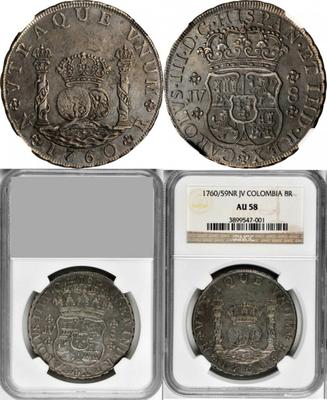
Y un poco más de Reales de a ocho
http://gredos.usal.es/jspui/bitstream/10366/70460/1/Itinerarios_mundiales_de_una_moneda_supr.pdf
http://www.ucm.es/data/cont/docs/446-2013-08-22-14%20real.pdf
Банк России 26 марта 2015 года выпускает в обращение памятные серебряные монеты номиналом 3, 25 рублей и золотую монету номиналом 50 рублей серии «70-летие Победы советского народа в Великой Отечественной войне 1941-1945 гг.».
Серебряная монета номиналом 3 рубля (масса драгоценного металла в чистоте 31,1 г, проба сплава 925, каталожный № 5111-0289), серебряная монета номиналом 25 рублей (масса драгоценного металла в чистоте 155,5 г, проба сплава 925, каталожный № 5115-0107) и золотая монета номиналом 50 рублей (масса драгоценного металла в чистоте 7,78 г, проба 999, каталожный № 5216-0105) имеют форму круга диаметром соответственно 39,0 мм, 60,0 мм и 22,6 мм.
С лицевой и оборотной сторон монет по окружности имеется выступающий кант.
На лицевой стороне монет в круге, обрамленном бусовым ободком, расположено рельефное изображение эмблемы Банка России — двуглавого орла с опущенными крыльями, под ним надпись полукругом «БАНК РОССИИ», а также по окружности имеются надписи, разделенные точками: номинал монет — «ТРИ РУБЛЯ», «ДВАДЦАТЬ ПЯТЬ РУБЛЕЙ», «ПЯТЬДЕСЯТ РУБЛЕЙ» соответственно, и дата — «2015 г.», между ними проставлены обозначение металла по Периодической системе элементов Д.И. Менделеева, проба сплава для монет номиналом 3 и 25 рублей, проба для монеты номиналом 50 рублей, товарный знак Санкт-Петербургского монетного двора и масса драгоценного металла в чистоте.


На оборотной стороне монет расположены:
— серебряной монеты номиналом 3 рубля — рельефные изображения советских воинов, водружающих Знамя Победы над Рейхстагом, слева имеется надпись в две строки — «70 ЛЕТ ПОБЕДЫ»;

— серебряной монеты номиналом 25 рублей — в обрамлении георгиевской ленты рельефные изображения: в центре — Ордена Отечественной войны с исходящими лучами прожекторов, вверху в центре — монумента «Воин-освободитель» мемориала в Трептов-парке в Берлине, слева — маршала Г.К. Жукова на Параде Победы на Красной площади 24 июня 1945 года, справа — фрагмента плаката «Родина-мать зовет!», внизу слева — солдата, делающего надпись на стене Рейхстага, справа — скульптуры «Стоять насмерть!» на фоне главного монумента «Родина-мать зовет!» мемориального комплекса «Героям Сталинградской битвы» на Мамаевом кургане в Волгограде, вверху имеется надпись в две строки — «70 ЛЕТ ПОБЕДЫ»;

— золотой монеты номиналом 50 рублей — рельефное изображение Вечного огня у Могилы Неизвестного Солдата у Кремлевской стены, справа имеется надпись в две строки — «70 ЛЕТ ПОБЕДЫ».

Боковая поверхность монет рифленая.
Монеты изготовлены качеством «пруф».
Тираж:
— серебряной монеты номиналом 3 рубля — 5,0 тыс. шт.;
— серебряной монеты номиналом 25 рублей — 1,0 тыс. шт.;
— золотой монеты номиналом 50 рублей — 1,5 тыс. шт.
Выпускаемые монеты являются законным средством наличного платежа на территории Российской Федерации и обязательны к приему по номиналу во все виды платежей без всяких ограничений.

http://www.zerohedge.com/news/2015-03-26/silver-projection-dollar-correction
No me hago responsable de lo que Mr. Christenson a través de Eric «siempreigual» Sprott elucubran jeje
Recopilación 8 reales
https://moneditis.com/tag/8-reales/
Porque leer / aprender / mirar es siempre importante 😉
Imágenes
Añado página de Lanzarote sobre columnarios, http://siemprenosquedarae.wix.com/columnario ,moderador del foro imperio numismático http://www.imperio-numismatico.com/t89969-reales-de-a-8-tipo-columnarios
Y alguna más
http://www.bcrp.gob.pe/docs/Proyeccion-Institucional/Museo/Museo-Numismatico-del-Peru.pdf
http://www.banxico.org.mx/divulgacion/billetes-y-monedas/6–historia-moneda-del-billet.html
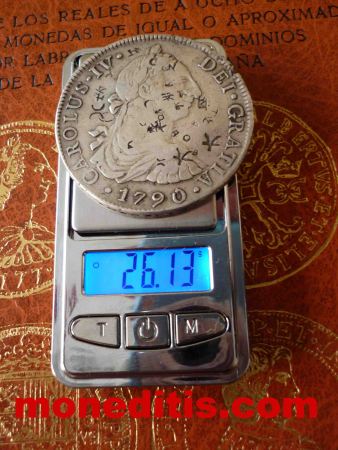
Tras revisar unos cuantos datos de otras cuantas monedas de 8 reales estos días atrás, podemos colegir que varias características congruentes no hacen auténtica a una determinada pieza o, lo que es lo mismo, debe haber concordancia de varias características para decir que una pieza es auténtica pero faltando una sola de ellas podemos afirmar que es falsa. Empezando por lo más básico, peso y diámetro, grado de desgaste y homogeneidad del mismo y otros detalles que salten a la vista como pérdidas de recubrimiento / chapado y/o marcas / resellos / punzones. Son importantes los solapamientos a 180 º por cambio de dirección de las hojas de laurel antes de 1762 en los columnarios; en los 8 reales de busto se espera solapamiento del cordón geométrico a 180 º siempre
Imagen del libro Counterfeit Portrait eight-reales – Robert Gurney https://moneditis.com/2014/10/08/falsificaciones-de-8-reales-busto/
https://moneditis.com/2014/10/12/falsificaciones-de-8-reales-busto-ii/

https://moneditis.com/2013/11/05/8-reales/
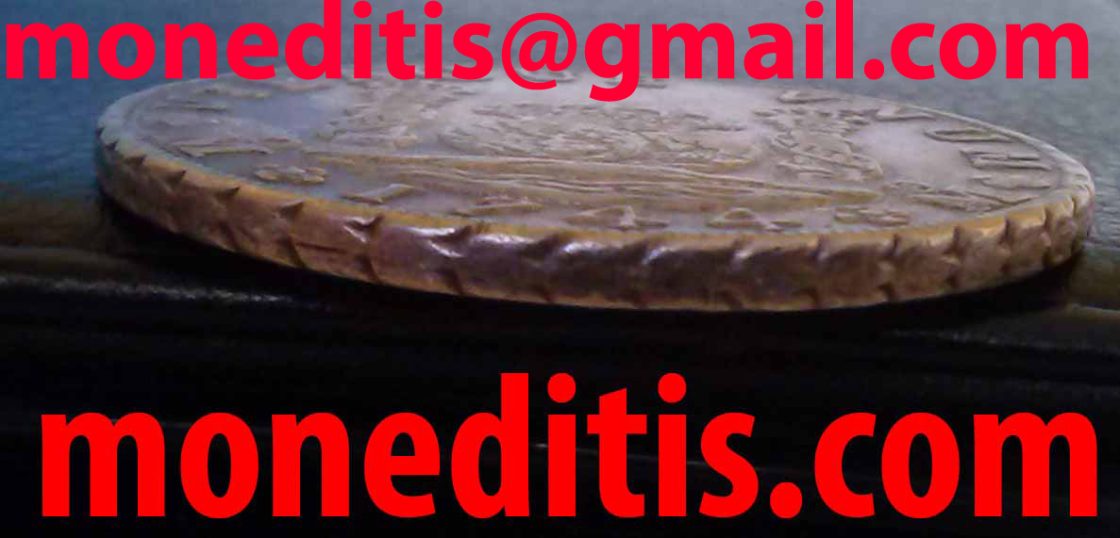
Luego están la gráfila con sus 180 segmentos paralelos «orientados» al centro y finalizando en el borde mismo del canto de la moneda, los castillos y los leones del escudo con sus propias características dependiendo de las CECAs, la cruz sobre la corona del reverso y sus puntos, columnas, cartelas, tipos…
Lo que no nos miente nunca (casi nunca) es un XRF científico. El espectrograma dice lo que dice y tampoco es de difícil interpretación. Otra cosa es el microscopio electrónico, técnica en la que no he profundizado por su relativa complejidad y variabilidad dependiendo de diversos factores externos pero que ha confirmado la no autenticidad de las piezas expuestas. No existe un método seguro al 110 %; la cuestión principal es aunar diversas técnicas y entrenar el ojo…porque todo cuenta 😉
Espero que estos cuantos ejemplos al menos siembren la duda entre vosotros sobre lo que podemos encontrarnos y donde. En ningún momento he pretendido facilitaros una guía para la detección de 8 reales falsos; esta requeriría de mucho más tiempo,extensión y datos. Gracias.
|
|
|
http://revista-hecate.org/files/5714/1944/6659/Cano_Borrego1.pdf «Los Lores del Tesoro reconocieron el 11 de febrero de 1825 que en la mayoría «Un Acta de la Asamblea de la isla de 22 de abril de 1845 mantuvo la «En el circulante de la isla del Príncipe Eduardo, estudiado por Chris Faulkner, Figura 7. Holley Dollar de cinco chelines de la Isla de Príncipe Eduardo. Durante el siglo XIX la estimación de los dólares en cuatro chelines y seis Me acordaba de esta entrada al estar publicada en Hécate (gracias David) pero hay multitud de trabajos publicados en la red. Sólo hay que molestarse un poquito en google y, por experiencia, se aprende mucho más que releyendo |
¡¡He ahí el quid de la cuestión!! ¡Al menos yo cada vez dudo más!
![]()

Para eso estamos, Ignacio
En los USA apreciaban los 8 reales más que el papel moneda por la misma época que en el Canadá de la entrada anterior ![]()
– La ausencia de un metal moderno no significa que una moneda sea de época. La presencia del cadmio nos orienta sobre la procedencia de la plata (y no me refiero a la ubicación geográfica de las vetas), pero no nos asegura en qué momento fue elaborada. Hay monedas de ocho reales falsificadas en la actualidad que no presentan cadmio en su composición.
– El mismo argumento sirve para el oro presente en la plata. Su presencia o ausencia, así como la cantidad, nos orientan sobre el origen de la plata, pero no sobre el momento en que fueron elaboradas las monedas. Existen monedas de ocho reales falsificadas en la actualidad que presentan oro en su composición, y esto, generalmente, es debido a que se elaboran a partir del metal de monedas de la época.
– La técnica analítica utilizada puede dar resultados dispares. Por ejemplo: una concentración de oro de partes por billón no será detectada por ninguna XRF del mercado, en cambio si que se detectará mediante activación neutrónica. ¿La moneda tiene oro o no tiene oro?
Respecto a las monedas falsas de época, usemos el sentido común!!!:
En el siglo XVIII, exactamente igual que en la actualidad, en la época de los duros sevillanos, o en la época de los maravedís de molino, lo que llevaba a falsificar moneda era la relación coste/beneficio. En un momento de la historia en que la moneda valía por su valor de metal intrínseco, lo único que justificaría falsificarla sería:
– Utilizar una plata de baja ley, u otras aleaciones que dieran un peso y aspecto muy aproximado al real, o
– Robar la plata antes o después de pasar por las Cajas Reales, plata que hemos de tener en cuenta que no estaría afinada.
Creo que es muy poco probable que encontremos un ocho reales falso de época con un 92% de plata en su composición. Además, hoy en día los falsarios acaban en prisión, pero en el siglo XVIII te ahorcaban o te descuartizaban. Había que tener muy claro lo beneficioso del “negocio” para dedicarse a él.
Las ocho reales falsos de época fueron elaborados con los metales existentes en esa época, así que podemos asegurar que estos procedían de las mismas minas de plata con el que se elaboraron los auténticos, por lo que su composición debería ser, si no idéntica, si muy similar.
En mi opinión, una composición química “anómala” puede ser determinante para confirmar la falsedad de una moneda, pero una composición “correcta” no confirma su autenticidad. Y respecto al momento en que fueron elaboradas la monedas, tanto las falsas de época como las falsificaciones contemporáneas, la composición química por si sola no será suficiente, habrá que realizar más pruebas.
Eduard Fernández
http://hekte.es/blog/wordpress/2015/03/falsas-de-epoca/
Unos dicen una cosa, otros otra… ![]()

http://blognumismatico.com/2012/05/16/discutiendo-la-autenticidad-de-8-reales-de-1748-de-mexico/
I read the thread completely and the supporting report. The owner seems to WANT the coin to be genuine and he seems to be reading the results to achieve that wish. The credentials of the specialist are very good. Josep Pellicer I Bru is President of La Asociación Numismática Española and is an author of several books on earlier Spanish coins and ancients.
I am concerned as to the casual nature of the “authentication” by this person regardless of his qualifications. The owner notes the process is simply a subjective opinion by one man – a qualified one. But the nature of the inspection is not given. Was anything other than a loupe used? How long did it take? Did he make any cautionary disclaimers?
The owner uses the XRF tests as a “Coup de grace” to prove his case.
There are several SERIOUS problems with the authentication as presented. The XRF device used by this “new” testing firm (which the owner of the coin has been involved with since its inception) was essentially worthless as a method of proof the coin is genuine.
The Niton XL3T 980 is a hand held XRF devise that provides a level of accuracy that is good for a junk yard purchase of scrap metal but it is not capable of testing for the trace contamination of gold that must be present to authenticate the coin. If you refer to the website for Niton you will notice this model is not recommended for precious metals testing. It is a general industrial tester. The stated error rate for the silver content (91.8 % average) is plus or minus one quarter of a percent. That result is actually too high for an original. The results DO NOT MENTION gold at all. There is about 1% of the content missing which is referred to as “other trace elements”. That is simply NOT ADEQUATE as an XRF result.
So, far from being proven genuine – the results seem to indicate the coin could just as easily be a Numismatic Forgery made from 91.8% silver and 7.2% copper a few weeks ago as it could be a genuine coin made in 1748.
…
When I re-read the comments made on that other web site – I am fearful that the XRF technology is not only generally misunderstood by coin collectors but is actually being miss applied in an effort to subvert the science behind the use of XRF to disclose modern forgeries.
The starting point is simple. In 1748 no one on the face of the earth had the capability to remove all of the gold that is naturally found in Mexican silver deposits. Today parting gold and silver to 99.999 fine levels is rather easy – but in 1748 99% pure was acceptable and 99.9% was an impossible industrial standard.
So if you find NO gold or gold on the order of less than 200 ppm – you have a forgery pure and simple.
XRF tests which can look for this trace level of gold are essential. The use of HANDHELD XRF testers is worthless in this context. They are simply not accurate enough – PERIOD.
The handheld XRF testers are good only to screen out really bad coins – 5 or 10% off. They are in the same class as Specific Gravity testing – NO MORE than that.
The laboratory XRF tester looks at all 100% of the elements contained in the coin from Carbon to Uranium to a level of 1 ppm if needed and achieves a balance of 100.0000%. The gold can not hide from this test. Nor can other equally important trace elements that should or should NOT be present.
This capability will actually make forgeries harder to create. Just consider that a modern ore refinery uses a lined furnace with a surface that can contaminate the metal being refined to 10 ppm. How do they remove this «modern signature» contamination?
Even if they simply melt genuine coins – how do they do it to avoid furnace and fuel contamination or the loss of the mercury trace that came from the original patio process?
Finally how about copper? Today commercial copper is NOT pure. It is not valuable enough to be refined to a level beyond 1000 ppm. How does the forger purify his copper to avoid modern contaminants without losing needed contaminants that would have been there in 1748?
I am trying to illustrate why XRF could be the answer needed to put 99.9% of all forgers out of business. If a fake of a $100 coin costs $200 to make – they will NOT be made. The most important thing to do is to eliminate in a simple way silver forgeries. »
Matizaría algún punto, pero básicamente es así. La microscopía electrónica es otro parámetro a tener en cuenta, parámetro que no he comentado más que someramente en los 8 reales de 1823 y que en todos los casos publicados confirmaría su falsedad. Por supuesto, ningún método da un 110 % de fiabilidad ![]()
http://www.imperio-numismatico.com/t77060p252-falsas-de-subastas
Quevedo
Los reales de a ocho estuvieron circulando es España hasta principios del siglo XX, en teoría con la entrad en vigor de la peseta tendrían que haber desaparecido, pero tanto a finales del siglo XIX, como a primeros del XX (creo que en 1902), se emitieron sendas órdenes que fijaban su desmonetarización … señal inequívoca que todavía andaban rulando por ahi, como buena parte de la moneda fraccionaria catalana de vellón y cobre, que fué retirada y fundida a finales del XIX.
Hay un interesante estudio de la universidad de murcia sobre ello, aqui lo teneis:
Un saludo
moneditis
Leída la introducción he intentado comprarlo en Amazon, Casadellibro, elCoreteInglés e Iberlibro…pero está agotado
![]()
Salud
Si. Alguno ha pasado por mis manos.